How to Water Houseplants
How to Tell When Your Plant Needs Water
Push a finger into the soil to about 2 inches deep. If it feels dry at that depth, the plant probably needs water. If it still feels cool and damp, wait a few more days and check again.
The surface can mislead you. The top of the soil may look dry while the root zone underneath is still wet, and watering on looks alone is a fast route to root rot. Always test below the surface, not just the top.
Lifting the pot helps too. A dry pot feels noticeably lighter than a freshly watered one, and with practice you can judge moisture by weight alone. A clay pot that sounds hollow when tapped is also a sign the mix has dried out.
Wilting does not always mean “add water.” A wilted plant in moist soil may already have damaged roots from sitting wet, because wet soil holds little air and roots need oxygen to grow. Check the soil before you reach for the watering can.
How to Water Houseplants, Step by Step
Follow the same routine every time you water houseplants, and your plants will stay on steady ground.
- Check the soil first. Test 2 inches down with your finger. Water only if it feels dry at that depth.
- Use room-temperature water. Cold water can shock roots, so let cold tap water warm up before you pour.
- Water slowly and evenly. Pour over the whole soil surface, not in one spot, so every part of the root zone gets wet.
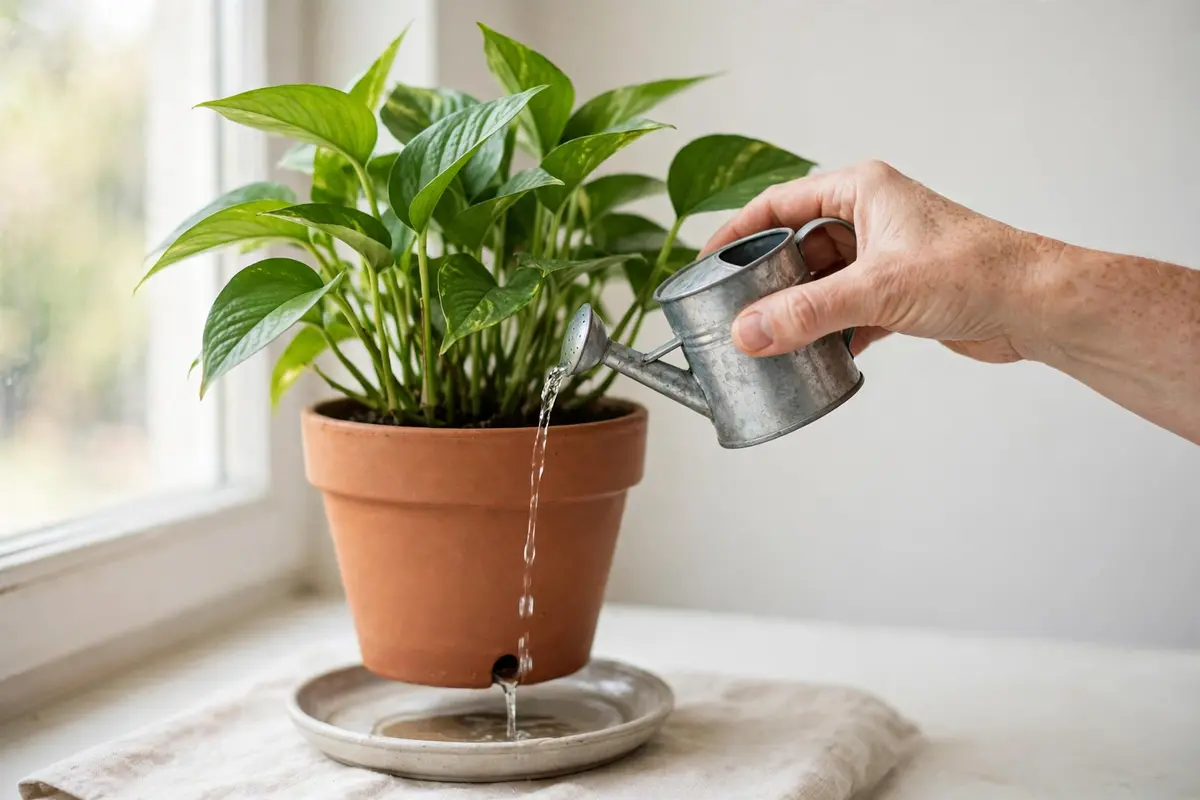
- Water until it drains. Keep going until water runs out of the drainage holes at the bottom of the pot.
- Let it drain fully, then empty the saucer. Tip away standing water within 30 minutes so the roots never sit in it.
Thorough, less-frequent watering beats little sips. Small sips wet only the top of the pot and leave the lower roots dry, while a deep soak reaches the whole root system. Watering deeply also flushes out excess salts left behind by fertilizer.
Top Watering vs Bottom Watering
Top watering is the default method for most houseplants. You pour from above until water drains out the bottom, which flushes mineral and salt buildup from the soil. It suits the large majority of foliage plants.
Bottom watering works better in a few cases. Plants with hairy leaves, plants in soilless mixes, and soil that has dried out and shrunk from the pot all benefit from soaking up water from below. Stand the pot in a tray of water for 15-30 minutes, then lift it out and let it drain.
One caution applies to bottom watering: salts are not flushed out when water only moves upward, so water from the top occasionally to wash them through.
How Often Should You Water Houseplants?
There is no reliable schedule for every species and home. Watering frequency depends on the plant type, light, temperature, humidity, pot size and material, soil mix, and season. A plant in a warm, bright spot dries out far faster than the same plant in a cool, low-light corner.
As a rough guide, many houseplants need water every few days in hot, bright summer weather and only every few weeks in winter. But these are starting points, not rules. Your finger test overrules any calendar, and checking plants at least once a week keeps you ahead of problems.
Different plants want different treatment. Succulents and cacti should dry out almost completely between waterings, while ferns and begonias prefer steadier moisture. Some plants, like the ZZ plant, actually prefer their soil to dry out fully before the next drink.
Pot type matters as well. Water evaporates through the sides of a porous clay pot, so plants in terracotta dry faster than plants in glazed or plastic pots. A large plant squeezed into a small pot also needs water more often than a small plant in a roomy one.
Overwatering vs Underwatering: How to Tell
The tricky part is that overwatering and underwatering look similar above the soil. Both can cause wilting and yellow leaves, so the soil and roots tell the real story. Use this comparison before you act.
| Clue | More like overwatering | More like underwatering |
|---|---|---|
| Soil | Stays wet for days, may smell sour | Very dry, pulling away from the pot edges |
| Leaves | Yellow, soft or limp, dropping despite wet soil | Crispy edges, curling, dry before falling |
| Roots | Brown, mushy, or foul-smelling | Dry and brittle in severe cases |
| Pot weight | Unusually heavy long after watering | Much lighter than after watering |
Overwatering is about frequency, not the amount in one watering. A deep soak is fine when the soil needed it; the damage comes from watering again before the soil has dried. Remember that distinction and most watering problems disappear.
How to Fix an Overwatered Plant
Stop watering first and let the soil dry to the right level for that plant. Make sure excess water can escape and that the inner pot is not sitting in a full saucer. Most mildly overwatered plants recover once their roots can breathe again.
If the soil stays soggy, smells bad, or the plant keeps declining, check the roots. Healthy roots are firm and pale, while rotted roots are brown and mushy. Trim away the rotted parts and repot into fresh, free-draining mix if the damage is clear.
Fungus gnats are another warning sign. These tiny flies thrive in constantly damp soil, so their arrival often means you are watering too often. Letting the top of the soil dry between waterings usually breaks their cycle.
Water Less in Winter
Most houseplants grow slowly in winter, with less light, and need much less water. Growth is most active in spring and summer, when plants use more water, nutrients, and sunlight. Autumn and winter call for restraint.
Central heating can dry the air without drying the soil. A plant in a heated room may look thirsty while its compost is still moist, so check before watering rather than guessing. Expect to water less often from autumn through early spring.
What Kind of Water Should You Use?
Tap water is fine for most houseplants. Let it sit for 24 hours before use, which allows chlorine to dissipate and brings it to room temperature. Avoid softened water, which can damage some plants.
A few plants are fussier about water quality. Municipal water may carry fluoride that harms sensitive plants such as orchids and peace lilies, so rainwater or filtered water is safer for those. Hard water can also leave mineral buildup on the soil surface over time.
If buildup appears, flush the soil with low-mineral water every 4-6 months. Water thoroughly until it runs freely from the drainage holes, which washes excess salts out. Repot if the soil surface stays crusty despite flushing.
A few plants break the usual rules entirely. Lucky bamboo, for example, is often grown in water itself rather than soil. For the rest of your collection, the check-soil, water-deeply, drain-fully routine covers nearly everything.
Common Watering Mistakes
Most watering mistakes come from guessing instead of checking. Once you know how to water houseplants by the soil rather than the calendar, these errors mostly disappear.
- Watering on a fixed day. A schedule that fits summer will overwater in winter. Let the soil decide, not the calendar.
- Little sips instead of a soak. Shallow watering leaves lower roots dry and trains roots to stay near the surface.
- A pot with no drainage hole. A plant in a pot with poor or no drainage is doomed sooner or later. Keep it in a nursery pot inside the decorative one and tip out excess water.
- Stones in the bottom of the pot. They do not improve drainage — they take up valuable root space. Use a free-draining mix instead.
- Misting instead of watering. Misting raises humidity briefly but does not wet the root zone. It is a supplement, never a substitute.
- Letting the pot sit in a saucer of water. Standing water blocks oxygen from roots, and roots without oxygen suffocate and rot.
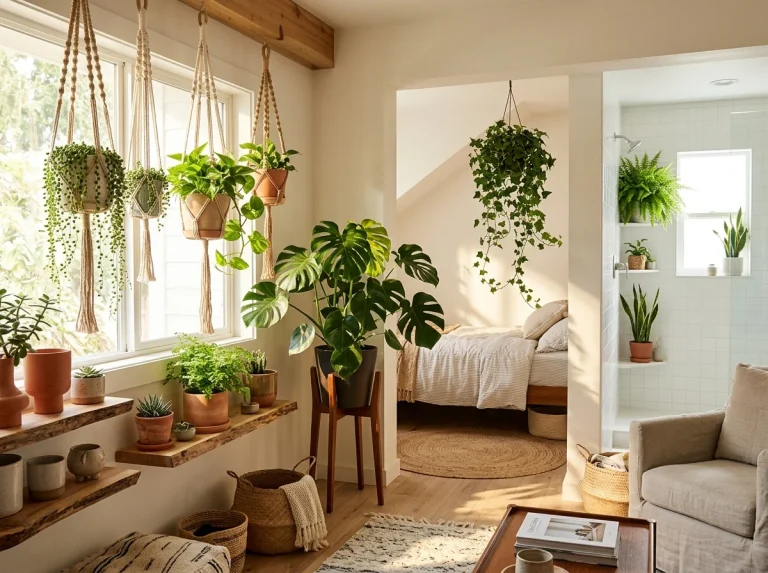
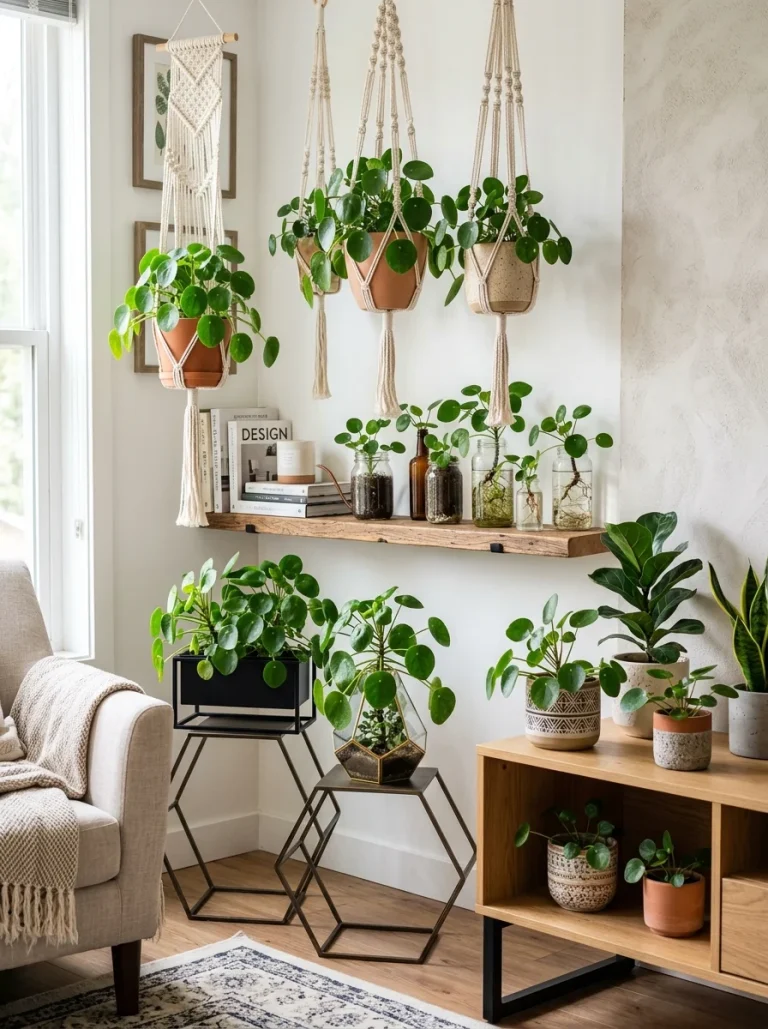
Hanging plants deserve a special note. Pots hung high in warm air dry out faster than pots on a sill, so check them more often. Trailing plants like the spider plant are classic hanging choices, and our hanging plants guide covers which varieties suit that spot.
The Short Version
Learning how to water houseplants comes down to one habit: check the soil, water deeply only when it is dry, and never let the pot sit in water. That habit prevents the overwatering that kills more houseplants than anything else. Adjust for the plant type, the pot, and the season, and your plants will tell you the rest.