Hanging Plants for Small Spaces, plus styling ideas and tips
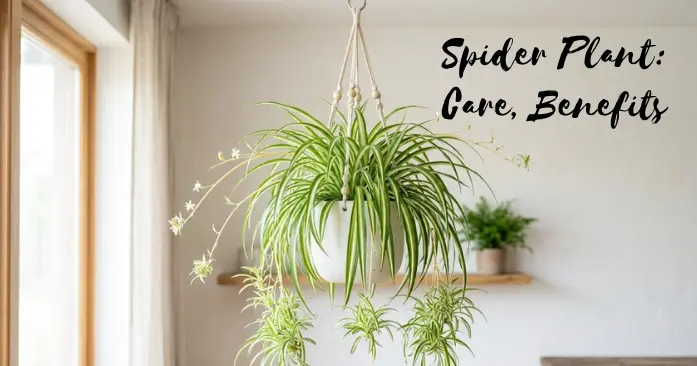
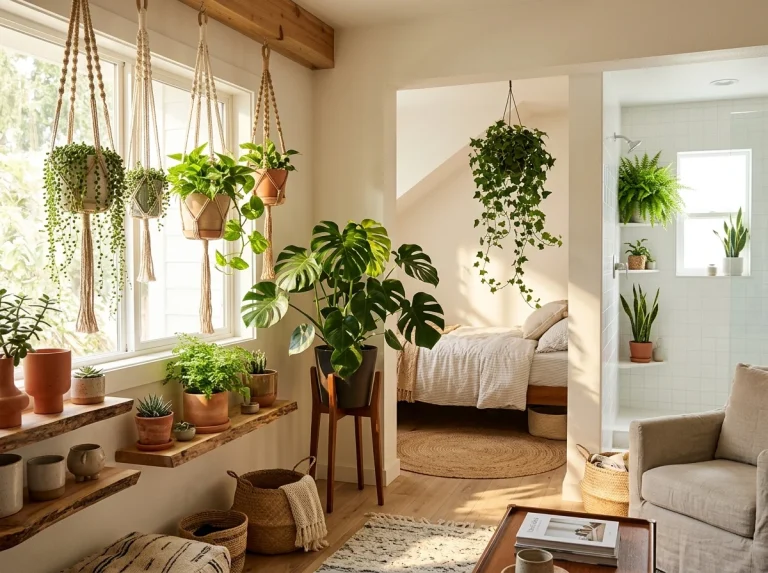
Hanging plants for small spaces help you add greenery without using valuable floor space or crowded shelves. These indoor plants grow upward, trail downward, or spread across walls and racks, making small apartments, bedrooms, kitchens, and home offices feel fresher and calmer. Hanging plants also improve indoor atmosphere, soften empty corners, and create visual height in compact rooms. Some hanging plants need bright indirect light, while others grow well in semi-shade or low-light apartments. With the right hanging baskets, ceiling hooks, wall racks, or macramé holders, even a tiny room can hold several plants comfortably.
There are 4 main advantages of hanging plants small indoor spaces benefit from:
- Saving floor and tabletop space
- Improving room appearance with natural greenery
- Creating a relaxing atmosphere for work or rest
- Adding plants to apartments with limited sunlight or storage
This guide covers 10 easy-to-care-for hanging plants, care tips, styling ideas, hanging methods, and practical ways to buy hanging plants online.
Hanging plants: the perfect mood enhancer
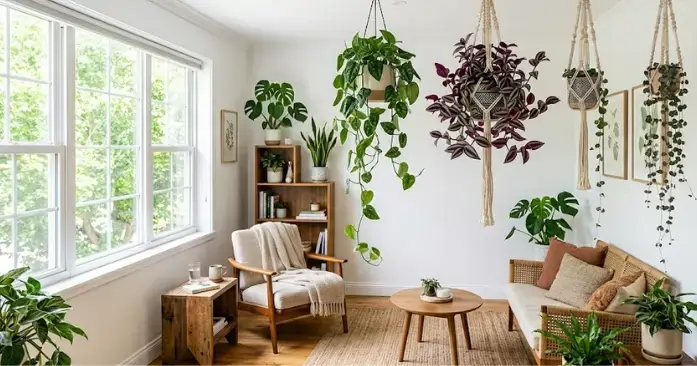
Hanging plants create a softer and greener indoor environment. Trailing stems, colorful leaves, and elevated planters add movement and texture to small rooms. Hanging plants also help small apartments feel less crowded because the greenery stays above eye level instead of taking over shelves or furniture.
Many people use hanging low maintenance plants in:
- Studio apartments
- Small bedrooms
- Home offices
- Kitchens
- Bathrooms
- Balcony corners
Hanging plants small spaces benefit from often include plants with compact roots, trailing vines, or small leaves. These plants fit easily into small pots and narrow hanging baskets.
10 easy-to-care-for hanging plants
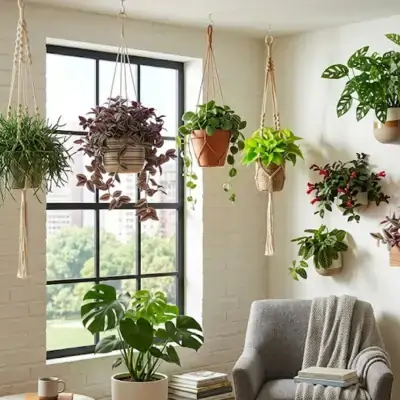
Scindapsus
/ 100
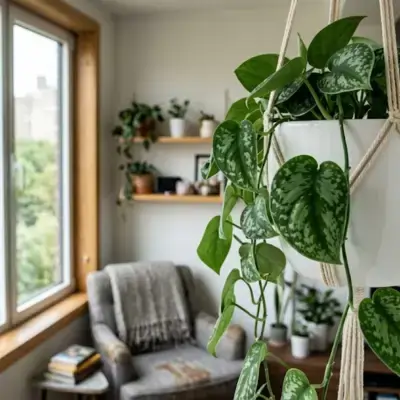
Scindapsus is one of the best hanging plants for indoors because the plant tolerates medium light and irregular watering. The heart-shaped leaves trail naturally from baskets and shelves.
Scindapsus grows best in:
- Semi-shade
- Bright indirect light
- Slightly dry soil between watering
Scindapsus is suitable for hanging plants for small pots because the root system stays manageable indoors.
Dragon ivy
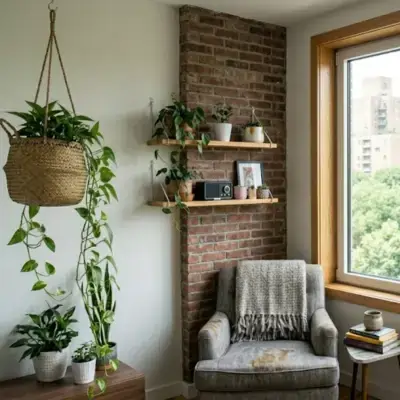
Dragon ivy, often called Epipremnum Aureum, grows quickly and creates long green vines. Dragon ivy works well for renters who want hanging plants in an apartment without complex care routines.
Dragon ivy prefers:
- Light shade
- Slightly moist soil
- Warm indoor temperatures between 18°C and 27°C (64°F to 80°F)
Trim long vines regularly to maintain a compact shape in small apartments.
Tradescantia
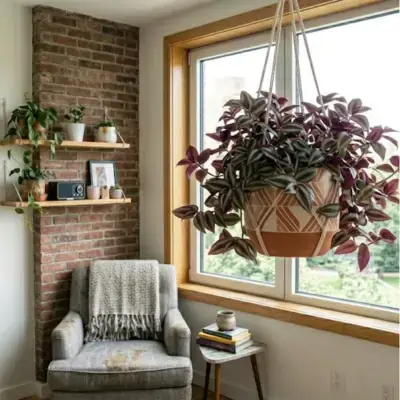
Tradescantia is a fast-growing hanging plant with purple, pink, and green foliage. The colorful leaves brighten neutral rooms and home offices.
Tradescantia grows best with:
- Bright indirect sunlight
- Weekly watering
- Good airflow
Tradescantia is one of the best hanging plants small leaf plant lovers choose for compact rooms.
Rhipsalis
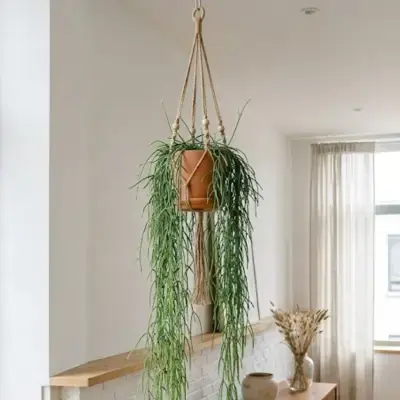
Rhipsalis is a trailing cactus with thin stems and a soft texture. Unlike desert cactus varieties, Rhipsalis tolerates moderate humidity and indoor conditions well.
Rhipsalis needs:
- Semi-shade
- Light watering
- Dry soil between watering sessions
Rhipsalis works well in hanging plants small indoor arrangements because the stems stay lightweight.
Aeschynanthus
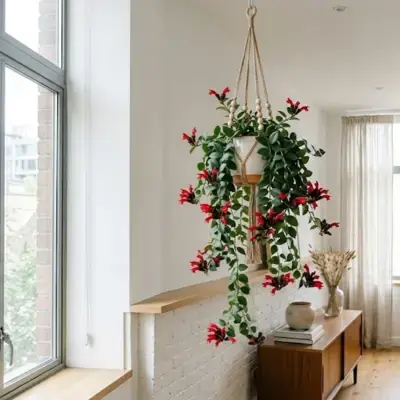
Aeschynanthus, often called lipstick plant, produces glossy leaves and red flowers during warmer months. The trailing stems look attractive in hanging baskets near windows.
Aeschynanthus prefers:
- Bright indirect light
- Slightly moist soil
- Indoor humidity around 40% to 60%
Avoid placing the plant in direct afternoon sunlight.
Ceropegia
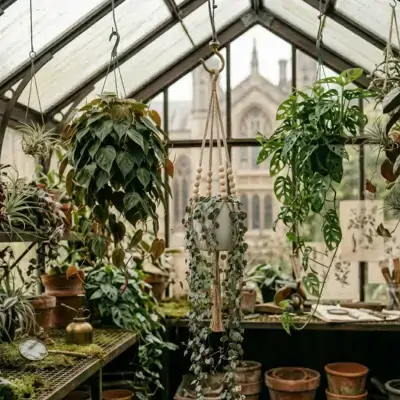
Ceropegia, or string of hearts, has small heart-shaped leaves attached to delicate trailing vines. The plant uses very little space, making it ideal for hanging plants small apartments need.
Ceropegia requires:
- Bright indirect light
- Minimal watering
- Well-draining soil
Water once every 7 to 10 days during warm months.
Saw cactus
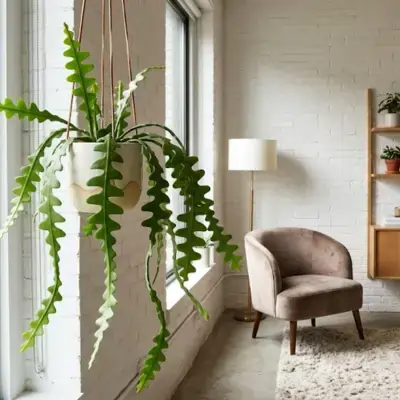
Saw cactus has zigzag-shaped leaves that create a striking indoor display. The unusual leaf pattern adds texture without making the room feel crowded.
Saw cactus grows best in:
- Semi-shade
- Dry-to-lightly-moist soil
- Temperatures above 16°C (60°F)
Saw cactus is suitable for hanging plants for small spaces because the stems stay narrow and vertical.
Peperomia rotundifolia
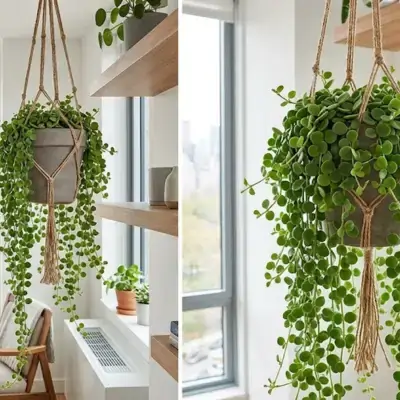
Peperomia rotundifolia has tiny round leaves that spill softly over hanging pots. The compact growth pattern makes the plant useful for shelves, kitchen corners, and narrow windows.
Peperomia rotundifolia prefers:
- Bright indirect light
- Slightly moist soil
- Small hanging pots
Avoid overwatering because wet soil can damage the roots.
Monstera monkey leaf
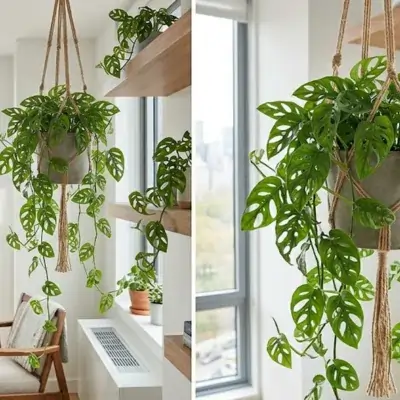
Monstera monkey leaf has split leaves that create a tropical appearance indoors. The plant climbs and trails at the same time, making it flexible for wall hooks or hanging racks.
Monstera monkey leaf needs:
- Medium to bright indirect light
- Consistent watering
- Support for climbing stems
This plant is one of the best hanging plants for indoors if you want larger decorative leaves in a compact room.
Medinilla
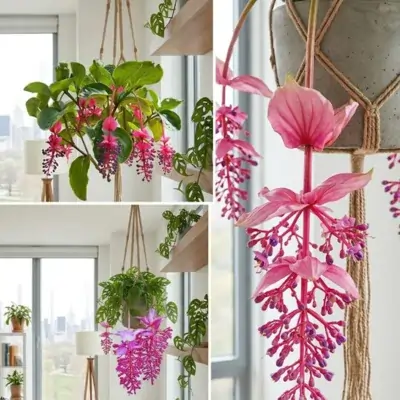
Medinilla produces long pink flowers that hang downward from thick stems. The plant adds color to apartments with neutral furniture and minimal decoration.
Medinilla prefers:
- Bright filtered light
- Moderate humidity
- Slightly dry soil between watering
Medinilla works best near bright windows without harsh sunlight.
Care tips for hanging plants
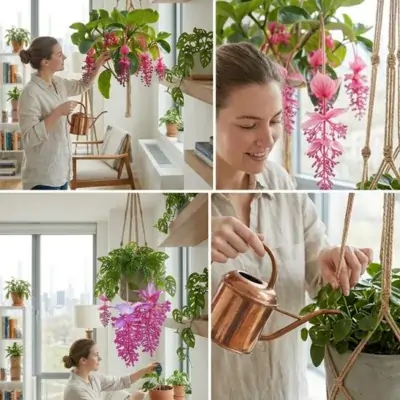
To care for hanging plants properly, focus on 5 main factors:
- Light exposure
- Watering frequency
- Pot drainage
- Air circulation
- Plant height placement
Most hanging low maintenance plants grow well in bright indirect sunlight. Direct afternoon sunlight can burn leaves, especially in small apartments with hot windows.
Water hanging plants after checking the soil moisture with your finger. Hanging baskets dry faster because air moves around the pot continuously.
Use pots with drainage holes to reduce root rot risk. Add clay pebbles or hydro grains at the bottom of the planter to improve drainage.
Hang plants at reachable height. Plants placed too close to the ceiling receive less light and become difficult to water.
Feed indoor hanging plants every 2 to 4 weeks during spring and summer growth periods.
How to style and combine hanging plants
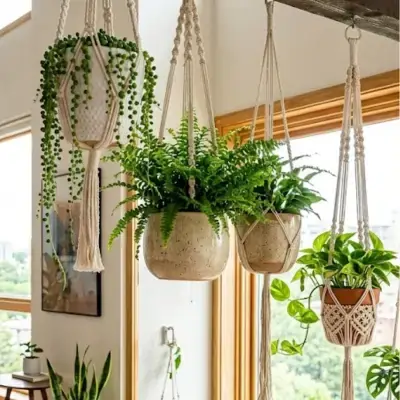
To style hanging plants successfully, combine different leaf shapes, vine lengths, and planter textures. Small apartments look more balanced when plants vary in height and color.
There are 4 effective ways to combine hanging plants:
- Pair trailing vines with upright plants
- Mix small leaf and large leaf varieties
- Combine ceramic and woven planters
- Use layered heights near windows or shelves
Neutral-colored pots create a calm appearance. Bright planters create stronger contrast in minimalist rooms.
Hanging plants also work well in:
- Bathroom corners
- Kitchen racks
- Home office walls
- Window frames
- Bookshelves
Styling hanging plants: 5 ideas
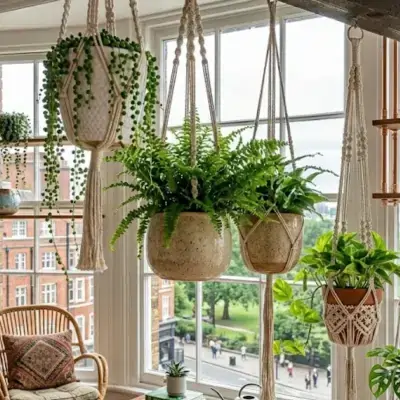
Hanging plant idea 1: green oasis of calm
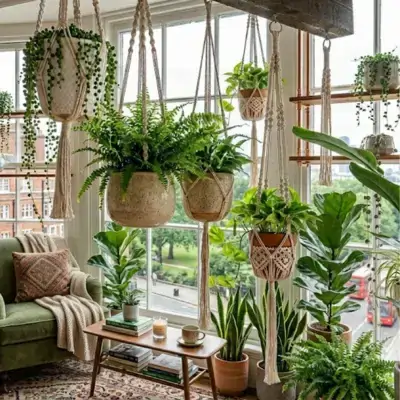
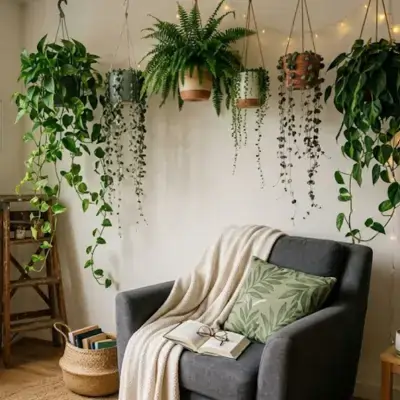
Combine 3 to 5 green hanging plants with standing floor plants to create a quiet seating area. Use plants with different leaf sizes to make the arrangement feel natural.
Good combinations include:
- Scindapsus
- Rhipsalis
- Monstera monkey leaf
Hanging plant idea 2: colourful and surprising
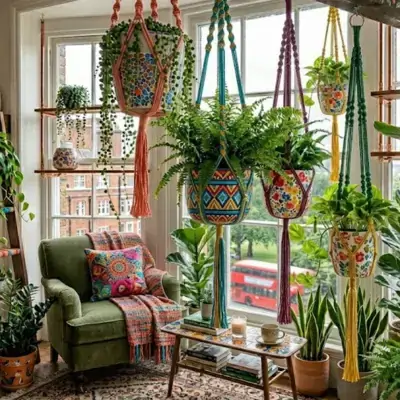
Use colorful hanging plants with patterned pots or macramé hangers. Tradescantia and Medinilla add strong visual contrast to white walls or neutral furniture.
Place colorful hanging plants near:
- Reading corners
- Dining spaces
- Apartment entrances
Hanging plant idea 3: green background for video calls
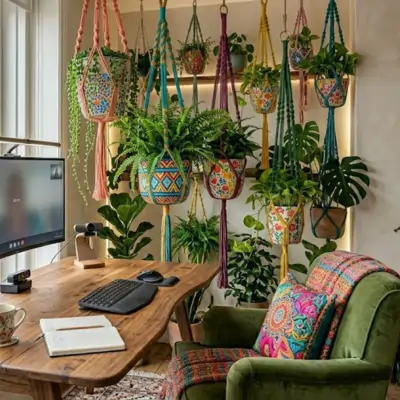
Create a natural background behind your desk with hanging plants placed at different heights. Small apartments benefit from vertical greenery because wall space replaces floor decoration.
Good plants for video call backgrounds include:
- Scindapsus
- Dragon ivy
- Rhipsalis
Hanging plant idea 4: 4 in a row
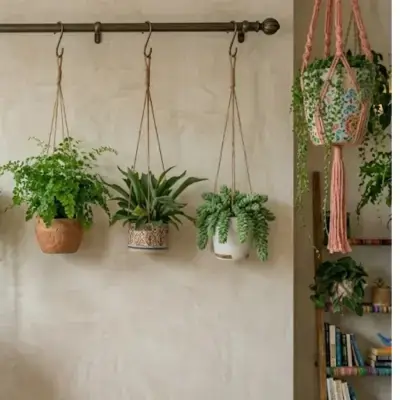
Hang four small planters together on one wall rack or curtain rod. Mixing different textures makes the arrangement look fuller without overcrowding the room.
Use combinations such as:
- Peperomia rotundifolia
- Dragon ivy
- Tradescantia
- Ceropegia
Hanging plant idea 5: kitchen hanging rack
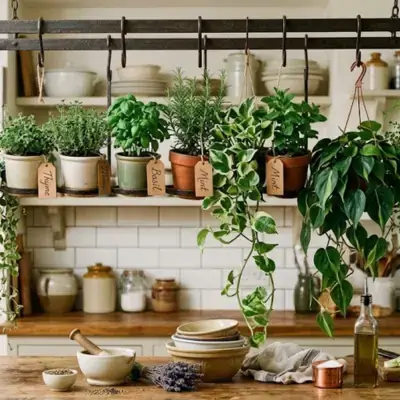
Install a hanging kitchen rack above a counter or dining area. Combine herbs with trailing indoor plants to create a greener kitchen layout.
Good kitchen hanging plants include:
- Peperomia rotundifolia
- Dragon ivy
- Small herbs like basil or mint
How to hang plants
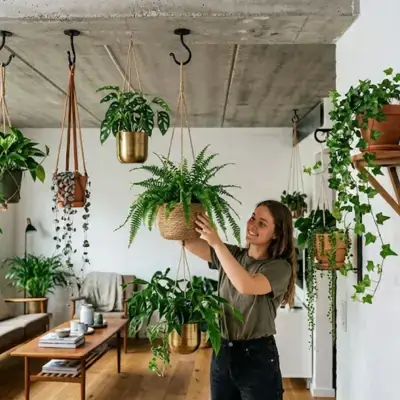
To hang plants safely indoors, use stable anchors and lightweight pots. Small apartments benefit from vertical arrangements that keep walking areas clear.
There are 5 common ways to hang plants indoors:
- Ceiling hooks
- Wall brackets
- Curtain rods
- Hanging racks
- Shelf-mounted hooks
Use lightweight plastic or resin pots if the ceiling support is limited.
For apartments, hanging plants near windows usually improves growth because indirect sunlight stays consistent during the day.
Hanging plants without drilling
You can have hanging plants in an apartment without drilling holes into ceilings or walls.
There are 6 practical no-drill methods:
- Hanging plants from curtain rods
- Using adhesive ceiling hooks
- Placing plants on tall shelves
- Using ladder shelves
- Hanging plants from clothing racks
- Using tension rods near windows
Adhesive hooks work best with small hanging plants under 2 kg (4.4 lb). Heavy ceramic pots require stronger support systems.
Hang in there! More inspiration for high-up plants
High-up plants create depth in compact homes. Combining climbing and hanging plants can make a room feel taller and greener without adding clutter.
Good areas for elevated greenery include:
- Above kitchen cabinets
- Over desks
- Near bookshelves
- Around windows
- Along hallway walls
Plants with trailing stems soften hard corners and empty vertical spaces.
How to Buy Hanging Plants Online
To buy hanging plants online successfully, check 5 important details before ordering:
- Plant size
- Pot diameter
- Light requirements
- Pet safety information
- Shipping protection
Read customer reviews carefully to confirm plant condition after delivery. Small indoor hanging plants usually travel better than large tropical plants.
Choose hanging plants based on your apartment lighting:
- Low-light rooms: Scindapsus, dragon ivy, Rhipsalis
- Bright rooms: Tradescantia, Medinilla, Aeschynanthus
- Small pots: Ceropegia, Peperomia rotundifolia
Online plant stores often provide hanging baskets, macramé holders, and wall hooks together with the plant purchase.
Conclusion
Hanging plants for small spaces help apartments and compact homes feel greener without sacrificing storage or walking space. Plants such as Scindapsus, Tradescantia, Rhipsalis, and Ceropegia grow well indoors and require limited maintenance. Hanging plants small indoor rooms benefit from can improve atmosphere, soften empty walls, and create vertical decoration in bedrooms, kitchens, bathrooms, and home offices.
Using ceiling hooks, curtain rods, wall racks, or no-drill methods makes it easy to have hanging plants in an apartment. With proper light, watering, and placement, hanging plants can stay healthy and attractive throughout the year.