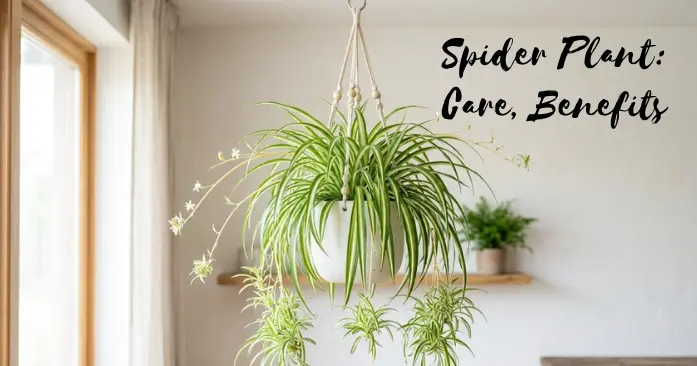
Spider Plant: Care, Benefits, Propagation, and Common Problems
A spider plant is a fast-growing indoor plant known for its cascading variegated foliage, easy care air qualities, and spiderette propagation success. It works by producing long arching leaves and small plant babies (spiderettes) that grow from runners. This oxygenating indoor champion offers air purifying marvel benefits, low maintenance appeal, and adaptable resilient nature, making it ideal for homes, offices, and decorative plant display. Its main parts include roots, arching leaves, runners, and plantlets.
What Is a Spider Plant?
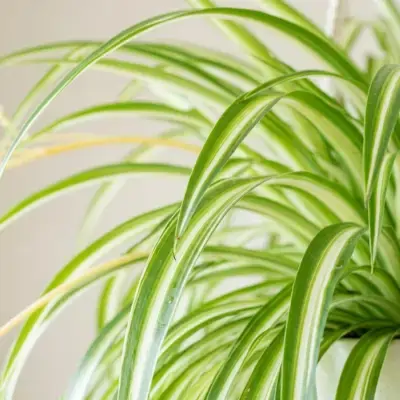
A spider plant is a non-toxic, pet friendly cultivar of Chlorophytum comosum that produces arching leaves and baby plantlets.
It is a hanging basket favorite because of its distinctive arching leaves and fast growth. The plant thrives in bright indirect sunlight and adapts to different indoor conditions.
7 Key Benefits of Spider Plant
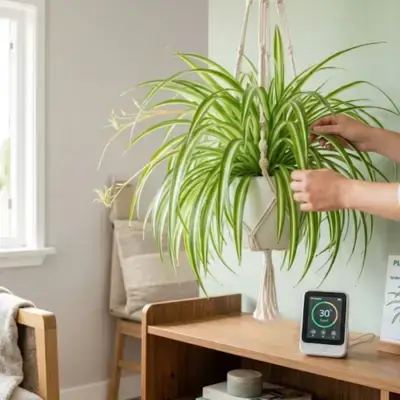
There are 7 main benefits of a spider plant:
- Air purification – Removes indoor toxins and acts as a natural air cleanser
- Low maintenance care – Requires minimal watering and attention
- Pet safe – Safe for cats and dogs due to non toxic nature
- Fast propagation – Produces plant babies easily through spiderettes
- Decorative appeal – Enhances interiors with striking foliage contrast
- Adaptability – Grows in fluorescent lighting and varied humidity levels
- Root bound happiness – Thrives even when slightly pot bound
These chlorophytum comosum benefits make it one of the best indoor plants.
Main Uses of Spider Plant
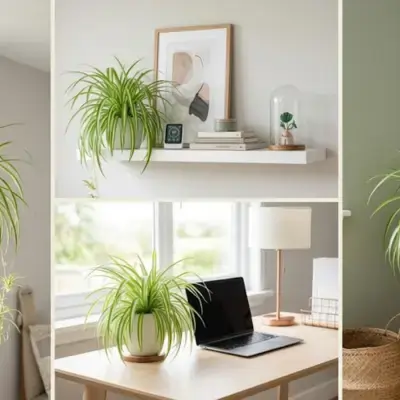
Spider plants are used in 4 main ways:
- Indoor decoration – Placed in hanging baskets or shelves
- Air improvement – Works as an air purifying indoor plant
- Beginner gardening – Ideal for new plant owners
- Propagation projects – Used to grow multiple plants from spiderettes
Main Parts of a Spider Plant
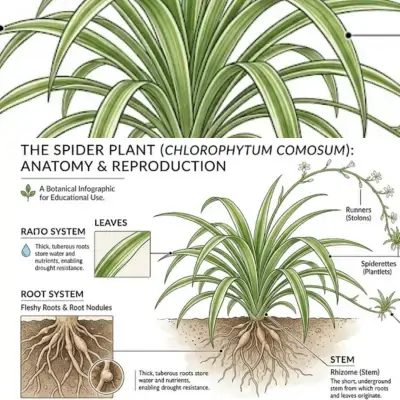
A spider plant has 4 main components:
- Roots – Thick, tuberous roots that store water
- Leaves – Long, narrow, variegated leaves with green and white stripes
- Runners (Stolons) – Long stems that grow outward
- Plantlets (Spiderettes) – Small baby plants that form on runners
How to Care for a Spider Plant
Light Requirements
Spider plants grow best in bright indirect sunlight.
Direct sun burns leaves, while low light slows growth. North facing or filtered light works well.
Watering Schedule
Water thoroughly, then allow the soil to dry partially before the next watering.
- Summer: every 5–7 days
- Winter: every 10–14 days
Overwatering leads to root rot.
Soil and Potting
Use well draining potting soil with a light soil mixture.
A mix of peat, perlite, and compost supports healthy roots.
Temperature and Humidity
Spider plants prefer 18–27°C (64–80°F) and moderate humidity levels.
They tolerate dry indoor air but grow faster with slight humidity.
Fertilizing
Fertilize sparingly once every 4–6 weeks during the growing season.
Too much fertilizer causes brown tips.
How to Propagate Spider Plant
Propagate spider plant by planting spiderettes directly in soil or water.
Follow these steps:
- Select healthy plantlets – Choose mature spiderettes
- Cut from runner – Use clean scissors
- Place in water or soil – Root in 7–14 days
- Transfer to pot – Once roots reach 2–3 inches (5–7 cm)
This method is propagation beginner friendly and has a high success rate.
Common Problems and Solutions
Brown Leaf Tips
Brown tips occur due to fluoride in water, low humidity, or excess fertilizer.
Use filtered water and reduce feeding.
Root Rot
Root rot happens due to overwatering and poor drainage.
Improve soil drainage and reduce watering frequency.
Pests (Spider Mites)
Spider mites appear as tiny spots and webbing under leaves.
Clean leaves and apply neem oil.
Slow Growth
Slow growth happens due to low light or nutrient deficiency.
Move the plant to bright indirect light and fertilize lightly.
When to Repot a Spider Plant
Repot spider plant every 1–2 years or when roots outgrow the pot.
Spring is the best time for repotting. Choose a pot 1–2 inches (2.5–5 cm) larger.
Conclusion
A spider plant is an oxygenating indoor champion with cascading variegated foliage, air purifying marvel qualities, and low maintenance appeal. It grows through arching leaves and spiderette propagation success, making it ideal for decorative plant display, indoor air improvement, and beginner gardening. With proper bright indirect sunlight, well draining potting, and controlled watering, this adaptable resilient nature plant stays healthy and continues producing plant babies for years.