Voles vs Moles: How to Tell Which One Is Tearing Up Your Lawn
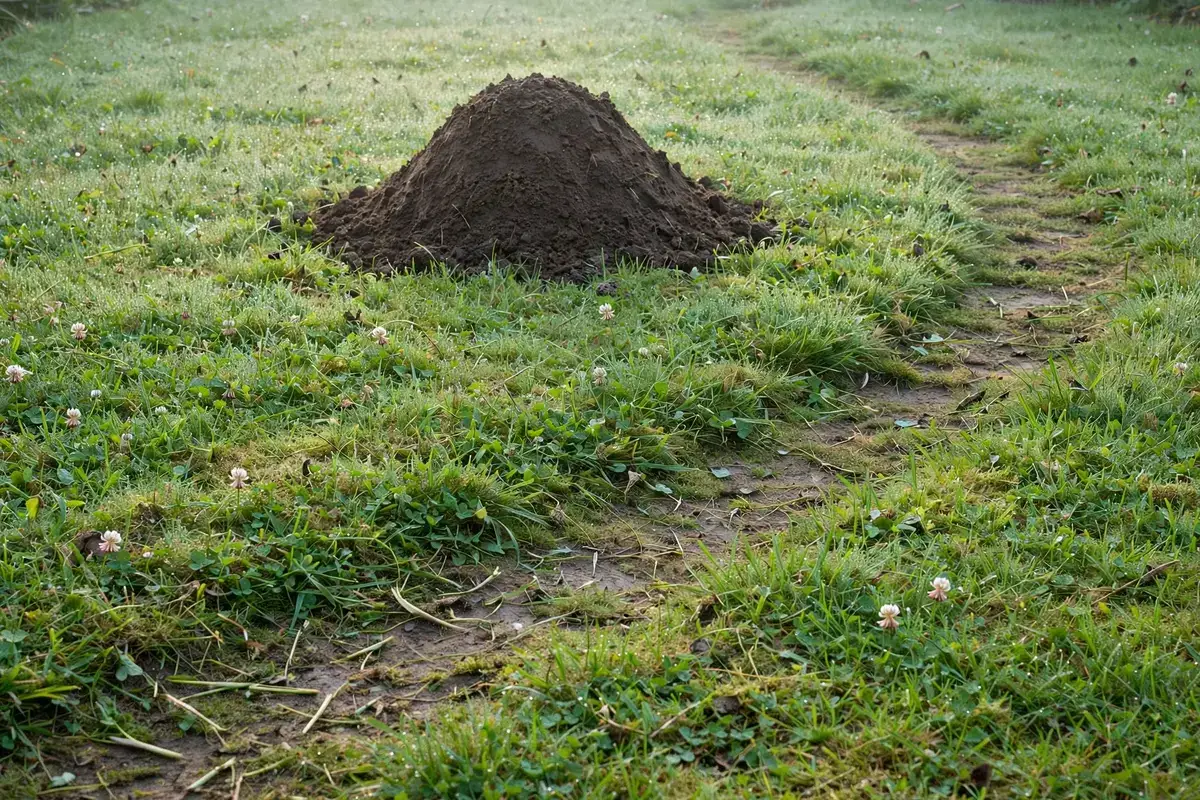
If you see cone-shaped mounds of soil and raised ridges across the lawn, it is almost certainly a mole. If you see flat, worn paths through the grass, chewed plants, and no mounds at all, it is voles.
Telling them apart matters because they eat completely different things and need completely different fixes: moles hunt earthworms and grubs underground, while voles are rodents that eat grass, roots, bulbs, and bark.
Treat the wrong animal and nothing changes.
In short: moles are insect-eaters, 6 to 8 inches long with paddle-shaped digging feet, and their signature is the volcano-shaped mound and the raised tunnel ridge. Their damage is mostly cosmetic — disturbed roots and an uneven lawn — because they do not eat plants.
Voles are mouse-like rodents, about 3.5 to 5 inches in body length, that run along shallow surface runways about 2 inches wide; their turf damage is often cosmetic and repairs itself, but their bark-gnawing can seriously harm trees and shrubs.
Voles stay active all winter under the snow, so their runway networks often appear at spring snowmelt. And voles sometimes move into empty mole tunnels, so you can occasionally have both signs at once.
For voles, the fix starts with removing cover and trapping the runways; for moles, it means trapping the active tunnel — grub killer alone will not evict a mole, because earthworms are its main food.
Voles vs Moles at a Glance
| Feature | Mole | Vole |
|---|---|---|
| Animal type | Insect-eater (not a rodent) | Rodent (a field mouse relative) |
| Size | 6 to 8 inches long | 3.5 to 5 inches body (5 to 7 inches with tail) |
| Feet | Large, paddle-shaped digging feet | Small, mouse-like feet |
| Diet | Earthworms, grubs, and soil insects | Grass, stems, roots, bulbs, and bark |
| Tunnels | Deep and surface tunnels | Shallow surface runways, about 2 inches wide |
| Signature sign | Volcano-shaped mounds and raised ridges | Worn paths, small open holes, chewed plants |
| Main damage | Disturbed roots, uneven lawn | Girdled bark, eaten roots and bulbs |
Read the Signs: Mounds, Ridges, and Runways
Start with the soil, not the animal — you will rarely see either one. A mole pushes excavated soil upward as it digs, leaving cone-shaped mounds and raised ridges you can feel underfoot.
The grass above a mole tunnel often feels spongy, and the ridge may run in a line across the lawn. Moles can dig fast, adding many feet of new tunnel in a single day, which is why a lawn can look freshly churned overnight.
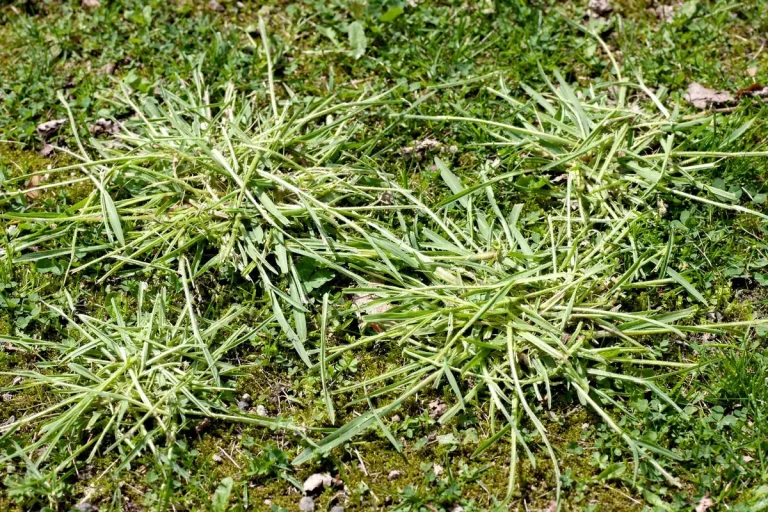
Voles leave a flatter signature. Look for worn, open pathways clipped through the grass, about 2 inches wide, often near dense ground cover, mulch beds, or fence lines.
You may also find small, golf-ball-sized exit holes and plants with gnawed stems or roots. Unlike moles, voles build no mounds at all.
Their runways are easiest to spot in spring, when melting snow reveals the network they used all winter.
If you see both mounds and runways, do not assume one animal made both. Voles readily reuse an empty mole tunnel as a shortcut, so a lawn can host moles and voles at the same time. In that case, treat each problem separately using the steps below.
Damage Compared: What Each One Actually Harms
Mole damage looks dramatic but is usually shallow. Tunneling disturbs roots, exposes them to air, and heaves the turf, which makes mowing difficult and the lawn uneven.
Moles do not eat plant roots, so a plant that wilts over a mole tunnel is usually suffering from root disturbance, not from being eaten. If your lawn feels bumpy after the tunnels are gone, our guide to lawn leveling walks through flattening it again.
Vole damage splits two ways. Damage to turf is largely cosmetic: the clipped runways look bad, but the grass usually grows back on its own.
Damage to trees, shrubs, and bulbs is the serious kind. Voles gnaw bark around the base of young trees — a full ring of gnawed bark (girdling) can kill the tree — and they eat roots and bulbs underground, so a healthy-looking plant can suddenly topple with its roots chewed off.
If voles ate the roots of plants you need to replace, check grass seed germination times before reseeding bare patches, so the new seed goes down at the right soil temperature.
What to Do About Voles
Habitat work comes first, because voles need cover and dislike feeding in the open. Clear dense ground cover, mulch piles, leaf litter, and debris away from tree trunks and lawn edges, and keep the grass mowed.
This alone shrinks vole territory and makes the lawn less inviting.
For active runways, snap traps set perpendicular to a fresh runway, baited with peanut butter or oatmeal, are the standard approach — place them where the runway is clearly in use, and check them daily.
Protect young trees with hardware-cloth guards around the base, buried slightly into the soil, so voles cannot reach the bark over winter.
Skip the repellent shortcuts: home remedies have inconsistent results, while cover removal plus trapping is what actually reduces numbers.
What to Do About Moles
For moles, trapping the active tunnel is the reliable method. Find an active tunnel by pressing down a short section of raised ridge with your foot; if it is pushed back up within a day, the tunnel is in use, and that is where a scissor-style or harpoon-style trap belongs.
Set it exactly as the trap maker directs, and check it daily.
Two common mistakes waste time. First, grub killer alone rarely solves a mole problem: grubs are only part of a mole’s diet, and earthworms alone can keep a mole fed, so a lawn with no grubs can still host a mole.
Second, sonic spikes and castor-oil granules have inconsistent results — they may shift activity for a while, but they do not reliably remove the animal. Before trapping or relocating any wildlife, check your local rules, since they vary by area.
Can You Have Both at Once?
Yes. A mole tunnel system can stand empty after its owner moves on, and voles are happy to move into it instead of digging their own.
If you see fresh mounds and worn runways together, assume both animals are present: trap the active mole tunnel, and separately remove cover and trap the vole runways. Fixing only one half leaves the other half’s damage in place.
Frequently Asked Questions
Q: Are voles dangerous to people or pets?
A: No. Voles are shy and avoid people and pets; they do not attack. As with any wild rodent, wash your hands after handling traps or clearing debris where they have been active.
Q: Do moles eat plant roots?
A: No. Moles hunt earthworms, grubs, and other soil animals. When plants suffer over a mole tunnel, the cause is root disturbance from digging, not eating.
Q: Will moles or voles leave on their own?
A: Sometimes a mole moves on when food gets scarce, but its tunnel system often gets reused — by another mole or by voles. Voles rarely leave a lawn that still offers dense cover and food, which is why cover removal matters more than waiting.
Q: Do coffee grounds or repellents get rid of moles?
A: There is no reliable evidence that coffee grounds, chewing gum, or sonic spikes remove moles. Trapping the active tunnel is the method that works; for voles, cover removal plus trapping is the combination that works.
Conclusion
Mounds and ridges mean mole; flat runways and chewed plants mean vole.
That one distinction decides the whole fix: trap the active tunnel for moles, remove cover and trap the runways for voles, and do not spend money on grub killer expecting it to evict a mole.
Identify the animal first, treat it second, and the lawn recovers far faster than it would from guessing.
Further reading: Clemson Extension explains how to tell moles and voles apart.