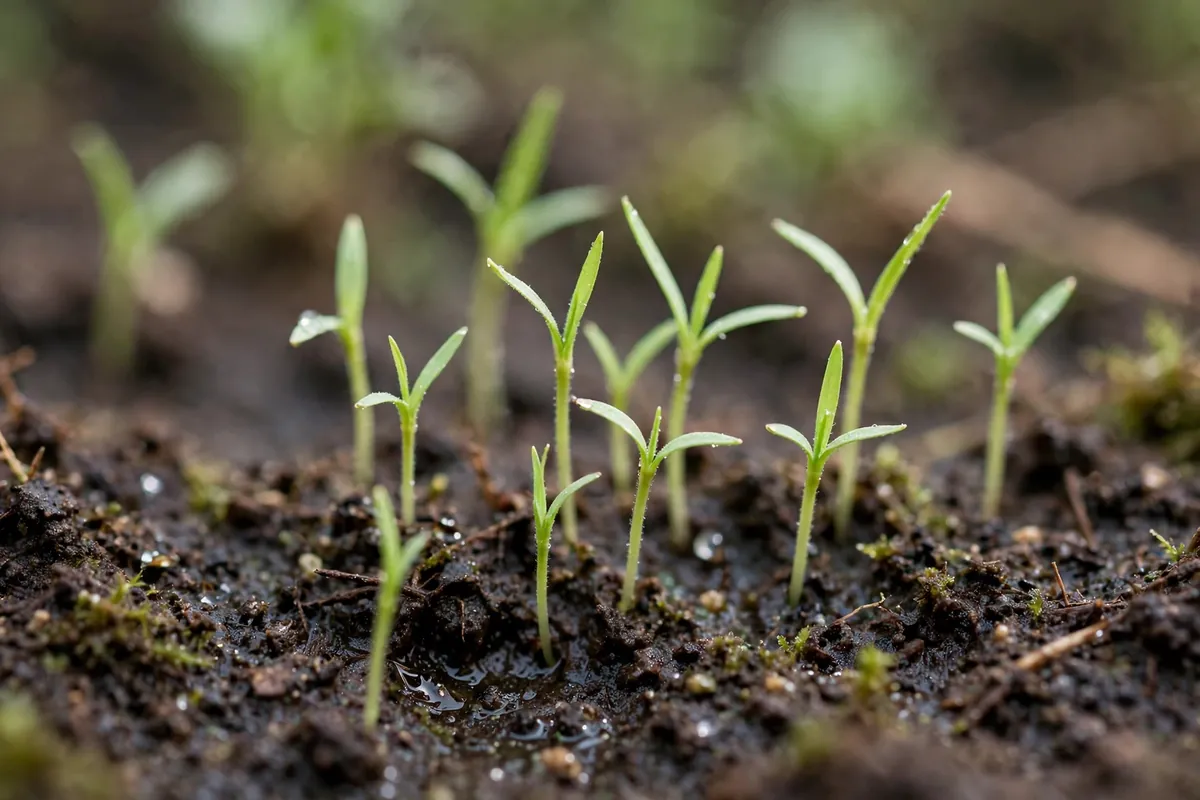
Grass Seed Germination Times: Chart by Grass Type
It’s day 12. The soil is bare. The bag said “germinates in 7–10 days” and you’re staring at dirt, doing the math on wasted seed and wondering if you should just start over.
Before you panic: those days-on-the-bag numbers assume ideal conditions, and your grass type’s “normal” might be far longer than you think. Kentucky bluegrass can legitimately take a full month. This chart tells you what’s normal for YOUR grass type — and the three things that make seed look dead when it isn’t.
The Germination Time Chart
| Grass type | Days to germinate | Soil temp needed | Notes |
|---|---|---|---|
| Perennial ryegrass | 5–10 | 50–65°F | The sprinter — first choice for quick cover |
| Annual ryegrass | 5–10 | 50–65°F | Fast but temporary; dies out within a year |
| Tall fescue | 7–12 | 60–70°F | Reliable workhorse of cool-season lawns |
| Fine / red fescue | 7–14 | 50–65°F | Shade-tolerant; slower than tall fescue |
| Kentucky bluegrass | 14–30 | 50–65°F | The patience tester — normal at 3+ weeks |
| Bermudagrass | 10–14 (up to 30 in cool soil) | 65–70°F+ | Needs real warmth; stalls below range |
| Zoysia | 14–21 | 70°F+ | Slowest common warm-season grass |
| Centipedegrass | 14–21 | 70°F+ | Low-maintenance southern lawns |
| Buffalograss | 14–30 | 65–75°F | Native prairie grass; erratic germination is normal |
Treat these ranges as normal-under-good-conditions, not guarantees. Soil temperature and moisture move every number — a cold snap can push any type toward the slow end of its range. If you’re after the fastest options specifically, see our fastest-growing grass seed picks.
For detailed seeding rates and timing, refer to Purdue Extension’s seeding guide.
Species choice matters as much as timing — read this Penn State turfgrass specialist’s seed advice before buying seed.
Soil Temperature Is the Real Clock
Days-to-germinate is really a function of soil temperature, not the calendar. Every grass type has a temperature window where its seed wakes up — and below that window, seed just sits there, dormant but alive.
- Cool-season grasses (ryegrass, fescue, bluegrass): 50–65°F soil. This is why fall seeding beats spring for cool-season lawns — soil is warm from summer, air is cooling, and weed competition is low.
- Warm-season grasses (Bermuda, zoysia, centipede, buffalo): 65–75°F+. Seed these in late spring/early summer when soil has genuinely warmed. Bermuda sown into 60°F soil can take the full 30 days — or just wait.
How to check: a cheap probe thermometer, pushed 2 inches into the soil, read in the morning. One inexpensive tool ends all the guessing. If your soil is below your grass type’s range, the seed isn’t dead — it’s waiting.
One more timing nuance: air temperature lies, soil temperature tells the truth. A 75°F April afternoon doesn’t mean 60°F soil — soil warms weeks behind the air in spring and stays warm weeks into fall. That’s the second reason fall wins for cool-season seeding: you sow into genuinely warm soil while the cooling air reduces stress on seedlings and weeds are winding down. For warm-season grasses, wait until late spring when morning soil readings hold steady in range for several days running — sowing into “almost warm enough” soil is how Bermuda seedings stall out and look like failures when they’re really just early.
“It’s Past the Chart and Nothing’s Growing” — Troubleshooting
Past the slow end of your range and still bare? Run through the five failure causes, in order of likelihood:
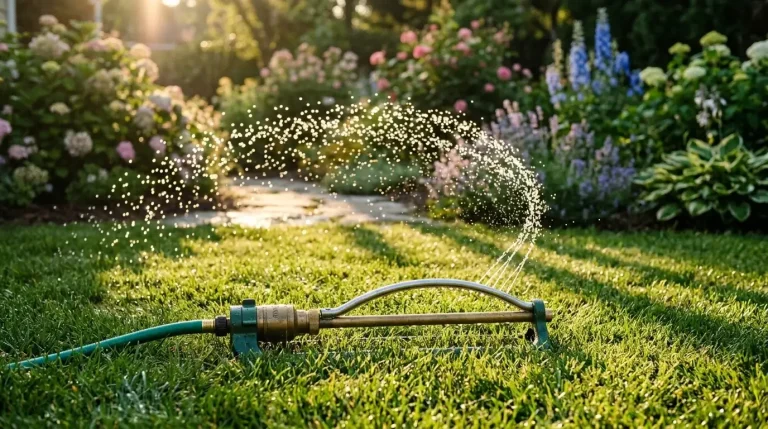
- It dried out (the #1 killer). Grass seed must stay consistently moist through germination — one dry afternoon on a hot day can kill the whole sowing. This is the cause more often than all the others combined. Keep the surface damp with light, frequent watering; see our guide to how often to water your lawn for the new-seed routine.
- Buried too deep. Seed covered by more than 1/4 inch of soil can’t push through. Seed should sit ON or just barely under the surface — a light raking-in, not a burial.
- Old or dead seed. Check the date on the seed tag. Germination rates drop every year past the test date; a three-year-old bag might give you 30% of what’s printed.
- Birds. If you skipped any covering, birds can clean out a seeding in a day. A light straw mulch (not hay — hay carries weed seed) discourages them and holds moisture.
- Pre-emergent herbicide still active. This one’s sneaky: pre-emergent applied for crabgrass blocks ALL seed germination — including your grass seed. If you put down pre-emergent in spring, fall overseeding is fine, but spring overseeding after a spring pre-emergent is doomed. See the crabgrass battle plan for the timing rules, and our overseeding guide for the repair process.
Germination vs Establishment — Don’t Stop Watering at the First Sprout
Here’s the mistake that kills more new lawns than any other: the first green fuzz appears, the homeowner declares victory, and the watering stops. First sprout is the most vulnerable stage, not the finish line.
- Keep the surface consistently moist until the grass is about 2 inches tall. Those baby roots are shallow and dry out fast.
- Then transition gradually to deeper, less frequent watering to train roots downward.
- First mow timing: wait until the new grass reaches about 3–3.5 inches, then mow high — never cut more than a third of the blade. For ryegrass that might be 3 weeks after seeding; for bluegrass, 6–8 weeks. Patience now pays off all season.
Pair It With the Calculator
Knowing how long is only half the job — you also need to know how much. Too little seed gives you a thin, patchy stand that weeds colonize; too much crowds seedlings into disease.
Use our grass seed calculator — enter your lawn size and grass type, and it gives you the exact pounds of seed for a new lawn or overseeding. How long (this chart) + how much (the calculator) = a seeding you only do once.
How long does grass seed take to germinate?
Depends on type: ryegrass 5–10 days, tall fescue 7–12, Kentucky bluegrass 14–30, Bermuda 10–14 (in warm soil), zoysia 14–21. Cold soil pushes every type toward the slow end.
What soil temperature does grass seed need to germinate?
Cool-season grasses: 50–65°F. Warm-season grasses: 65–75°F+. Below the range, seed sits dormant — which is why fall seeding beats spring for cool-season lawns.
Why isn’t my grass seed germinating?
The top causes: it dried out (seed must stay consistently moist), it was buried too deep (over 1/4 inch), the seed was old, birds ate it, or pre-emergent herbicide is still active in the soil blocking germination.
Which grass seed germinates the fastest?
Annual ryegrass (5–10 days, but temporary) and perennial ryegrass (5–10 days, permanent). See our fastest-growing grass seed picks for the full ranking.
Should I keep watering after grass seed sprouts?
Yes — the first sprout is the most vulnerable stage. Keep the surface consistently moist until the grass is about 2 inches tall, then transition to deeper, less frequent watering.
Can I overseed after applying pre-emergent?
Not until the waiting period passes — pre-emergent blocks ALL seed germination, including grass seed. That’s why the calendar is pre-emergent in spring, overseeding in fall.