How Often to Water Your Lawn, and How Much
Most people water their lawn on a schedule they inherited from somebody else, for a length of time they picked at random, at whatever hour happens to be convenient. It usually produces a lawn that is simultaneously overwatered and shallow rooted.
How often to water your lawn is really three separate decisions, and they matter in this order: when you water, how much you put down, and how often you repeat it. The timing is the one almost everyone gets wrong, and it is also the one that costs nothing to fix.
How much water a lawn actually needs
Illinois Extension puts it at one to 1.5 inches of water per week for cool-season grasses to maintain green colour and active growth. Clemson gives a similar figure, noting most turfgrasses need about an inch a week.
That total includes rainfall. An inch of rain on Tuesday means you do not water on Wednesday.
Two things to understand about that number before you use it.
It is a weekly total, not a per-session amount. How you split it across the week is the separate question covered below, and the answer depends on your soil.
It assumes you want the lawn actively green and growing. In the middle of a hot summer that is not the only option, and sometimes not the best one. There is a section on letting the lawn go dormant further down.
Measuring an inch of water, properly
This is the step almost nobody does, and without it every other number on this page is guesswork. You have no idea how much water your sprinkler puts down per hour, and it is almost certainly not what you assume.
The method both Illinois and Clemson describe:
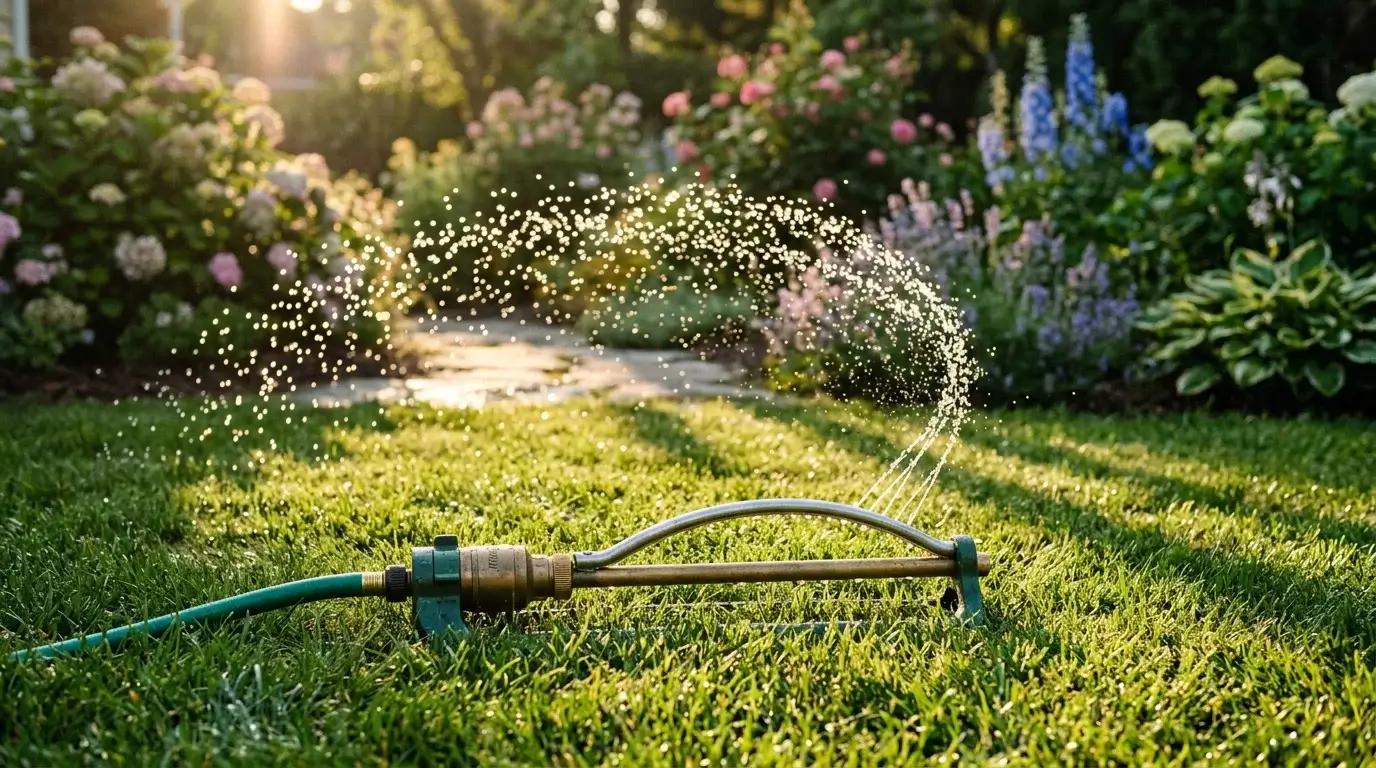
- Put several straight-sided containers around the area the sprinkler covers. Empty tuna tins or coffee cans are ideal because the sides are vertical, so the depth in the tin equals the depth on the lawn. Clemson suggests five to seven containers spread through the zone.
- Run the sprinkler for 15 minutes.
- Measure the depth in each container and take the average.
- Multiply up to work out how long you need to run for your target depth.
So if 15 minutes gives you a quarter inch, an inch takes an hour.
Two things usually come out of this exercise. The first is that people are watering for far less time than they think they need. The second is that the containers rarely hold the same amount, which tells you the coverage is uneven and some parts of the lawn are getting much less than others. Repeat it for each sprinkler position or zone.
How often to water your lawn, and why your soil decides
Here is where the generic advice falls apart, because sandy soil and clay soil need genuinely different schedules to deliver the same weekly total.
Clemson breaks it down like this:
| Soil | Each watering | How often |
|---|---|---|
| Heavy clay | 1 inch, all in one go | Once a week |
| Sandy to loam | ½ inch | Twice a week |
| Very sandy | ⅓ inch | Three times a week |
The logic is straightforward. Clay holds water and accepts it slowly, so one long soak works and more frequent watering just keeps the surface wet. Sand drains fast and cannot hold a full inch in the root zone, so putting an inch down at once sends most of it past the roots.
Sources vary a little on the exact frequency, and Michigan State notes that lawn roots sit only about 3 to 4 inches deep in summer, which argues for somewhat more frequent watering in the hottest part of the year than in spring or autumn when roots run deeper. Treat the table as a starting point and adjust based on how your lawn actually responds.
If you are not sure what soil you have, dig a small hole and squeeze a handful. Clay holds together in a ribbon. Sand falls apart immediately. Loam does something in between.
When to water, and why evening is the worst choice
This is the decision that matters most, and it is free.
Water early in the morning, before or around sunrise. Illinois recommends the early morning hours specifically because the lawn is already wet from dew, so you are not creating a separate wet period. NC State, writing about lawn disease, is more precise still: irrigate just before sunrise.
Do not water in the evening or at night. Every extension source that discusses this says the same thing in different words:
- Illinois: watering at night has the potential to promote the development of some turf diseases.
- Clemson: irrigation in the early evening increases humidity around the individual blades and creates more opportunity for fungal disease to develop.
- Penn State: irrigating turf at night during hot and humid weather may exacerbate brown patch.
The mechanism is specific rather than vague. The two most common lawn diseases both need roughly 10 to 12 continuous hours of leaf wetness before they can infect. Overnight dew on its own often falls just short of that. Watering in the evening adds several hours on the front end and pushes it comfortably over the line.
That is the entire reason evening watering is discouraged. It is not about evaporation, and it is not superstition. It is that you are manufacturing the exact condition that brown patch and dollar spot require.
Midday is wasteful rather than harmful. Illinois notes water evaporates before it does much good. If early morning is genuinely impossible, midday is the less bad of the two remaining options.
Checking whether it worked
Watering for an hour tells you what came out of the sprinkler. It does not tell you how far down it got.
Illinois suggests the simplest possible test: push a long screwdriver into the soil after watering. It slides easily through moist soil and stops when it hits dry. That tells you how deep the water actually reached.
You are aiming to wet the root zone, which on an established lawn in summer means roughly the top 3 to 4 inches. If the screwdriver stops at an inch, you are watering too briefly, whatever the calendar says.
Knowing when the lawn needs water
Better than watering on a fixed schedule is watering when the grass tells you to. Two reliable signs, both from the extension sources:
Footprinting. Walk across the lawn and look back. If your footprints stay visible instead of the blades springing back, the grass is short of water. This is the earliest sign and the most useful.
Colour change. Illinois notes grass turns darker under mild drought stress, before it browns. Clemson describes waiting for a slight blue-grey cast on drought-tolerant grasses before watering.
Both appear before any real damage. A lawn that shows footprinting in the evening and recovers overnight is fine. One that shows it in the morning needs water.
Why deep and infrequent actually matters
This phrase gets repeated constantly without explanation, so here is the mechanism.
Roots grow toward water. Frequent light watering keeps the top inch of soil permanently damp, so the roots have no reason to go deeper. Illinois notes that frequent shallow watering promotes shallower root systems and weeds, crabgrass in particular, which thrive in exactly those conditions.
Deep, infrequent watering does the opposite. The surface dries between waterings and the roots chase moisture downward. Clemson puts it plainly: plants that receive deep but infrequent irrigation are healthier, their root systems extend deeper, and as a result they are more resilient.
A deeply rooted lawn survives a dry fortnight. A shallow rooted one browns in four days. The difference was built months earlier by how it was watered.
The option nobody mentions: let it go dormant
Cool-season grasses are supposed to slow down in summer heat. Browning off is a survival strategy, not a death sentence, and it is a legitimate choice for a home lawn.
The crown, which is the base of the plant at soil level, stays alive while the leaves brown off. Keep the crowns hydrated and the lawn greens up when the weather turns.
Illinois puts the maintenance requirement at about half an inch of water every few weeks, which will not turn the lawn green but keeps it alive. Other extension sources give somewhat higher figures, up to an inch every two or three weeks, so half an inch is the floor rather than a target.
One important warning. Illinois notes that repeatedly breaking dormancy drains large amounts of food reserves from the plant and causes stress. Watering just enough to green it up, letting it brown again, then repeating is worse than either committing to keeping it green or committing to letting it rest. Pick one and stick with it for the season.
New seed and new sod are different
Everything above describes an established lawn. New grass is the exception that proves the rule.
Seed and freshly laid sod have no root system to reach downward, so they genuinely do need light, frequent watering to keep the surface consistently moist until roots establish. Going straight to deep, infrequent watering on new seed kills it.
The transition matters as much as the start. As the grass establishes, water less often and more deeply each time, so the roots are pushed downward. Staying on the new-lawn schedule is how lawns end up permanently shallow rooted.
Common mistakes
Watering on a fixed schedule regardless of rain. The weekly requirement includes rainfall. A timer that runs through a wet week is watering a lawn that does not need it.
Never measuring output. Without the container test, “water for 20 minutes” is meaningless. It might be a tenth of an inch or half an inch.
Watering in the evening. Adds hours of leaf wetness to overnight dew and creates the conditions two common lawn diseases require.
Light watering every day. Produces shallow roots and encourages crabgrass, and uses more water for a worse result.
Breaking dormancy repeatedly. Greening up a dormant lawn and letting it brown again, over and over, drains the plant’s reserves.
Ignoring soil type. An inch in one go is right for clay and wrong for sand.
Frequently asked questions
How often should I water my lawn in summer?
For an established cool-season lawn you are keeping green, aim for one to 1.5 inches per week in total, split according to your soil: once a week on clay, twice on loam, three times on very sandy soil. Roots are shallower in summer, so err toward the more frequent end in the hottest weeks.
What time of day is best to water a lawn?
Early morning, at or just before sunrise. The grass is already damp with dew, so you are not extending the wet period, and it dries at the normal time. Evening and overnight watering is the one to avoid.
How long should I run my sprinkler?
However long it takes to deliver your target depth, which you can only know by measuring. Put straight-sided containers on the lawn, run the sprinkler 15 minutes, measure the average, and scale up from there.
Is it bad to water every day?
For an established lawn, yes. Daily light watering keeps the surface wet, produces shallow roots and favours weeds. New seed and new sod are the exception and do need frequent light watering until they root.
How do I know if I watered deeply enough?
Push a long screwdriver into the soil afterwards. It moves easily through moist soil and stops at dry soil, which tells you how far the water reached. Aim for the top 3 to 4 inches on an established lawn.
My lawn has gone brown in summer. Is it dead?
Probably dormant rather than dead. The crowns stay alive while the leaves brown off, and the lawn recovers when temperatures drop. About half an inch of water every few weeks keeps the crowns viable without greening it up.
Does watering more fix a brown patch in the lawn?
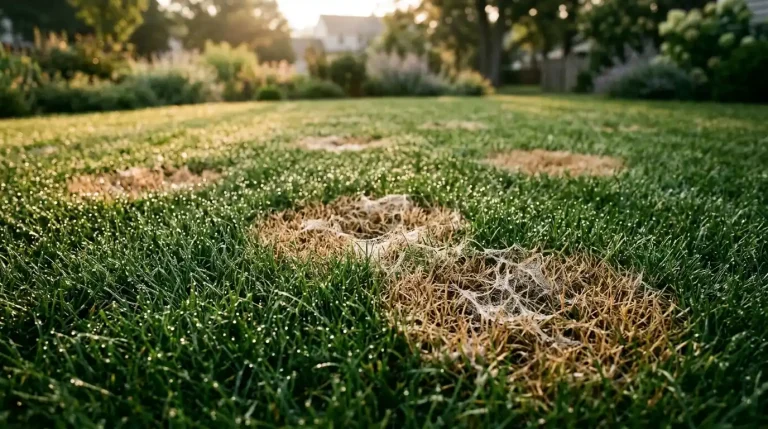
Not if the cause is disease, and watering more can make it worse. Brown patches that appeared within a day or two, or that have distinct lesions on the individual blades, are more likely to be a disease than drought stress.
The short version
How often to water your lawn comes down to this: water early in the morning, put down one to 1.5 inches across the week, split it according to whether your soil is clay or sand, and measure what your sprinkler actually delivers before trusting any of it.
Check the depth with a screwdriver, watch for footprinting rather than following the calendar, and accept that a brown lawn in August is usually a resting lawn rather than a dying one. For the rest of keeping turf healthy through the year, our lawn care section collects it, and the grass cutting height chart covers the mowing side, which affects drought tolerance more than most people expect.