Snowblower Pull Cord Stuck? Recoil Starter Fix
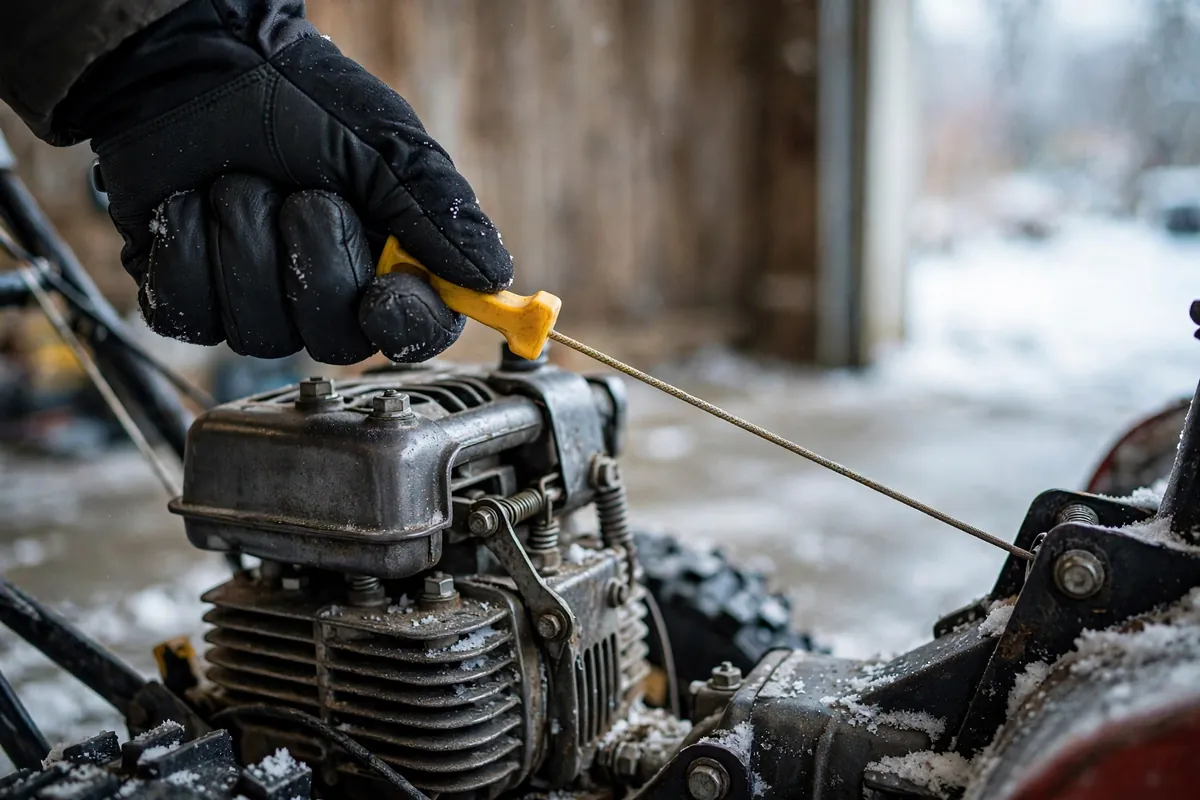
First cold morning of the season. You pull the starter handle — and the cord comes out and stays out. Or it won’t budge at all. Or it pulls, but feels like you’re starting a truck. The season hasn’t started and the machine is already dead.
A pull-cord problem is a recoil starter problem, and recoil starters have exactly four parts. Match your symptom below, and the failed part is usually obvious — most are DIY fixes.
Which Symptom Do You Have? (The Three-Way Split)
These look similar from the outside but have completely different causes:
| Your symptom | The failed part | The fix |
|---|---|---|
| Cord pulls out but won’t retract (stays out) | Broken or unhooked recoil spring | Re-tension or replace the spring |
| Cord won’t pull out at all (stuck/jammed) | Jammed pulley, tangled rope — or a seized engine | Free/replace rope and pulley; or diagnose the engine |
| Cord pulls but it’s extremely hard | Engine-side issue (hydro-lock, valve problem, ice) | Diagnose the engine, not the recoil |
“Won’t retract” = spring problem. “Won’t pull out” = jam (or the engine). “Hard to pull” = almost never the recoil — it’s the engine resisting.
How a Recoil Starter Works (60 Seconds)
Four parts:
- Rope — wound around the pulley; you pull it.
- Pulley — the spool; pulling the rope spins it.
- Spring — a flat coil spring that rewinds the pulley when you release the handle.
- Pawls — small arms that fling outward as the pulley spins, engaging the flywheel to crank the engine.
Pull → rope unwinds → pulley spins → pawls engage flywheel → engine cranks. Release → spring rewinds → rope retracts. Rope won’t retract = spring failed. Rope won’t come out = pulley or rope jammed. Everything in the housing fine but hard to pull = the resistance is in the engine.
The 3 Causes, in Likelihood Order
1. Broken or Unhooked Recoil Spring
The #1 “won’t retract” cause. The coil spring rewinds the pulley; when it snaps or unhooks, the rope stays out.
Confirm: remove the recoil housing (usually 3–4 bolts). A healthy spring sits as a neat flat coil anchored at both ends; a broken one shows a snapped end, a coil jumped out of its track, or an unhooked anchor.
Rewind procedure: remove the old rope (note routing and knots). Wind the pulley in the rewind direction — usually 4–6 full turns, enough to retract the rope with authority without binding the spring. Feed the rope through the housing eyelet and pulley, tie the knot, and release slowly.
Eye protection is mandatory before opening the housing. A coil spring under tension can uncoil violently — it cuts skin and damages eyes. Work slowly, keep your face clear. A spring that snapped from fatigue should be replaced, not reused — it will snap again.
2. Tangled, Frayed, or Jammed Rope
Cord won’t pull out, or pulls inches and jams? Usually the rope: bunched inside the housing or frayed and wedged between pulley and housing wall.
Confirm: open the housing and look. Tangled rope is a bird’s nest instead of neat wraps; frayed rope shows fuzzy fibers, usually at the handle knot or pulley knot.
Replacement: unwind and remove the old rope. Match the rope diameter to the original — too thick binds in the pulley groove; too thin slips and wears fast. Tie the pulley-end knot as the original was (it seats in the pulley’s knot pocket), wind neatly, feed through the eyelet, tie on the handle. Inspect the pulley for cracks while you’re in there — a cracked pulley chews rope and will jam again.
3. Seized Pulley, Broken Pawls, or a Locked-Up Engine
Pulley won’t turn at all, or pawls spin without engaging? Critical fork: is it the recoil, or the engine?
The engine test: remove the recoil housing, exposing the flywheel. Turn the flywheel by hand. Turns freely = engine is fine; the problem is in the recoil (seized pulley bearing, broken pawls). Engine won’t turn = not a recoil problem. Suspects: hydro-lock (fuel or oil in the cylinder from tipping — liquid doesn’t compress), seizure from sitting, or ice. Diagnostic trick: remove the spark plug and pull — if it pulls easily with the plug out, the cylinder was hydro-locked.
If the engine is the problem, stop working on the recoil. For engine-side diagnosis, see why your snow blower is surging.
Safety: eye protection before opening the housing (spring warning above), and never start the engine with the recoil housing removed — the exposed flywheel is a serious injury risk.
If the engine itself might be seized, work through UGA Extension’s small-engine troubleshooting guide before forcing the cord.
Electric Start? Use It While You Fix the Recoil
Many snowblowers have electric start as backup. Use it to get through the storm while you repair the recoil — but it’s a workaround, not a fix. The recoil still needs repair; relying on the button permanently leaves you one outlet problem away from a dead machine in the next storm.
When to Replace the Whole Assembly vs. Repair
Repair the single part when: one rope, one spring, or one pulley failed and the housing is intact.
Replace the whole assembly when: the housing is cracked (won’t hold alignment), multiple parts failed at once (parts priced separately usually exceed the assembly), or the spring won’t hold tension after rewinding (fatigued = done).
Prevention — The Pre-Season Pull
Every October, before you need the machine: pull the cord slowly 2–3 times and feel the mechanism — rope should retract crisply, spring rewind with authority, nothing gritty. Finding a weak spring in October beats finding it in a blizzard. Store with the rope fully retracted (the relaxed position), and keep the housing area clear of packed snow and ice that freeze mechanisms mid-winter.
Frequently Asked Questions
Why won’t my snowblower pull cord retract?
The recoil spring is broken or unhooked — it’s what rewinds the rope. Open the housing (eye protection on) and inspect the coil: re-tension if it just unhooked, replace if it snapped.
What do I do if my snowblower pull cord is stuck and won’t pull out?
Check for a jammed pulley or tangled rope inside the housing first. If those are fine, remove the housing and try turning the flywheel by hand — if the engine won’t turn, the problem is the engine (seized, hydro-locked, iced), not the recoil.
Can I start my snowblower if the pull cord is broken?
With electric start, yes — use it as a workaround while you repair the recoil. Without it, the recoil must be fixed first; there’s no safe alternative. Never start the engine with the recoil housing removed.
Is it hard to replace a snowblower recoil spring?
Moderate DIY: remove the housing, wind the pulley to tension the spring (4–6 turns), feed the rope through, release slowly. Eye protection is non-negotiable — an uncoiling spring is dangerous. Nervous about the spring? Replacing the whole assembly is simpler and still DIY-friendly.
Why is my snowblower pull cord so hard to pull?
Usually engine-side, not the recoil: hydro-lock (fuel or oil in the cylinder from tipping), a valve problem, or ice. Remove the spark plug and pull — if it’s easy with the plug out, the cylinder was hydro-locked.
Cluster links: doing the full pre-winter check? See snowblower leaking gas (fuel-system safety) and snowblower auger not turning (drive-system diagnosis). Honda owners needing a full cord replacement: our Honda lawn mower pull-cord replacement walkthrough covers that brand-specific procedure — the guide above is the brand-agnostic diagnosis for any snowblower.