Snowblower Auger Not Turning? Diagnose It Step by Step
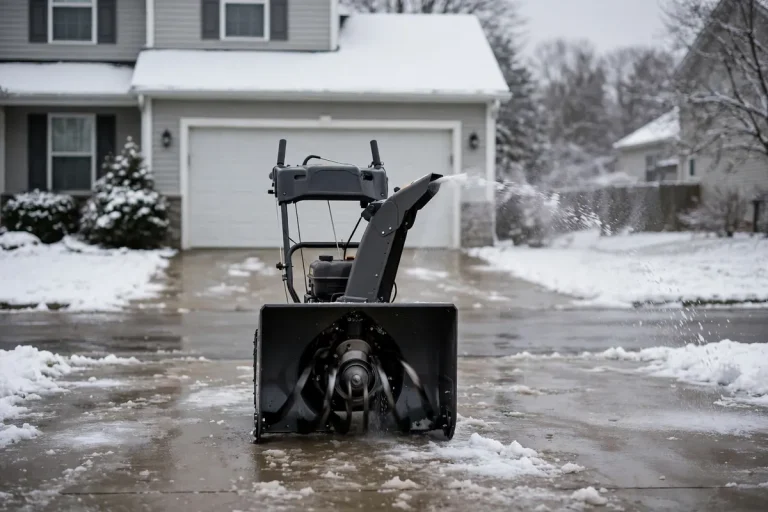
The mid-storm nightmare: the engine is roaring at full throttle, you’re pushing forward into the drift — and the auger is dead. Snow piles up in front of the machine, nothing moves through the chute, and you’re standing there in a blizzard with a very expensive snow-pusher.
Here’s the reassuring part: “engine runs, auger doesn’t” has a short list of causes, and they run in a clear likelihood order. The #1 cause is a five-minute fix with a part that costs almost nothing. Work through the four checks below in order and you’ll have it diagnosed — most owners have it fixed — in under 30 minutes.
Safety — Engine OFF Before You Touch the Auger
Before any diagnosis involving the auger, the rules are absolute:
- Engine OFF, key out. Not idling — off.
- Disconnect the spark plug wire. This prevents any accidental start while your hands are near the auger.
- NEVER reach into the auger housing with the engine running. A spinning auger doesn’t care that you’re “just clearing a clog.” Use the clean-out tool that came with the machine (or a sturdy stick) — never your hands.
- Even with the engine off, auger blades are sharp. Gloves on.
Every step below assumes the engine is off and the plug wire is disconnected unless stated otherwise.
Before touching the auger for diagnosis, review NDSU’s equipment safety procedures for disconnecting power and securing equipment.
The 4 Causes, in Likelihood Order
1. Broken Shear Pins (The 5-Minute Fix)
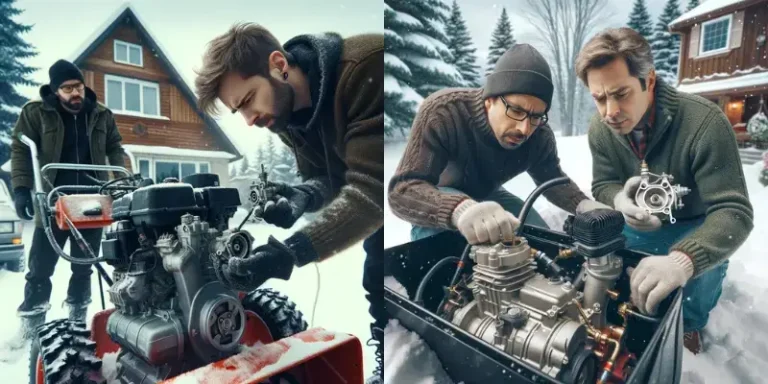
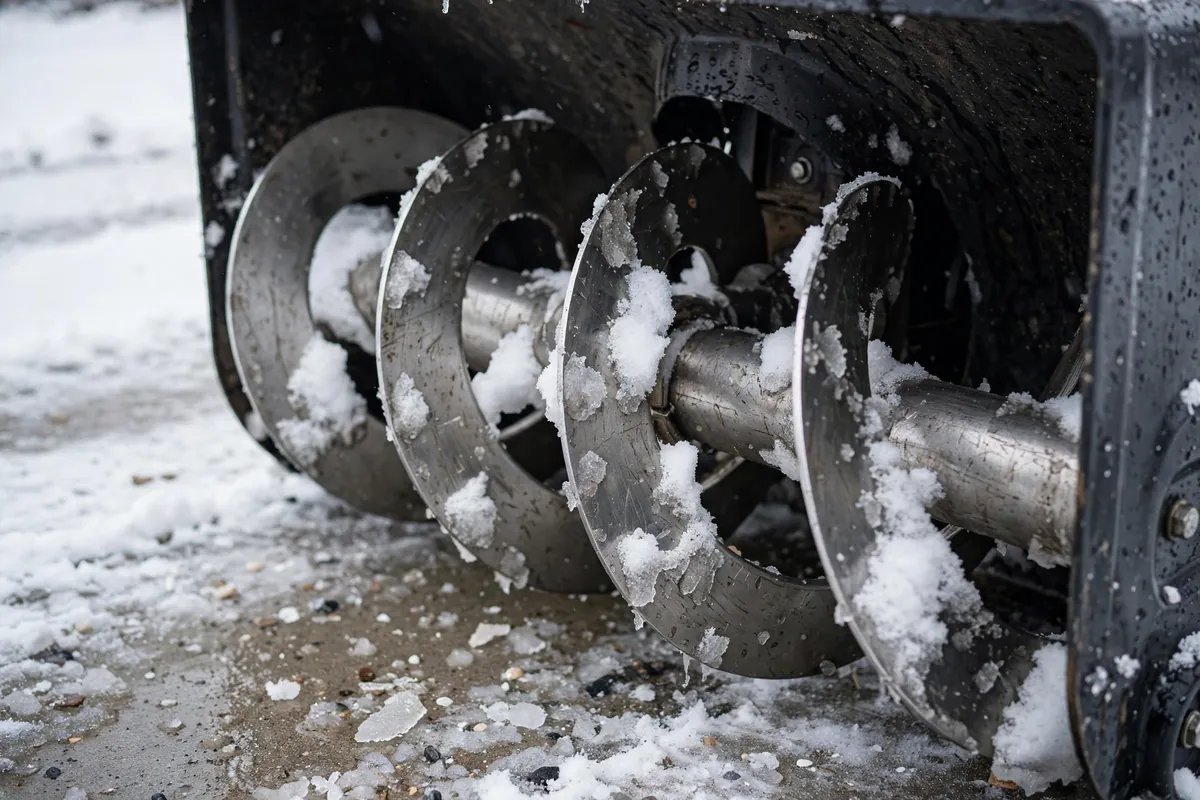
Broken shear pins are the #1 cause of a dead auger by a wide margin. Here’s what they are: small soft-metal pins that pass through the auger shaft, connecting each auger section to the shaft. They exist to break on purpose. When the auger hits something hard — a rock, a chunk of ice, a buried newspaper — the pin snaps instead of the gearbox or engine absorbing the shock. Replacing a sheared pin is normal maintenance, not a breakdown.
How to find them: look along the auger shaft, near each end of the auger housing. You’ll see a pin (or the hole where one was) passing through the shaft and the auger tube.
How to tell broken vs. intact: grab the auger and spin it by hand (engine off, plug wire disconnected). If the auger spins freely but the shaft doesn’t turn with it, the pins are sheared — the auger is disconnected from the drive. If the auger and shaft turn together, the pins are intact and the problem is further down the list.
The critical rule: replace sheared pins with the correct shear pins for your machine — not regular bolts. A regular bolt won’t snap on the next impact, which means the next rock you hit destroys the gearbox instead of a 50-cent pin. Shear pins are deliberately soft metal; that’s the whole point. (For the compatibility question, see are snow blower shear pins universal.)
2. Broken or Slipped Auger Belt
If the pins are intact, check the belt. The engine drives the auger through a belt and pulley system, and belts snap, slip off, or wear out. Engine runs fine, belt doesn’t transfer power, auger sits dead.
How to check: remove the belt cover (usually a few bolts on the side or top of the machine). Look at the auger belt:
- Snapped — obvious, replace it.
- Slipped off the pulley — reseat it and check why it jumped (often a worn belt that’s stretched).
- Glazed/shiny — the belt surface looks polished and slick. A glazed belt slips under load even if it looks intact — it can’t grip the pulleys when the auger meets resistance.
The tension check: press the belt midway between pulleys. It should deflect slightly but feel taut. A belt you can push an inch or more with light pressure is stretched and slipping. For the full replacement procedure, see how to change a belt on a snowblower.
If the belt and pulleys show wear, set up a regular inspection routine with UGA Extension’s equipment maintenance guide.
3. Loose or Stretched Auger Engagement Cable
The auger engagement lever on the handle connects via cable to an idler arm that tensions the belt. If that cable stretches or slips out of adjustment, the lever pulls but never fully engages — the idler doesn’t tension the belt enough to drive the auger.
The “half-engaged” symptom: this one has a telltale signature. The auger turns weakly under no load (spinning in the air) but stops the moment it meets snow. That’s partial engagement — enough belt tension to spin an unloaded auger, not enough to do work.
The fix: adjust the cable at the handle or at the idler arm (there’s usually a threaded adjuster with lock nuts). Take up the slack until the lever fully tensions the belt at full pull. If the cable is frayed or the housing is damaged, replace the cable — adjustment can’t fix a cable that’s coming apart.
4. Failed Auger Gearbox
The rare one — but check it last, because it’s the expensive one. If the shear pins are intact, the belt is good and tensioned, the pulley is turning with the engine running, but the auger shaft itself is dead — the worm gear inside the auger gearbox is stripped.
The wiggle test: grab the auger shaft and try to move it. Excessive play, grinding, or a shaft that turns while the input pulley doesn’t move it properly all point to internal gearbox failure. Another sign: metallic debris or gear oil leaking from the gearbox housing.
This is pro-repair territory on most machines. Gearbox disassembly means splitting the housing, replacing the worm gear (and usually bearings and seals while you’re in there), and re-shimming — a shop job unless you’re experienced with gear work.
The Hand-Turn Test (Quick Version)
This single test, done with the engine OFF and plug wire disconnected, routes you to the right cause fast:
- Auger spins freely, shaft doesn’t turn with it → shear pins are sheared. Replace with correct shear pins.
- Auger won’t budge at all → something is jammed in the housing (clear it with the clean-out tool) or the gearbox is seized (cause #4).
- Auger and shaft turn together → the pins are fine; look at the belt (cause #2) and cable (cause #3).
For the complete version of this diagnostic — including what normal resistance should feel like and the edge cases — see our full guide: should the snowblower auger turn by hand.
What NOT to Do
Two mistakes turn a cheap fix into an expensive one:
- Don’t replace shear pins with regular bolts. Worth repeating because it’s the most common and most damaging shortcut. The bolt survives the next impact; your gearbox doesn’t. Always use proper shear pins.
- Don’t run with a slipping belt. A belt that’s slipping is polishing your pulleys smooth (glazing them). Glazed pulleys won’t grip even a brand-new belt properly. Fix the belt now, not after it’s ruined the pulleys.
And the standing rule: never clear the auger housing with your hands — clean-out tool only, engine off, plug wire disconnected.
Spare-Parts Kit for the Season
Since shear pins are designed to break and belts wear out, keep these on hand before the season starts (informational — no links, just the list):
- Spare shear pins — the correct ones for your machine, plus the retaining clips.
- A spare auger belt — belts always fail mid-storm, never on a convenient Saturday.
- Basic hand tools — the wrenches/sockets that fit your belt cover and shear pin bolts, so you’re not hunting through the toolbox in the snow.
With spares in the garage, a sheared pin is a five-minute roadside-style fix instead of a trip to the store in a blizzard.
Frequently Asked Questions
Why is my snowblower auger not turning when the engine runs?
Almost always broken shear pins — they snap on purpose when the auger hits something hard, disconnecting the auger from the drive shaft to protect the gearbox. Check them first: with the engine off and plug wire disconnected, spin the auger by hand. If the auger spins but the shaft doesn’t turn with it, the pins are sheared. If the pins are intact, check the belt, then the engagement cable, then the gearbox — in that order.
What are shear pins on a snowblower?
Small soft-metal pins through the auger shaft that connect each auger section to the drive. They break on impact — rock, ice, frozen newspaper — sacrificing themselves to protect the gearbox and engine from shock loads. They’re designed to fail; replacing them is normal seasonal maintenance, not a sign something is wrong with your machine.
Can I use a regular bolt instead of a shear pin?
No. A regular bolt is too strong — it won’t break on impact, so the next rock you hit sends the full shock load into the gearbox and destroys it. Always use the correct shear pins. The pin is supposed to be the weakest link; that’s its job.
Why does my auger turn by hand but not when the engine runs?
The shear pins are likely sheared — the auger is disconnected from the shaft, so it free-spins by hand but gets no power from the engine. The other possibility is a broken or slipped belt: no power reaches the auger pulley at all. Check the pins first (the hand-turn test), then pull the belt cover.
How do I know if my snowblower belt is bad?
Remove the belt cover and look: a bad belt is snapped, slipped off its pulley, cracked, frayed, or shiny and glazed. The glaze test matters — a belt can look intact but be polished slick, in which case it slips under load. Also check tension: excessive slack means a stretched belt that needs replacing.
When is an auger problem beyond DIY?
If the shear pins are intact, the belt is good and properly tensioned, and the engagement cable is adjusted — but the auger shaft still won’t turn when the pulley is driven — the gearbox is likely stripped. Gearbox rebuilds are shop repairs on most machines.
Cluster links: if the auger is fixed but the machine throws weakly, see snowblower not throwing snow far — the discharge-side companion to this drive-side guide. For engine-side trouble (rough running, won’t stay running), see why your snow blower is surging.