How to Jack Up a Zero Turn Lawn Mower — Complete Safety Guide
Jacking up a zero turn lawn mower is something every owner needs to do at some point — whether it is to sharpen or replace the blades, fix a flat tire, clean under the deck, or replace a drive belt. But zero turn mowers are heavy machines, and lifting them incorrectly can cause serious injury or damage to the mower.
In this guide I will walk you through exactly how to jack up a zero turn mower safely, which types of jacks work best, and the most common mistakes that can get you hurt.
Can You Jack Up a Zero Turn Mower?
Yes — but you need the right equipment and technique. Zero turn mowers typically weigh between 500 and 1,200 pounds depending on the model, which is far too heavy to lift by hand. A proper floor jack, bottle jack, or dedicated mower lift is essential.
The key difference from jacking up a car is that zero turn mowers do not have a traditional frame rail. You need to find the correct lift points on your specific mower before you begin, or you risk bending the deck or cracking the frame.
Types of Jacks That Work on Zero Turn Mowers
Floor Jack (Most Common)
A standard hydraulic floor jack rated for at least 2 tons works well for most residential zero turn mowers. Position it under the correct lift point, pump the handle, and the mower rises smoothly.
Pros: Easy to find, affordable, works on level surfaces
Cons: Only lifts one side at a time, requires jack stands to hold the mower safely
Bottle Jack
A bottle jack is a compact vertical jack that generates high lifting force in a small footprint. It works well in tight spaces under the mower deck.
Pros: Very powerful for its size, inexpensive
Cons: Less stable than a floor jack, requires a flat surface
Dedicated Mower Lift (Best Option)
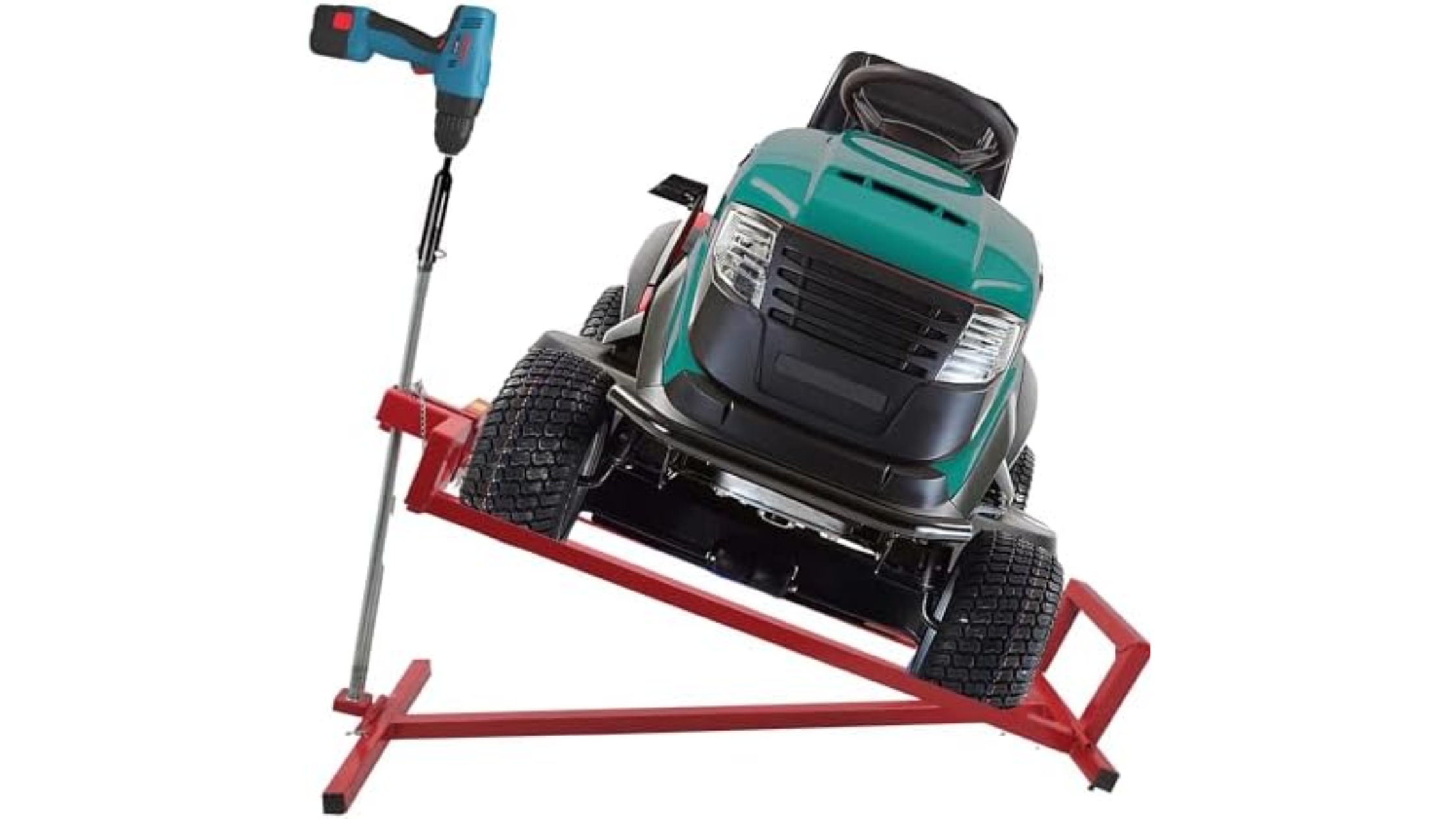
A dedicated zero turn mower lift — sometimes called a mower jack or jungle jack — is specifically designed for this purpose. It slides under the front of the mower and uses a foot pedal or hand mechanism to raise the entire front end at once.
Pros: Lifts the entire front at once, very stable, designed for mower frame shapes
Cons: More expensive than a standard jack, takes up storage space
Riding Mower Ramps
Simple ramps that you drive the mower onto, lifting the rear wheels off the ground. These work for accessing the rear of the mower but not the deck.
What You Need Before You Start
How to Jack Up a Zero Turn Mower — Step by Step
Step 1: Park on a Flat Hard Surface
Move the mower onto a concrete driveway or garage floor. Never attempt to jack up a mower on grass, gravel, or an uneven surface. The jack can sink or tip, causing the mower to fall.
Step 2: Turn Off the Engine and Remove the Key
This seems obvious but it is the most important safety step. Turn off the engine completely, wait for all moving parts to stop, then remove the ignition key and put it in your pocket. This prevents any accidental startup while you are working underneath.
Step 3: Engage the Parking Brake
Engage the parking brake firmly. Then place wheel chocks or wooden blocks behind the rear wheels to give extra security against rolling while the front is lifted.
Step 4: Lower the Deck to Its Lowest Position
Before jacking, lower the mower deck to its lowest cutting height setting. This gives you better access to the lift points and reduces the chance of the deck catching on anything during lifting.
Step 5: Locate the Correct Lift Points
This is the most important technical step. Check your owner’s manual for the designated lift points on your specific model. Common lift points on zero turn mowers include:
Front frame cross member
the horizontal steel bar that runs across the front of the mower frame, just behind the front wheels. This is the safest and most common lift point for accessing the deck.
Side frame rails
On some models, the main frame rails on either side are reinforced for lifting.
What to avoid:
Never place the jack under the mower deck itself, the fuel tank, plastic housing, or any hydraulic lines. These will crack or bend under the weight.
Step 6: Position the Jack
Place the floor jack directly under the identified lift point. Make sure the jack saddle (the top cup of the jack) is making full contact with the steel frame member — not just touching the edge.
If you are using a dedicated mower lift, follow the manufacturer’s instructions for your specific lift model, as the positioning varies.
Step 7: Raise the Mower Slowly
Pump the jack handle slowly and steadily. Watch the mower as it rises to make sure it is lifting evenly and the jack is staying stable. Stop lifting as soon as you have enough clearance to do your maintenance work — do not lift higher than necessary.
Most blade and deck work requires only 6 to 10 inches of clearance.
Step 8: Place Jack Stands Immediately
As soon as the mower is at the correct height, slide jack stands under the frame on each side and lower the mower onto them. Never work under a mower that is supported only by a hydraulic jack — jacks can fail or leak, and the mower will come down on you.
Position the jack stands on the same reinforced frame points that you used for jacking.
Step 9: Test Stability Before Working
Before you put your hands anywhere near the blades or under the deck, push the mower gently from the side. It should not move or wobble. If it feels unstable, lower it, reposition the stands, and raise it again.
Step 10: Do Your Maintenance Work
With the mower safely supported on jack stands, you can now:
Always wear thick gloves when handling mower blades — the edges are sharp even when they appear dull.
Step 11: Lower the Mower Safely
When your work is done:
- Remove all tools from under the mower
- Raise the mower slightly with the jack to take the weight off the jack stands
- Remove the jack stands
- Lower the mower slowly to the ground
- Remove the wheel chocks
- Reinstall the ignition key only after you have moved away from the deck area
How to Jack Up the Rear of a Zero Turn Mower
Accessing the rear of the mower — for tire changes or rear wheel work — requires a different approach:
- Place chocks under the front wheels to prevent forward rolling
- Locate the rear frame cross member behind the rear wheels
- Position the jack under this cross member
- Raise and support with jack stands as described above
Be aware that the rear of a zero turn mower is significantly heavier than the front due to the engine location. Use a jack rated for adequate capacity.
Common Mistakes to Avoid
Jacking on grass or gravel — The jack will sink into soft ground as soon as weight is applied. Always use a hard flat surface.
Using the deck as a lift point — Mower decks are not structural — they will bend or crack under the mower’s weight.
Working under a mower supported only by a jack — Hydraulic jacks can fail. Always use jack stands.
Not removing the key — An accidental bump of the ignition while you are under the mower can start the engine and engage the blades.
Lifting too high — Every extra inch of height increases the risk of tipping. Only lift as high as the work requires.
Not checking lift point in the manual — Every mower model has specific reinforced lift points. Using the wrong spot can damage the frame permanently.
How Often Should You Jack Up Your Zero Turn Mower?
You should inspect and sharpen the blades every 20 to 25 hours of mowing — or roughly once a month for the average homeowner. This means jacking the mower up regularly is part of normal maintenance.
Additionally, clean under the deck at the end of each mowing season, and inspect belts and spindle bearings once a year.
Frequently Asked Questions
What size jack do I need for a zero turn mower?
A 2-ton (4,000 lb) hydraulic floor jack is sufficient for most residential zero turn mowers. For heavy commercial models over 1,000 pounds, use a 3-ton jack to be safe.
Where do you put the jack on a zero turn mower?
Place the jack under the front frame cross member — the reinforced steel bar that runs across the front of the mower frame just behind the front caster wheels. Always check your owner’s manual for the exact lift point on your specific model.
Can I use a car jack on a zero turn mower?
Yes, a standard hydraulic floor jack works fine for zero turn mowers as long as it has adequate weight capacity. Make sure the jack saddle makes full contact with the steel frame, not plastic bodywork.
How do you change the blades on a zero turn mower?
Jack the front of the mower up and support it on jack stands. Disconnect the spark plug wire. Block the blade with a piece of wood to prevent spinning, then remove the blade bolt — counter-clockwise for standard threads. Remove the old blade, install the new one in the correct orientation, tighten the bolt to the manufacturer’s torque specification, and reconnect the spark plug wire.
Is it safe to tip a zero turn mower on its side?
No. Zero turn mowers should never be tipped on their side — the engine oil will flow into the cylinder, and fuel can leak from the tank. Always use a jack to lift the mower rather than tilting it.
How do I know if my zero turn mower needs new blades?
Signs include torn or ragged grass tips rather than clean cuts, uneven cutting height across the mow path, the mower requiring multiple passes to cut the same area, and visible nicks or bends in the blade when you inspect it after jacking up the mower.
Conclusion
Jacking up a zero turn mower is a straightforward job when you use the right equipment and follow the correct sequence. The most important rules are simple: always work on a hard flat surface, always identify the correct lift points before you start, and never work under a mower that is supported only by a hydraulic jack without jack stands underneath.
Do this maintenance regularly — sharp blades and a clean deck make a measurable difference in cut quality and reduce strain on your mower’s engine and drive system over time.
Related Posts:
- Zero Turn Mower Won’t Go Forward or Reverse
- 5 Disadvantages of Zero Turn Mowers
- Zero Turn Mower Moves Slow — Troubleshooting and Fixes
- Are Lawn Mower Blades Reverse Threaded?