How to Put a Zero Turn Mower in Neutral
Putting a zero turn mower into neutral is one of those jobs that sounds obvious until the machine will not budge. On a zero turn there is no gearstick and no clutch pedal — drive comes from two independent hydrostatic transmissions, one per rear wheel, and each of those has to be released before the mower will roll freely.
This guide covers what neutral actually means on a zero turn, how to find and operate the bypass levers, and the mistakes that damage a hydrostatic transmission.
Neutral versus bypass: two different things
This is where most confusion starts, because “neutral” describes two separate states on a zero turn.
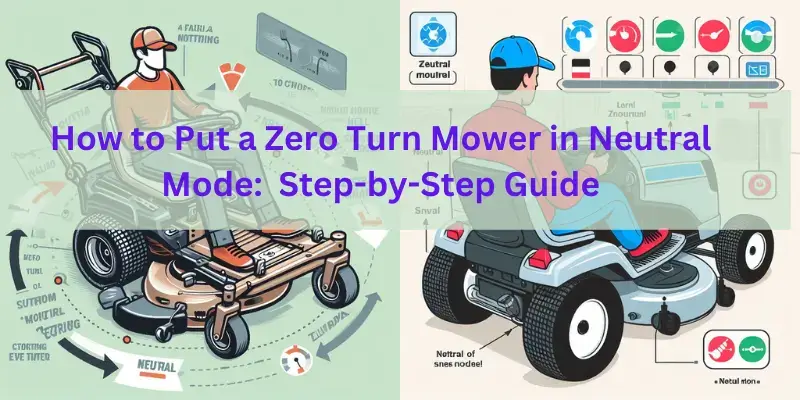
Operating neutral is what you get when both steering levers sit in the centre detent, straight up. The engine still drives the transmissions, but they are at zero output, so the mower stands still. This is the position the safety interlock requires before the engine will start.
Transmission bypass — sometimes called freewheel, tow or dump valve position — mechanically disconnects the hydrostatic pumps from the wheels so the machine can be pushed. This is what you need if the mower will not start, has to be loaded onto a trailer, or needs moving in the workshop.
If you want to push the mower, operating neutral is not enough. A hydrostatic transmission at rest is effectively locked; the fluid has nowhere to go. You need the bypass.
Putting the mower in operating neutral
- Bring the mower to a stop on level ground and take your hands off the levers.
- Pull both steering levers outward into the parked position. On most machines this is a sprung detent you can feel click.
- Disengage the PTO so the blades stop turning.
- Set the parking brake. On many models the outward lever position engages it automatically — check your manual rather than assuming.
That outward lever position is also what the seat and lever interlocks look for. If your mower cranks but will not start, a lever not fully seated in its detent is one of the first things to check — along with the seat switch, which we cover in zero turn safety switch problems.
Engaging the transmission bypass so the mower can be pushed
The bypass controls sit at the back of the machine, behind or beneath the rear frame, one for each transmission. Depending on the make they are rods you pull out, levers you flip up, or valves you turn a half-turn with a spanner.
- Park safely first. Level ground, engine off, key out, parking brake on, blades stopped. Let a hot transmission cool before you reach behind the machine.
- Find the two bypass rods or levers. Look low at the rear, just inboard of each drive wheel. They are usually painted or tagged, and they always come in a matched pair.
- Move both to the bypass position. Rods normally pull rearward and hook into a slot; levers usually flip up or back. Both sides must be released — one alone leaves that wheel locked and the mower will only pivot.
- Release the parking brake and push. The machine should roll with moderate effort. If it still resists, one bypass is not fully engaged.
- Return both to the drive position before you restart. Running the engine with the bypass open circulates fluid without driving anything, which builds heat and achieves nothing.
Zero turns are heavy — see how much a zero turn weighs before you plan to move one by hand. On any slope, get a second person. The same caution applies to pushing a riding mower.
Where the bypass is on common brands
Layouts vary, but the pattern is consistent enough to know what to look for. Always confirm against your own manual — the position differs between model years even within a brand.
- Toro: two rods at the rear, pulled out and rotated into a notch to hold them open.
- John Deere: a lever or rod each side of the rear frame, pulled rearward for freewheel.
- Husqvarna and Ariens: levers behind the rear wheels that flip up or back into the bypass slot.
- Hydro-Gear transaxles (fitted across many brands): a bypass arm on the transaxle body itself, moved through roughly 90 degrees.
If the machine still will not roll with both bypasses open, the problem is inside the transmission rather than in the linkage. Our guide to hydrostatic transmission problems covers the usual causes, and a mower that will not go forward or reverse deals with the related drive faults.
Three mistakes that damage a hydrostatic transmission
- Towing with the bypass closed. Dragging the wheels forces fluid backwards through the pump and is the fastest way to ruin a transaxle. Never tow or winch a zero turn without engaging bypass first.
- Pushing faster than walking pace. Even in bypass, these transmissions are not designed to be back-driven quickly. Keep it slow and short.
- Leaving the bypass open. With bypass engaged there is no hydraulic braking at all, so the mower can roll away on the mildest slope. Close both valves as soon as the machine is where you want it.
Pros and cons of using neutral
| Pros | Cons |
| Safety is improved: blades cannot drive the machine forward near people, pets or obstacles. | It is easy to forget to return the bypass to drive, leaving the mower free to roll. |
| Manoeuvrability in tight spaces and in the shed becomes far easier. | In bypass there is no hydraulic braking, so the parking brake is all that holds it. |
| Maintenance jobs that need the wheels free become possible without a lift. | Repeated back-driving adds wear to the transmission over time. |
Common questions
Why won’t my zero turn move even in neutral?
Almost always because you are in operating neutral rather than bypass, or because only one of the two bypass rods has been released. Check both sides.
Can I tow a zero turn behind a vehicle?
Manufacturers advise against it. If it is unavoidable, engage both bypasses and keep below walking pace for the shortest possible distance. Trailering is always the safer option.
Does the mower need to be running to engage bypass?
No — and it should not be. Engine off, key out, brake on before you reach behind the machine.
Should I store the mower in bypass over winter?
No. Store it in the drive position with the parking brake on, so it cannot roll. See storing a mower in the garage for the rest of the routine.
The bottom line
Operating neutral is the levers-out position that lets the engine start and the machine sit still. Transmission bypass is the pair of rods at the rear that lets it be pushed. Knowing which one you need — and remembering to close the bypass afterwards — is the whole job.
Keeping the transmission healthy the rest of the time comes down to fluid changes and not back-driving it, both of which are covered in our lawn mower maintenance guide.