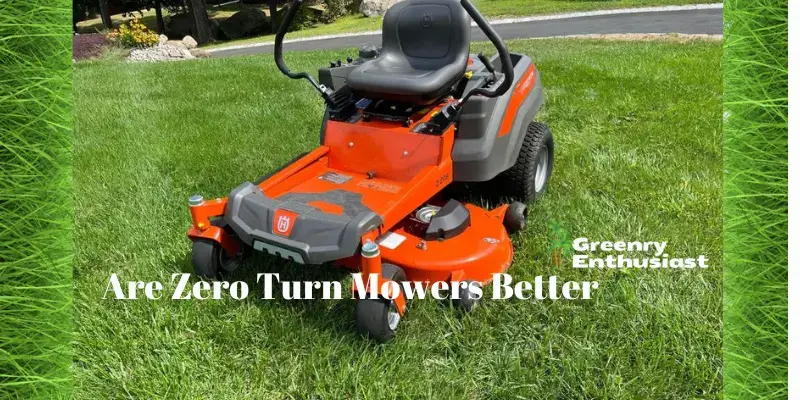
Are Zero Turn Mowers Better Than Riding Mowers?
If you are trying to decide between a zero turn mower and a traditional riding mower, you are asking the right question. Both machines cut grass — but they do it differently, they cost differently, and they are better suited for different types of lawns.
The short answer is: zero turn mowers are better for large, flat, open lawns where speed and maneuverability matter. Riding mowers are better for smaller properties, hilly terrain, and budget-conscious buyers.
But the full picture is more nuanced than that. Let me break it down completely.
What Is a Zero Turn Mower?
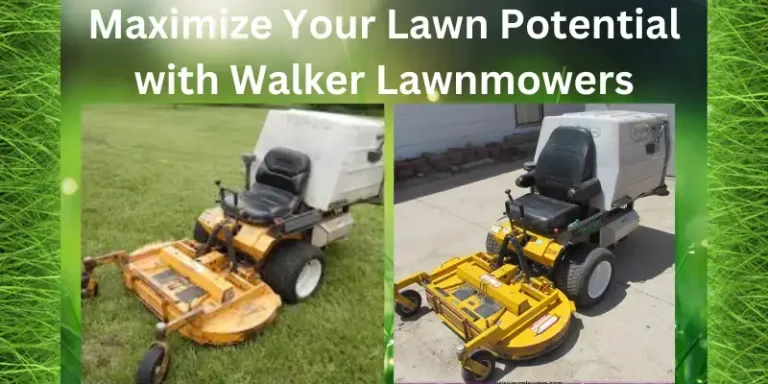
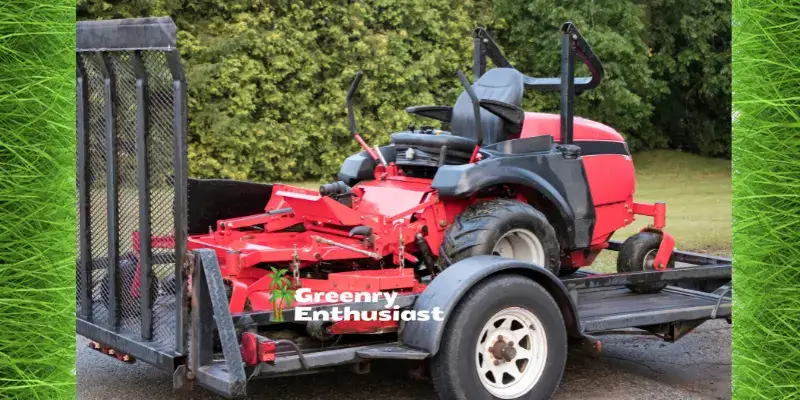
A zero turn mower is a riding mower where each rear wheel is driven by its own independent hydraulic motor. Instead of a steering wheel, the operator uses two lap bars — one for each rear wheel. Pushing both bars forward moves the mower forward. Pulling one bar back while pushing the other forward causes the mower to spin on the spot, achieving a zero-inch turning radius.
This is where the name comes from — the mower can literally turn in place without leaving any uncut circle of grass.
The mowing deck on a zero turn mower sits out in front of the machine, between the front caster wheels. This forward deck position allows the operator to cut right up to the edge of obstacles like trees, flower beds, and fence posts without needing to go back and trim with a push mower afterward.
What Is a Riding Mower?
A traditional riding mower — sometimes called a lawn tractor — works more like a car. The operator sits on a seat, steers with a steering wheel, and the mowing deck hangs underneath the machine between all four wheels.
Riding mowers are simpler to operate, generally less expensive, and more stable on uneven or hilly ground. Their turning radius is larger than a zero turn mower, which means more passes are needed around obstacles and tighter areas.
Zero Turn vs Riding Mower — Side by Side Comparison
| Feature | Zero Turn Mower | Riding Mower |
| Turning radius | Zero inches | 18 to 24 inches |
| Mowing speed | 7 to 10 mph | 4 to 6 mph |
| Best lawn size | 1 acre and above | Up to 2 acres |
| Hill performance | Poor to moderate | Good |
| Ease of learning | Moderate | Easy |
| Price range | $2,500 to $10,000+ | $1,200 to $4,000 |
| Deck position | Front of machine | Under machine |
| Trimming around obstacles | Excellent | Moderate |
| Comfort on long jobs | Excellent | Good |
| Fuel efficiency | Moderate | Good |
6 Advantages of Zero Turn Mowers
Speed
Zero turn mowers are significantly faster than riding mowers. Most residential models operate between 7 and 10 mph compared to 4 to 6 mph for a lawn tractor. On a one-acre lawn, a zero turn mower can cut mowing time by 30 to 50 percent.
For someone mowing a large property every week during the growing season, this time saving adds up to several hours per month.
Maneuverability
The zero radius turning capability is the defining advantage of these machines. When you need to cut around a tree, a flower bed, a mailbox post, or any other obstacle, a zero turn mower can wrap tightly around it and cut in a single clean pass. A riding mower requires multiple three-point turns to achieve the same result.
On a lawn with many trees and garden beds, a zero turn mower can eliminate the need for a separate string trimmer pass entirely.
Cleaner Cut Lines
The front-mounted deck on a zero turn mower cuts grass that the mower has not yet driven over. This produces cleaner, more consistent cut lines compared to a riding mower where the tires have already compressed the grass before the deck reaches it.
Larger Cutting Decks
Zero turn mowers are typically available with wider cutting decks — from 42 inches up to 72 inches for commercial models. Wider decks mean fewer passes to cover the same area, further reducing mowing time.
Professional Results
The combination of speed, maneuverability, and clean cutting lines is why professional lawn care companies almost universally use zero turn mowers. The striped lawn patterns you see on professional sports fields and well-maintained properties are most easily achieved with a zero turn mower.
Operator Comfort
On long mowing jobs, zero turn mowers are generally more comfortable. Most models have high-back seats, armrests, and vibration-dampening suspension. When you are spending two or three hours mowing a large property, this matters.
5 Disadvantages of Zero Turn Mowers
Poor Hill Performance
This is the most important limitation of zero turn mowers and the one most likely to cause a dangerous situation. The independent rear wheel drive system that makes zero turns so maneuverable on flat ground becomes a liability on slopes.
On hills steeper than 15 degrees, the rear wheels can lose traction independently, causing the mower to slide or spin sideways. Most manufacturers recommend against using zero turn mowers on slopes steeper than 10 to 15 degrees.
If your property has significant slopes, a riding mower or a specialized hillside mower is a much safer choice.
Learning Curve
The lap bar control system feels unnatural to most new users. New operators frequently over-correct, causing the mower to zigzag or spin unexpectedly. Most people need several hours of practice before they feel fully confident controlling a zero turn mower smoothly.
A riding mower with a steering wheel is immediately intuitive for anyone who can drive a car.
Higher Cost
Zero turn mowers cost significantly more than comparable riding mowers. A quality residential zero turn starts at around $2,500 to $3,500, while a capable riding mower can be had for $1,500 to $2,500. Commercial zero turn mowers run $6,000 to $15,000 or more.
Turf Damage During Turns
When a zero turn mower pivots sharply, the rear wheel that reverses direction can tear up the grass surface, leaving ruts or bare patches. This is most noticeable on soft ground or after rain. With proper technique — making wide, gentle turns rather than sharp pivots — this can be minimized, but it takes practice.
Not Suitable for Small Lawns
On a small lawn with many obstacles, a zero turn mower’s size and turning style can actually make mowing slower and more awkward than a walk-behind or small riding mower. Zero turn mowers truly shine on open spaces of one acre or more.
How Does a Zero Turn Mower Work?
Zero turn mowers use a hydrostatic transmission for each rear wheel. Each lap bar controls the flow of hydraulic fluid to the motor on its corresponding rear wheel:
- Push both bars forward equally — mower moves straight ahead
- Push one bar further forward than the other — mower turns toward the slower side
- Push one bar forward and pull the other back simultaneously — mower spins in place (zero turn)
- Pull both bars back — mower reverses
The front wheels are passive caster wheels — they swivel freely and simply follow wherever the rear wheel drive takes the machine.
Zero Turn Mower with Steering Wheel
Most zero turn mowers use the traditional lap bar control system. However, some manufacturers offer steering wheel versions of zero turn mowers. These combine the maneuverability of zero turn rear wheel drive with the familiar feel of a steering wheel.
Steering wheel zero turns are a good option for:
- Older operators who find lap bars physically difficult
- First-time zero turn users who want an easier learning curve
- Anyone who prefers a car-like driving experience
The trade-off is that steering wheel zero turns are generally more expensive than lap bar versions with similar specifications.
How to Stripe a Lawn with a Zero Turn Mower
One of the most popular reasons homeowners choose zero turn mowers is the ability to create professional-looking stripe patterns. Here is how to do it:
Step 1 — Plan your stripe direction
Choose whether you want horizontal, vertical, or diagonal stripes. Mark a reference line along one edge of the lawn to keep your first pass straight.
Step 2 — Make your first pass along the edge
Mow along the reference edge in a straight line. This first pass sets the direction for all subsequent passes.
Step 3 — Reverse direction on each pass
At the end of each row, make a wide gentle U-turn outside the mowing area, line up with the previous pass, and mow back in the opposite direction. Overlapping each pass by 2 to 3 inches prevents uncut strips.
Step 4 — Mow a border around the perimeter
After completing all the stripe passes, mow one or two passes around the entire perimeter of the lawn. This cleans up the turn marks and gives the lawn a finished, professional appearance.
Step 5 — Alternate direction each week
Mowing in the same direction every time causes grass to lean permanently in one direction. Rotating your stripe direction by 90 degrees each week keeps the grass growing upright and produces better striping results over time.
What Size of Lawn Do You Need for a Zero Turn Mower?
Zero turn mowers start to show their time-saving advantage on lawns of one acre or larger. On smaller lawns, the mower’s size and minimum turning space can actually make it less efficient than a smaller machine.
| Lawn Size | Best Machine |
| Under 1/4 acre | Walk-behind push mower |
| 1/4 to 1/2 acre | Walk-behind self-propelled mower |
| 1/2 to 1 acre | Small riding mower |
| 1 to 3 acres | Zero turn mower (residential grade) |
| 3 acres and above | Zero turn mower (commercial grade) |
Things to Consider When Choosing a Zero Turn Mower
Deck size — Match the deck width to your lawn size. A 42 to 48 inch deck suits most residential lawns of 1 to 2 acres. Larger properties benefit from 52 to 60 inch decks.
Engine power — Residential zero turns typically use 20 to 25 HP engines. Heavier grass, thicker turf, or frequent mowing in wet conditions calls for more power at the upper end of this range.
Drive system — All residential zero turns use hydrostatic drive, but commercial-grade pumps and wheel motors are significantly more durable and responsive than entry-level residential components.
Seat and comfort — If you are mowing for more than an hour at a time, pay close attention to seat quality, armrest design, and whether the machine has any suspension. An uncomfortable seat makes long mowing sessions exhausting.
Fuel type — Gas-powered zero turns are most common and offer the most power. Battery-electric zero turns are increasingly capable and eliminate fuel costs and exhaust, though they carry a higher upfront price and limited runtime per charge.
FREQUENTLY ASK QUESTIONS (FAQs)
Conclusion
Zero turn mowers are better than riding mowers in specific situations — large flat lawns, properties with many obstacles to mow around, and situations where mowing time and cut quality are the top priorities.
Riding mowers are better for hillier terrain, tighter budgets, and operators who want the simplest possible machine to learn and operate.
For most homeowners with one acre or more of relatively flat lawn, a zero turn mower will cut mowing time significantly and produce noticeably better results. The higher upfront cost pays back quickly in time saved over multiple mowing seasons.
Related Posts:
- 5 Disadvantages of Zero Turn Mowers
- Zero Turn Mower Pulling to One Side — Causes and Fixes
- Zero Turn Mower Won’t Go Forward or Reverse
- How to Jack Up a Zero Turn Lawn Mower Safely
- Common Ariens Zero Turn Mower Problems and Solutions