How to Get Rid of Dandelions Naturally
Every April the same invasion repeats: cheerful yellow flowers carpeting the lawn, and within a week they’re white puffballs launching seeds into every yard on the block. Meanwhile the internet offers a parade of “miracle” remedies — vinegar sprays, salt potions, mowing tricks — that sound great and mostly don’t work.
Here’s the honest version. Dandelions CAN be beaten without synthetic herbicides, but only by methods that respect how the plant actually survives. This guide ranks every natural method by what actually kills dandelions — with the limits of each stated upfront, including the popular remedies that are a waste of your time.
Know Your Enemy — Why Dandelions Are Hard to Kill
Dandelions aren’t stubborn by accident. They’re engineered for survival in two ways:
The taproot. Dandelions grow a thick, deep taproot — sometimes over a foot long — that stores enough energy to regrow the entire plant. Snap it off below the crown and the fragment left underground simply sprouts a new rosette. Any method that doesn’t remove or destroy the whole root is a haircut, not a kill.
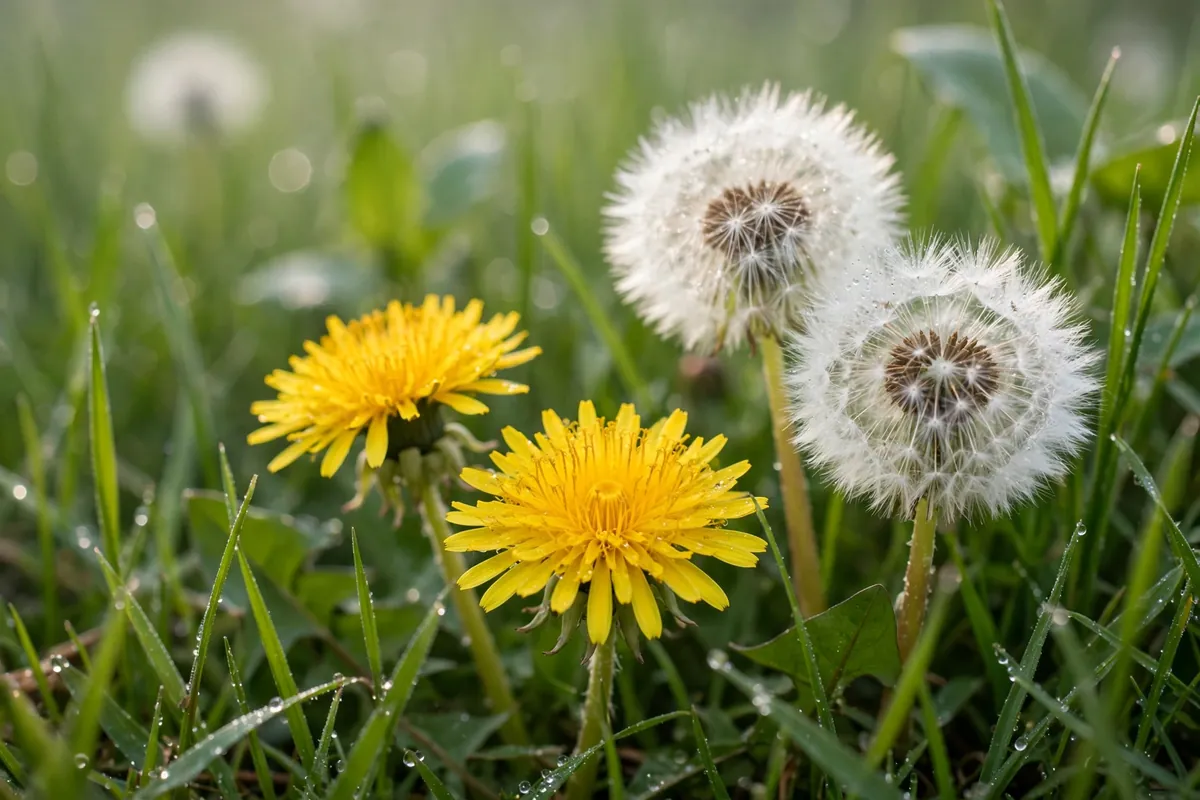
The seed head. A single yellow flower becomes a puffball holding roughly 200 seeds, each designed to ride the wind for miles. One neglected plant can seed your entire neighborhood. This is also why mowing matters in a counterintuitive way: mowing a lawn of white seed heads doesn’t destroy them — it flings them. If you mow AFTER they’ve gone white, you’re planting next year’s crop.
The takeaway: beat the taproot (kill the plant) AND beat the seed cycle (prevent the next generation). Everything below follows that two-part logic.
What Actually Works (Ranked)
Ranked from most to least effective at actually killing dandelions without chemicals:
1. Taproot Removal — The Gold Standard
This is the only natural method that kills a dandelion plant outright, guaranteed. No spray, no potion, no home remedy matches a complete taproot removal. Everything else on this list is prevention or suppression.
The technique:
- Water first. Pull the day after rain or water the area deeply. Moist soil lets the taproot slide out whole; dry soil is where taproots snap.
- Use a dandelion weeder or garden fork — the long, narrow kind with a forked tip. Push it vertically into the soil alongside the root, about 2–3 inches from the crown.
- Lever from the side. Pry the tool back and push the whole root up from underneath — don’t just yank the leaves.
- If the root snaps, dig out the fragment. Any piece left behind regrows. This is the step most people skip, and it’s why “pulling doesn’t work” for them.
- Bag the plants — never compost seed heads. Compost piles rarely get hot enough to kill dandelion seeds. Anything with a flower or puffball goes in the yard waste bin.
Do this in spring before plants flower and you’ve broken the cycle before it starts.
2. Thick Lawn Prevention — The Long Game
Dandelions don’t colonize healthy lawns — they colonize thin, bare soil. Bare patches are open invitations for wind-blown seeds to land, germinate, and take hold. The long-term cure is a lawn so dense that seeds never find bare ground.
- Overseed thin areas every fall. Fall is the repair season — warm soil, low weed pressure, months of establishment before spring. Our guide to overseeding a lawn without aerating walks through the full process, and if you’re choosing seed, see the fastest-growing grass seed options for quick fill-in.
- Mow high — 3.5 to 4 inches. Tall grass shades the soil surface, and dandelion seeds need light to germinate. Scalping the lawn is practically an invitation.
- Feed properly. A well-fed lawn grows thick enough to outcompete seedlings before they establish. (If your grass looks pale or patchy, start with our guide on why grass is turning yellow in patches.)
No single season of overseeding fixes a dandelion problem. But two falls of consistent thickening, and the invasion pressure drops dramatically.
A dense lawn is the best defense, so follow UMass’s cultural management advice to keep dandelions from returning.
3. Corn Gluten Meal — Timing Is Everything
Corn gluten meal is the one legitimate natural pre-emergent: it inhibits seeds from establishing roots after germination. Understand exactly what that means:
- It prevents SEEDS from establishing. It does NOTHING to dandelions already growing in your lawn. Spraying it on visible dandelions is wasted money.
- Apply in early spring, before germination — the same roughly 55°F soil-temperature window used for crabgrass pre-emergent (see the crabgrass battle plan for the timing method).
- Honest expectations: university trials show modest results, and it takes 2–3 seasons of consistent, correctly timed spring applications to show real effects. This is a long-game supplement, not a rescue treatment.
If you want a chemical-free pre-emergent and you’re patient, corn gluten meal has a real (if modest) role. If you need results this season, skip to taproot removal.
4. Boiling Water — For Cracks and Edges Only
Boiling water kills dandelions on contact — root and all. The catch: it’s completely non-selective. Pour it on the lawn and you kill the grass around the dandelion too, leaving a dead patch that’s even more inviting to the next seed.
Use it only where there’s no grass to kill: pavement cracks, patio edges, gravel borders, garden-bed edges. For dandelions in the actual lawn, it’s the wrong tool.
For research-backed organic options, consult UC IPM’s dandelion management guide.
What DOESN’T Work (The Honest Section)
This is the section most guides won’t write, because debunking gets fewer clicks than miracle recipes. Here it is anyway:
Vinegar. Household vinegar (5%) burns dandelion leaves, and the plant regrows from its taproot within weeks — looking exactly like it did before. Horticultural vinegar (20%+) is more destructive but comes with a real skin-and-eye hazard, and it still doesn’t kill the taproot. Vinegar is also non-selective: it damages the grass around the dandelion. Vinegar is a leaf-burner, not a dandelion killer. Never believe a recipe that presents it as a root killer.
Hand-pulling without a tool. Grabbing the leaves and yanking snaps the taproot nearly every time — which guarantees regrowth, often stronger. This is the #1 reason people say “pulling doesn’t work.” Pulling works; bad pulling doesn’t.
Mowing them down. Feels productive. Does nothing to the root. Worse: mowing plants that have gone to white seed spreads seeds across the whole lawn. If you must mow when dandelions are seeding, bag the clippings.
Salt. Salt kills the dandelion — and sterilizes the soil around it so nothing grows there for a season or more. Never use salt on a lawn, full stop.
If you’re reading this and thinking natural methods sound like a lot of work for a bad infestation: fair. If you decide natural isn’t enough, our weed killer for lawns overview covers the conventional options honestly. No judgment — but now you know exactly what the natural route requires.
The Seasonal Dandelion Calendar
The seasonal calendar below:
| Season | Action |
|---|---|
| Early spring | Apply corn gluten meal before germination (55°F soil window); pull any early plants before they flower |
| Late spring | Pull religiously — get every plant BEFORE it sets seed; bag everything with flowers |
| Summer | Mow high (3.5–4″) to shade soil; spot-pull strays; never let a plant reach the puffball stage |
| Fall | Overseed thin and bare areas — this is the real long-term fix |
| Winter | Plan: mark your calendar for the spring corn-gluten window and first pull |
(Fighting a different invader? See the crabgrass battle plan — or if it’s that tall, fast-growing stalk weed, our guide on dealing with horseweed instead.)
Frequently Asked Questions
What kills dandelions naturally without chemicals?
Complete taproot removal is the only natural method that kills the plant outright. Corn gluten meal prevents new seeds from establishing (but won’t kill existing plants), and a thick overseeded lawn prevents them long-term.
Does vinegar kill dandelions permanently?
No — vinegar burns the leaves but doesn’t kill the deep taproot, so the dandelion regrows within weeks. It’s also non-selective and will damage surrounding grass.
Will pulling dandelions get rid of them?
Only if you remove the entire taproot — if it snaps off underground, the plant regrows from the fragment. Water first, use a dandelion weeder to lever the whole root out, and never compost the seed heads.
Does corn gluten meal really work on dandelions?
As a pre-emergent (stops seeds from establishing), modestly — university trials show it takes 2–3 seasons of correctly timed spring applications to show real results. It does nothing to dandelions already growing.
How do I stop dandelions from coming back every year?
Break the cycle on both ends: pull plants before they set seed (one flower = ~200 seeds), and overseed thin areas every fall so there’s no bare soil for seeds to colonize. A dense lawn is the best prevention.
Is it better to pull dandelions before or after it rains?
After — moist soil lets the taproot slide out whole instead of snapping. Pulling from dry, hard soil is the #1 reason taproots break and plants regrow.