Trees with White Bark: Species, Identification, and What the Science Actually Says
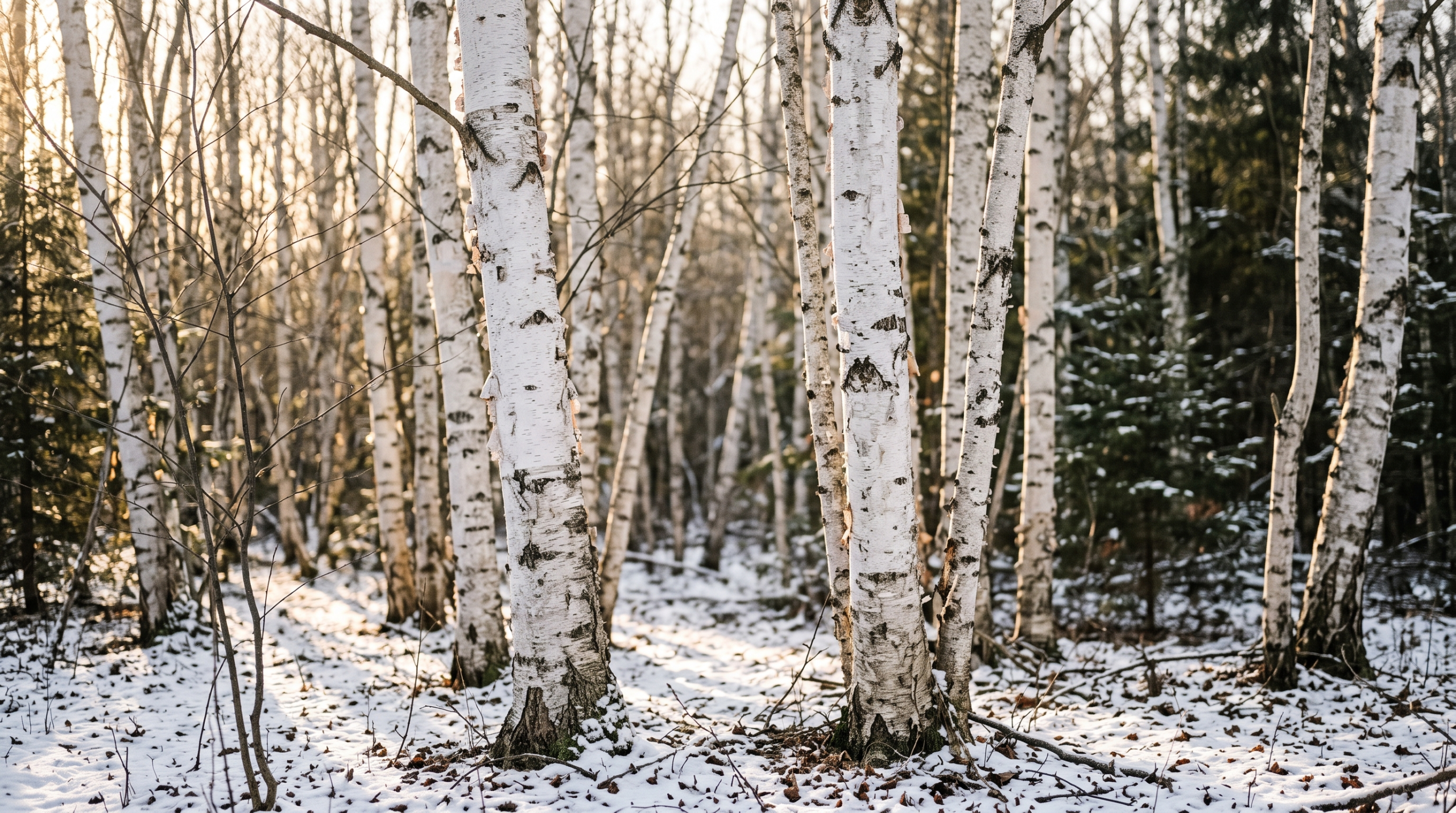
Walk through a winter garden or a northern forest and the trees that grab your eye aren’t the ones still holding leaves. They’re the ones with pale, almost glowing trunks standing out against bare branches and grey sky. White bark is one of the more striking things a tree can do, and it’s not just decoration. It’s a survival strategy that shows up again and again, in unrelated species, on different continents.
This guide walks through why white bark evolved, which trees actually have it, how to tell them apart in the field, and a few claims about these trees that turned out not to hold up once we checked them against primary sources.
Why Do Trees Have White Bark?
There isn’t one single reason. A few different mechanisms show up depending on the species.
It protects against sunscald. Dark bark absorbs heat. On a bright winter day, that can warm a trunk enough to reactivate tissue that should still be dormant, and then a hard overnight freeze can crack or kill that tissue. This freeze-thaw damage is known as sunscald, and it’s a real risk in cold climates with big day-to-night temperature swings. Pale bark reflects more of that heat instead of absorbing it, which keeps the trunk temperature more stable.
It helps delay dormancy break. A related idea, sometimes called bark thermoregulation, is that reflective bark helps a tree stay dormant a little longer through an unseasonably warm spell in late winter, rather than waking up early and then getting hit by the next frost. This is thought to be part of why birches and aspens do so well in the far north and at high elevations, from Alaska and the Rockies to Scandinavia.
In birches specifically, it comes down to one compound. The white color in birch bark is largely produced by betulin, a waxy triterpene that sits in the outer bark. Betulin isn’t just cosmetic. Peer-reviewed research on birch bark extracts has found real antimicrobial and antifungal activity, including activity against species like Candida albicans, which is one reason birch bark has held up so well historically as a material for canoes, baskets, and roofing. It’s genuinely rot-resistant, not just traditionally believed to be.
Painted bark works on the same principle. In orchards and street tree plantings in hot, high-UV regions, growers sometimes paint the lower trunks of young, thin-barked trees with a white, water-based latex wash. It’s not decorative. It’s doing the same job sunscald-resistant bark does naturally: reflecting heat and UV away from bark that hasn’t thickened enough yet to protect itself.
Trees with White Bark at a Glance
| Tree | Bark appearance | Typical mature height | Best suited to | Native range |
| Silver birch (Betula pendula) | White, peels in papery sheets, dark fissures with age | 49–82 ft | Cool climates, USDA zones 2–7 | Europe, North Africa, temperate Asia |
| Paper birch (Betula papyrifera) | Bright white, peels in horizontal sheets, dark lenticels | 50–70 ft | Cold northern climates | Alaska, Canada, northern U.S. |
| Himalayan birch (Betula utilis var. jacquemontii) | Brightest white of the birches, peels annually | 30–40+ ft | Cooler gardens with room to spread | Himalayas |
| River birch (Betula nigra) | Salmon-cinnamon outer layers peeling to reveal cream underneath, not pure white | 30–40 ft | Warmer, wetter zones than other birches | Eastern and central U.S. |
| Quaking aspen (Populus tremuloides) | Smooth, cream to pale greenish-white | 20–80 ft | Cool, high-elevation sites | Across North America |
| White poplar (Populus alba) | Whitish-grey with dark diamond lenticels | 40–80 ft | Not generally recommended, see below | Europe, central Asia |
| American sycamore (Platanus occidentalis) | Mottled white, cream, and green on upper trunk only | 75–100 ft | Riverbanks, floodplains, large properties | Eastern and central U.S. |
| Ghost gum (Corymbia species) | Smooth, powdery white to cream | Up to about 66 ft | Hot, dry, frost-free climates | Central and northern Australia |
Try Out:
The Birches
Birches, genus Betula, are the group most people picture when they hear “white bark tree.” But not every birch looks the same, and they don’t all suit the same climate.
Silver birch
(Betula pendula) is Europe’s classic white-barked tree, and its national tree in Finland. According to Wikipedia’s overview of the species, the bark starts golden-brown on young trees and turns white as a papery outer layer develops and peels away, with dark fissures developing lower down the trunk as the tree ages. It’s widely planted as an ornamental well outside its native range, including in cities as warm as Los Angeles and Sydney.
One claim worth flagging here: some garden sites describe silver birch (often under the name “European white birch”) in fairly uncomplicated, always-plant-it terms. That’s not the whole picture. Wikipedia’s species overview, citing a USDA Forest Service invasive species assessment, notes that European white birch is classified as invasive in Kentucky, Maryland, Washington, and Wisconsin, and is naturalized and locally invasive in parts of Canada. It’s not a problem everywhere, but it’s worth a quick check of your state’s invasive plant list before planting it in North America.
Paper birch
(Betula papyrifera) is the North American equivalent, and arguably has the most dramatic peel of any white-barked tree, curling away from the trunk in thin horizontal sheets to reveal a creamy or pale pink layer underneath. Young trees are reddish-brown and don’t take on their full white color until they’re around five to ten years old. It needs real cold to thrive and struggles badly in warm, humid summers.
Himalayan birch
(Betula utilis var. jacquemontii) has the whitest bark of the group by most accounts, peeling annually to reveal a fresh layer that starts yellowish and matures to a near-luminous white. It’s a good choice where there’s space for a full-sized tree and a climate on the cooler side.
River birch
(Betula nigra) is the odd one out. Its bark peels in curling layers of salmon and cinnamon that expose cream and beige patches rather than a uniform white trunk, and it’s noticeably more tolerant of heat, humidity, and wet soil than the other birches on this list. If you live somewhere too warm for paper or silver birch, river birch is usually the better bet.
Gray birch
(Betula populifolia) has a chalky white trunk that doesn’t peel dramatically the way paper birch does, and it tends to grow as a leaning, multi-stemmed clump rather than a single upright tree. It’s a good identifier for poor, rocky, disturbed soils in the northeastern U.S., where paper birch would struggle.
The Aspens and Poplars
Genus Populus covers aspens, poplars, and cottonwoods, and two members of the group are common white-barked garden and forest trees.
Quaking aspen
(Populus tremuloides) has smooth, non-peeling bark in a pale cream to slightly greenish-white, with dark, eye-shaped scars where old branches have dropped. Its rounded leaves sit on flattened stalks that let them flutter constantly, even in a light breeze, which is where both the common name and the “quaking” come from.
This is also where one of the more repeated claims online turns out to be wrong. A few gardening sites describe quaking aspen as living an average of about 20 years. That doesn’t match what forestry and wildlife sources actually report. The U.S. Forest Service and the National Wildlife Federation both put individual aspen stem lifespan at roughly 50 to 60 years on average, with some stems living up to 150 years in the West. What’s true is that any one visible trunk is relatively short-lived for a tree. What gets lost in the “20 years” version is that a whole aspen grove is usually one connected organism, all genetically identical stems sharing a single root system, and that root system can outlive any individual stem by thousands of years. The best-known example is Pando, a single quaking aspen clone in Utah’s Fishlake National Forest made up of an estimated 47,000 stems spread across roughly 106 acres, widely cited as one of the heaviest living organisms on Earth.
Quaking aspen also isn’t a great fit for most home gardens outside cool, high-elevation regions. Missouri Botanical Garden’s plant database notes it struggles badly with the heat and humidity of a typical warm-summer climate, and it’s generally intolerant of urban pollution.
White poplar
Populus alba, also called silver poplar, has whitish-grey bark marked with dark, diamond-shaped lenticels, and leaves with dense white woolly undersides that flash silver in wind. This is another spot where a common claim needed a closer look. One source described white poplar as flatly illegal to own in “numerous states.” That’s an overstatement, but the underlying concern is real. According to the USDA-affiliated invasive plant network Invasive.org and state agriculture department sources, white poplar is a prohibited species in Connecticut, restricted in Wisconsin, and on Maine’s official invasive “do not sell” list, and it’s flagged as invasive or discouraged for planting by extension services in states including Minnesota and Massachusetts. It spreads aggressively through root suckers rather than through seed alone, which is why it shows up on so many state lists even where it isn’t formally banned. The safer summary: check your specific state before planting it, and expect it to spread if you do.
American Sycamore
American sycamore (Platanus occidentalis) doesn’t look like a birch at all, and that’s part of what makes it worth including here. The lower trunk stays rough and grayish-brown, but starting around 15 to 20 feet up, the outer bark sheds in large, irregular plates, exposing chalky white, cream, and pale green patches underneath. The result is a mottled, mosaic pattern rather than a solid white trunk, and it’s a completely normal, healthy part of how the tree grows, not a sign of disease or stress.
Sycamores are large, commonly reaching 75 to 100 feet, and they favor wet soil, growing especially well along riverbanks and floodplains. They’re also notably tolerant of urban pollution and disease, which is part of why they’re such a common street and park tree in the eastern and central U.S.
Warm-Climate and Ornamental Options
Most of the trees above want a cold winter. If you’re gardening somewhere that doesn’t get one, there are still white-barked options.
Ghost gum is actually a common name shared by several Corymbia species native to Australia, not just one. Corymbia aparrerinja, the species most often meant by the name, is endemic to central Australia and has smooth, powdery white to cream bark, growing to around 20 metres (66 feet) in the wild, though it’s usually smaller on the rocky sites where it’s often found. It needs a genuinely hot, dry, frost-free climate to thrive and isn’t a realistic option outside the warmest parts of the U.S.
Weeping cherry (Prunus pendula) is grown mainly for its spring blossom, but its bark is a legitimate secondary feature: pale and smooth, it becomes the main visual interest once the leaves and flowers are gone for the year. It’s a much smaller, easier-to-place tree than a birch or sycamore, typically staying around 25 feet tall and wide.
Snakebark maples, including Acer tegmentosum ‘White Tigress’ and Acer davidii ‘Viper’, aren’t solid white. Their bark is striated with green and silvery-white veining that resembles snake skin, which is a different effect from a birch but still reads as pale and eye-catching, especially in a woodland or shade garden setting where a full birch might not fit.
Identifying a White-Bark Tree in the Field
If you’re standing in front of a pale-trunked tree and trying to work out what it is, four checks will get you most of the way there.
Does the bark peel? Peeling in horizontal sheets points to a birch, and paper birch specifically if the peel is dramatic and the underlying layer is cream or pale pink. Smooth, non-peeling bark points to an aspen or a poplar instead.
Where on the tree is the white concentrated? If the trunk is only white or pale high up, with rougher, darker bark lower down, that’s the signature of an American sycamore, not a birch.
What do the leaves look like? Small, rounded leaves on flattened stalks that flutter constantly, even in still air, mean aspen. Triangular, toothed leaves mean birch. Maple-shaped leaves with white, woolly undersides mean white poplar.
Where is it growing? Sycamores want to be near water. Birches generally favor cooler forests and are common ornamental plantings. Aspens tend to appear in large, connected groves, often at higher elevation.
Using White-Bark Trees in a Garden
A pale trunk does the most visual work when it has something to contrast against, and there are a few pairings that come up consistently in garden design advice.
- Plant against dark evergreens. A backdrop of conifers or dark-leaved shrubs makes a white trunk far more visible, especially in winter when there’s no competing foliage.
- Pair with red or copper bark. Trees or shrubs with red, coral, or bronze stems, such as red-twig dogwood or coral bark maple, create a strong seasonal contrast next to a white-barked birch or aspen.
- Match the tree to your actual climate before anything else. This matters more than any styling choice. Birches generally need real cold and struggle in heat and humidity. Sycamore and river birch tolerate far more heat and wet soil. Ghost gum needs the opposite, a hot, dry, frost-free climate. Getting this wrong is the most common reason a white-barked tree fails to thrive, regardless of how well it’s placed.
- Check size before you plant. Paper birch, silver birch, and American sycamore are all large trees at maturity, generally 50 feet or more. In a small garden, river birch, weeping cherry, or a snakebark maple will fit far more comfortably.
Frequently Asked Questions
Sources consulted and verified:
- U.S. Forest Service, “How Aspens Grow“
- National Wildlife Federation, “Quaking Aspen“