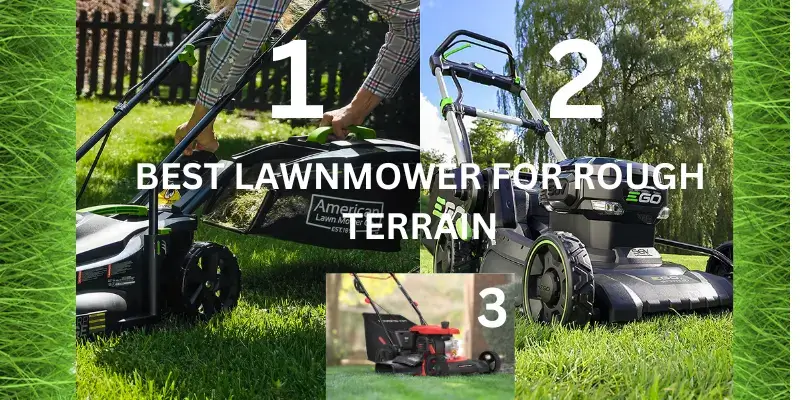
Best Lawn Mower for Rough Terrain: 7 Key Features & Buying Guide
A rough terrain mower needs four things above all: high ground clearance (4+ inches), rear-wheel or all-wheel drive, big wheels with aggressive tread, and enough engine power (160cc+ for walk-behind, 18 HP+ for riding). With those, slopes, bumpy ground, thick grass, and rocky patches become manageable instead of miserable.
This guide covers the 7 key features that separate a true rough terrain mower from a flat-lawn machine, which mower type fits your terrain, and the mowing techniques that keep you safe on slopes.
What Counts as Rough Terrain?
Rough terrain covers a wide range of conditions:
Sloped or hilly ground — Any incline steeper than 10 to 15 degrees puts significant demands on traction, stability, and braking.
Uneven or bumpy ground — Lawns with dips, mounds, tree roots, or irregular surfaces that cause the mower deck to bounce and scalp the grass.
Thick or overgrown grass — Grass that has grown very tall or thick puts extra load on the engine and cutting blades.
Rocky or debris-strewn areas — Ground with stones, roots, or other hard objects that the blades might strike.
Soft or wet ground — Waterlogged soil that causes wheels to sink and lose traction.
7 Key Features to Look for in a Rough Terrain Lawn Mower
High Ground Clearance
Ground clearance is the distance between the lowest point of the mower deck and the ground surface. On rough terrain, it is critical.
A mower with low ground clearance will catch and scrape on every bump, mound, or tree root it passes over. This not only produces a rough, uneven cut — it can bend the deck or damage the blade spindles over time.
What to look for
At minimum 4 inches of ground clearance for moderate rough terrain. For seriously uneven ground, look for 5 to 6 inches or more.
All-Wheel Drive or Rear-Wheel Drive
On slopes and rough terrain, front-wheel drive loses traction as soon as the front of the mower lifts.
Rear-wheel drive (RWD) maintains better traction on slopes because the engine weight sits over the drive wheels.
All-wheel drive (AWD) provides the best traction — both front and rear wheels driven simultaneously. AWD mowers are noticeably more stable on steep slopes and wet ground.
What to look for: Rear-wheel drive as minimum for sloped terrain. All-wheel drive for steeper slopes or wet conditions.
Large Wide Wheels with Good Tread
- Larger diameter wheels roll over bumps more smoothly
- Wide tires distribute weight over larger surface area — less sinking on soft ground
- Aggressive tread grips uneven and soft terrain far better than smooth tires
What to look for: Rear wheels of at least 8 inches diameter on walk-behind mowers.
Powerful Engine
Rough terrain constantly loads the engine harder than flat ground mowing.
Walk-behind mowers: At least 160cc to 190cc engine displacement for rough terrain. Riding mowers: Minimum 18 to 20 HP for rough terrain up to 2 acres.
Wide Cutting Height Range
What to look for: Cutting height range of at least 1 inch to 4 inches with easy single-lever adjustment.
Floating Deck (On Riding Mowers)
A floating deck moves up and down independently, following the contour of the ground. On rough terrain, this means a consistent cut height and far less risk of the deck striking obstacles.
What to look for: Any riding mower for rough terrain should have a floating deck.
Low Center of Gravity
Stability on slopes depends on where the mower’s weight is concentrated. Wide wheelbase and lower seat heights keep the center of gravity closer to the ground — much safer on slopes.
Which Type of Mower is Best for Rough Terrain?
| Terrain Type | Best Mower |
| Steep slopes over 15 degrees | Self-propelled walk-behind (AWD/RWD) |
| Large uneven rolling terrain | Riding lawn tractor with floating deck |
| Mildly uneven flat ground | Zero turn mower (gentle terrain only) |
| Overgrown brush and thick scrub | Rough cut / brush mower |
Self-Propelled Walk-Behind — Best for Steep Slopes
For slopes steeper than 15 degrees, a self-propelled walk-behind mower is the safest option. They are lighter, lower to the ground, and far less prone to tipping than any riding mower.
Riding Lawn Tractor — Best for Large Uneven Terrain
For large rough terrain properties of one acre or more with moderate slopes under 15 degrees, a riding lawn tractor with a floating deck is the best combination of coverage and capability.
Zero Turn Mower — Use With Caution
Zero turn mowers perform poorly on slopes and rough ground. Most manufacturers recommend a maximum slope of 10 to 15 degrees. Never use a zero turn mower on steep or significantly uneven ground. For more on slope limits and tire traction, see this rough terrain mower FAQ →.
Rough Cut / Brush Mower — Best for Overgrown Ground
For seriously neglected terrain — thick brush, very tall grass, saplings, or rocky ground — a rough cut mower is designed specifically for this work with heavy-duty flail or blade systems.
Mowing Techniques for Rough Terrain
Mow across slopes, not up and down On significant slopes, always mow horizontally across the face of the slope. This dramatically reduces tipping risk. Walk-behind mowers are the exception — they are safer mowed up and down steep slopes.
Slow down on uneven ground On rough terrain, mowing speed should be about half what you would use on flat ground.
Raise the cutting height first On your first pass through rough terrain, raise the cutting height to maximum. This reduces engine load and prevents scalping. Make a second pass at your desired height afterward.
Check for obstacles before mowing Walk the area first and mark or remove any rocks, branches, or debris. A stone struck by a blade becomes a dangerous projectile.
Never mow wet slopes Wet grass dramatically reduces traction. Wait for the grass to dry completely before mowing any incline.
Keep blades sharp Sharp blades reduce engine load significantly — very important on rough terrain where the engine is already working harder.
Common Mistakes When Mowing Rough Terrain
Using a zero turn mower on steep slopes — Most dangerous mistake. Zero turn mowers can tip or slide sideways on slopes where a walk-behind would be stable.
Mowing up and down steep slopes on a riding mower — Riding mowers should always cross slopes horizontally to prevent backward tipping.
Ignoring worn tires — Worn tread loses traction quickly on slopes. On rough terrain, tread condition directly affects safety.
Keeping deck too low — Causes constant scalping and deck strikes on rough ground. Raise the height and accept a slightly taller cut.
Maintenance Tips for Rough Terrain Mowers
Rough terrain is harder on mowers. More frequent maintenance keeps the machine reliable:
Check blade condition after every mowing session — Rock strikes create nicks that throw blades out of balance
Inspect deck for damage regularly — Dents and cracks from ground strikes worsen over time
Grease spindles more frequently — Extra vibration accelerates wear in all rotating components
Change engine oil more often — Consider every 25 to 30 hours instead of standard 50 hours
Frequently Asked Questions
What is the best type of lawn mower for rough terrain?
For steep slopes over 15 degrees, a self-propelled walk-behind mower with rear-wheel or all-wheel drive is safest. For large rolling properties with moderate slopes, a riding lawn tractor with a floating deck is the best combination of coverage and capability. For severely overgrown brush, a dedicated rough cut (brush) mower is built for the job.
Can you use a zero turn mower on rough terrain?
Only on gentle, mildly uneven ground. Most manufacturers rate zero turn mowers for a maximum slope of 10 to 15 degrees. On steeper or significantly uneven ground they can tip or slide sideways — a walk-behind or lawn tractor is safer there.
What is the maximum slope angle for a riding mower?
Most riding mowers are rated for slopes up to 10 to 15 degrees. Always check your owner’s manual for your model’s exact slope rating, and mow across slopes rather than up and down.
How much horsepower do I need to mow rough terrain?
For walk-behind mowers, look for at least 160cc to 190cc of engine displacement. For riding mowers on rough ground up to 2 acres, a minimum of 18 to 20 HP handles the extra load.
Should you mow across or up and down a slope?
On a riding mower, always mow horizontally across the face of the slope to prevent backward tipping. Walk-behind mowers are the exception — they are safer mowed straight up and down on steep slopes.
FINAL THOUGHTs
Mowing rough terrain safely comes down to choosing the right machine and using the right technique. A self-propelled walk-behind mower with rear or all-wheel drive is the safest choice for steep slopes. A riding lawn tractor with a floating deck handles large rolling properties best.
Whatever machine you choose: mow at reduced speed, keep blades sharp, raise cutting height on first passes through thick areas, check for obstacles before starting, and never mow slopes in wet conditions.
Related Posts:
- Are Zero Turn Mowers Better Than Riding Mowers?
- 5 Disadvantages of Zero Turn Mowers
- Zero Turn Mower Pulling to One Side
- How to Jack Up a Zero Turn Lawn Mower Safely
- Best Cutting Height for a Healthy and Beautiful Lawn