When to Aerate Your Lawn: Best Time for Cool & Warm Season Grass
The best time to aerate your lawn is early fall — September through October — if you have cool-season grass like Kentucky bluegrass, tall fescue, or perennial ryegrass. For warm-season grasses like bermudagrass, zoysiagrass, or St. Augustinegrass, aerate in late spring through early summer, once the grass has fully greened up and is growing vigorously. Always aerate when the grass is actively growing and the soil is moist — never during dormancy, drought, or extreme heat. Most home lawns only need aerating once a year.
Getting the timing right is what separates aeration that transforms a lawn from aeration that stresses it. This guide covers the exact timing window for your grass type, the 7 signs your soil is compacted and crying out for aeration, how often to repeat it, the soil conditions that make aeration work best, and the common timing mistakes that damage lawns.
When to Aerate Your Lawn by Grass Type
The single biggest factor in timing is your grass type. Cool-season and warm-season grasses grow at opposite times of year, so they need aeration in opposite seasons.
Cool-season grasses (Kentucky bluegrass, tall fescue, fine fescue, perennial ryegrass): aerate in early fall, from late August through October, with September to October being the sweet spot. Fall brings cooler air, warm soil, and fewer weeds — ideal recovery conditions. Clemson Extension recommends allowing at least four weeks of good growing weather after aerating so the lawn fully recovers before winter. If you miss fall, early spring (late March through April) is a solid second choice.
Warm-season grasses (bermudagrass, zoysiagrass, St. Augustinegrass, centipedegrass, bahiagrass): aerate in late spring through early summer — May into June, extending through July — once the grass has fully greened up and daytime temperatures are consistently warm. Nebraska Extension notes warm-season grasses should be aerated while actively growing, from late May through late August.
| Grass Type | Examples | Best Aeration Window |
|---|---|---|
| Cool-season | Kentucky bluegrass, tall fescue, perennial ryegrass | Early fall (Sep–Oct); spring as backup |
| Warm-season | Bermudagrass, zoysia, St. Augustine | Late spring–early summer (May–Jul) |
Not sure which grass you have? Cool-season grasses dominate the northern US; warm-season grasses dominate the South; the transition zone in between grows both.
Why Timing Matters So Much
Aeration punches thousands of holes in your lawn. Done while the grass is actively growing, those holes fill in within weeks as roots expand into the loosened soil. Done at the wrong time — during summer dormancy, drought, or winter cold — the grass cannot recover, and the open holes invite weeds and stress instead of growth.
7 Signs Your Lawn Needs Aeration
1. Water pools after rain. If water sheets off or puddles instead of soaking in, compacted soil is blocking infiltration.
2. Worn, thinning areas in high-traffic zones. Paths, play areas, and anywhere kids, pets, or mowers pass repeatedly get compacted first.
3. The screwdriver test fails. Push a screwdriver into moist soil — if it slides in easily, you are fine; if you have to force it, the soil is compacted. This simple test is recommended by Clemson Extension.
4. The ground feels like concrete. Walk the lawn — compacted areas feel hard and unyielding underfoot.
5. Thatch is thicker than half an inch. Cut a small wedge of turf; if the brown spongy layer between grass and soil exceeds 1/2 inch, aeration will help break it down.
6. Your lawn sits on construction-compacted soil. New-build lawns are often laid over subsoil compacted by heavy machinery — a classic hidden cause of struggling turf.
7. Moss or weeds are taking over. Stressed, compacted turf loses the fight against moss and weeds. If moss is already spreading, here is how to remove and prevent moss in lawns.
How Often Should You Aerate Your Lawn?
Once a year is right for most lawns. Adjust from there:
- Twice a year: heavy clay soil, constant foot traffic, or visibly compacted ground.
- Every 2–3 years: sandy, loose soil with healthy turf.
Nebraska Extension puts it simply: aerate as often as needed — scout your lawn with the screwdriver test rather than following a rigid calendar.
The Best Conditions for Aerating
Timing on the calendar is not enough — the day itself matters too:
- Moist soil, not soggy. Aerate a day or two after rain or deep watering. Bone-dry soil resists the tines; muddy soil smears and compacts worse.
- Mild temperatures. Avoid heat waves — freshly opened turf dries out faster.
- Mow a little shorter first. A slightly lower cut lets the aerator reach the soil cleanly.
- Mark irrigation heads and buried lines before you start.
When NOT to Aerate — 5 Timing Mistakes
1. During dormancy. Brown, dormant grass cannot heal aeration holes.
2. In drought or extreme heat. Opened soil loses moisture even faster.
3. When the soil is soaking wet. Wet soil compacts under the machine instead of fracturing — wait until it is merely moist.
4. Right after seeding or sodding. Give new lawns about a full growing season to establish first.
5. Expecting spike aerators to fix clay. Spike tines push soil aside and can actually increase compaction between holes in heavy soil — hollow-tine core aeration is the proven fix.
What to Do Right After Aerating
- Leave the soil plugs. Let them dry a day or two, then break them up with a mower or rake — they return valuable soil and microbes to the lawn.
- Overseed and fertilize now. Aeration holes give seed perfect soil contact — it is the single best moment to thicken a thin lawn.
- Water lightly and consistently for the next couple of weeks.
- After a fall aeration, finish your seasonal prep.
Core Aeration vs. Spike Aeration (Quick Version)
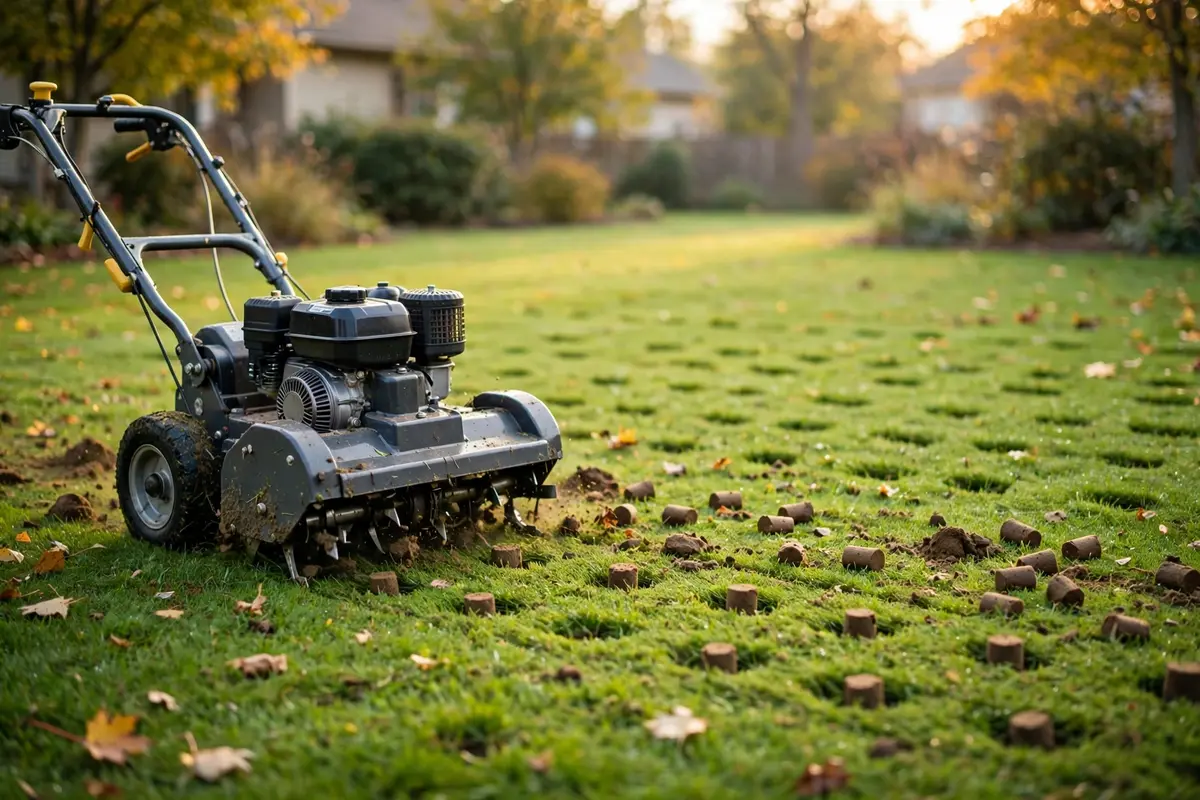
A core (hollow-tine) aerator pulls small soil plugs out of the ground — the gold standard, especially for clay. A spike aerator simply pokes holes, displacing soil sideways. For mildly compacted lawns a spike tool helps; for real compaction, rent a core aerator.
Frequently Asked Questions
What month is best to aerate my lawn?
September and October for cool-season grasses; May and June for warm-season grasses. These windows catch the grass at peak growth with mild weather.
Can I aerate my lawn in the spring?
Yes — early spring (late March through April) works as a second choice for cool-season lawns, especially if you missed fall aeration. Warm-season lawns prefer late spring into early summer.
Should I aerate before or after overseeding?
Always aerate first, then overseed. The holes give seeds direct soil contact, which dramatically improves germination.
Can you aerate a lawn too much?
It is hard to overdo. Heavily used clay lawns can handle twice a year; most lawns thrive on once a year; sandy lawns may need it only every two to three years.
Is November too late to aerate?
Not necessarily — if the grass is still growing and the ground is not frozen, you can aerate. Just make sure roughly four weeks of growing weather remain before hard frost sets in.
Final Thoughts
Aeration is one of the highest-impact lawn jobs there is — but only when the timing is right. Match aeration to your grass’s active growing season, wait for moist soil and mild weather, and your lawn will fill those holes with deeper roots and thicker turf within weeks.