What Is Polymeric Sand? How to Use It for Paver Joints
Polymeric sand is a dry blend of fine sand and water-activated polymer binders. You sweep it into the joints between pavers while dry, compact it, sweep the paver surface spotless, then mist it lightly with water in several passes — the polymers bind the grains into firm, weed-proof, washout-resistant joints. Keep foot traffic off for 24 hours and vehicles off for 48–72 hours while it cures.
It beats regular sand on all three fronts that matter: weeds can’t root through hardened joints, ants can’t tunnel through them, and heavy rain won’t wash them out. But it punishes sloppy work — over-watering washes the binders right out of the sand, and any dust left sitting on the pavers bonds into a cloudy white haze that’s hard to remove. Get the prep and watering right, and the joints last for years with almost no maintenance.
What Is Polymeric Sand and How Does It Work?
Polymeric sand is a fine, dry sand blended with polymer additives — special binding agents that activate when they come into contact with water. You sweep it into the joints between pavers while it’s dry, then mist it with water. The polymers bind the sand grains together, and the joints harden into a firm, flexible mass.
Once cured, polymeric sand joints resist weed growth, discourage ants from tunneling, and stand up to rain washout far better than plain sand. The set material stays slightly flexible, so it can handle small shifts in the pavers without cracking apart.
Polymeric Sand vs Regular Sand
Regular joint sand simply sits in the gaps by gravity and friction. It works, but it washes out in heavy rain, gives weeds an easy rooting medium, and invites ant colonies.
Polymeric sand solves all three problems: the bound joints don’t wash out easily, weeds can’t push through the hardened material, and ants can’t tunnel through it. The trade-off is that polymeric sand demands careful installation — regular sand forgives sloppy work, polymeric sand does not.
Where You Can (and Can’t) Use Polymeric Sand
Polymeric sand works for most paver patios, walkways, pool decks, and driveways with concrete pavers, clay pavers, or natural stone. Most products are designed for joints between about 1/8 inch and 4 inches wide, with a minimum joint depth of around 1 inch — always check your specific product’s label, because requirements vary by manufacturer.
Don’t use it in permanently wet areas like fountain surrounds, drains, or spots where water always stands. Constant submersion slowly dissolves the binders. The paved surface also needs proper slope so water runs off instead of pooling.
How to Apply Polymeric Sand: Step by Step
What you’ll need: polymeric sand, a stiff push broom (and a soft fine-bristle broom for final cleaning), a plate compactor with a protective pad (or rubber mallet for small areas), a leaf blower, and a garden hose with a fine-mist spray nozzle.
Step 1: Make sure everything is dry
The pavers and the joints must be completely dry before you start. Don’t apply polymeric sand if it rained recently, if rain is forecast within the next day, or if temperatures are near or below freezing. Most manufacturers recommend air temperatures above 40–50°F (5–10°C).
Step 2: Sweep the sand into the joints
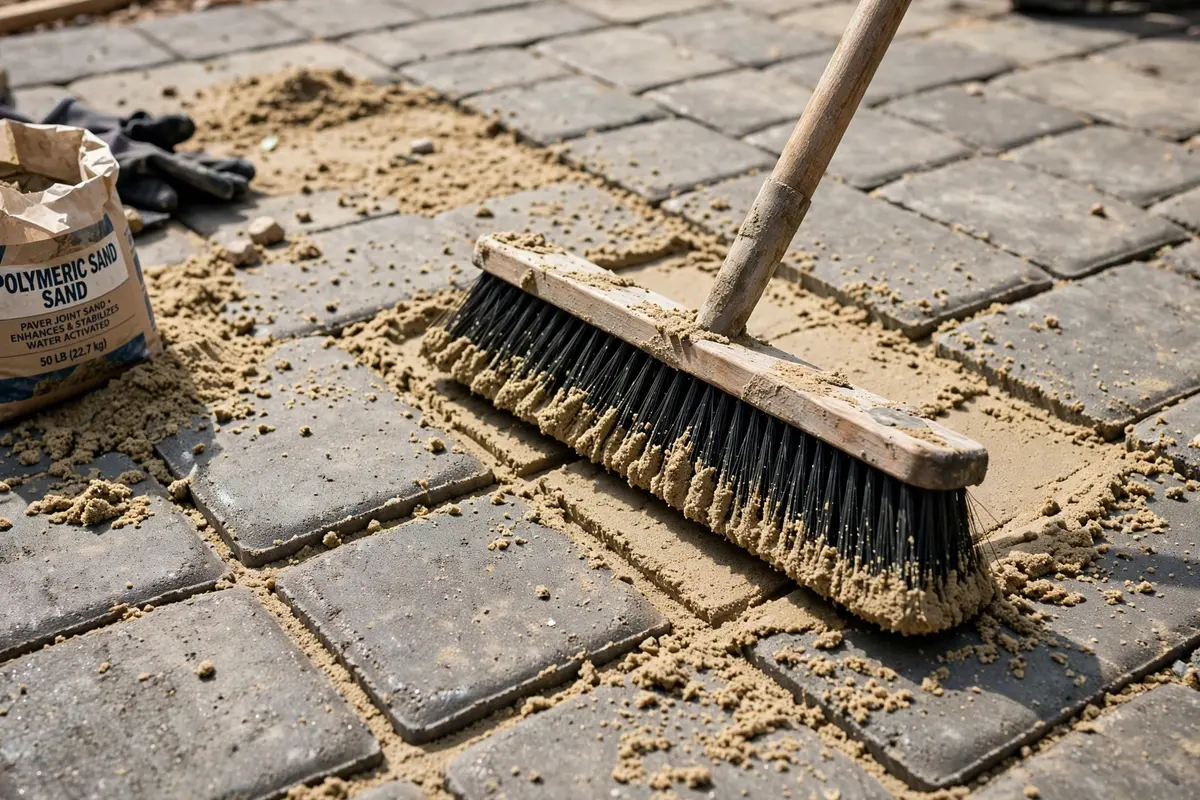
Pour the dry sand onto the pavers and sweep it diagonally across the joints with the push broom, working it down into every gap. Fill the joints completely — don’t rush this part.
Step 3: Compact the joints
Run the plate compactor (fitted with a protective pad so it doesn’t chip or scuff the pavers) over the surface. This vibrates the sand down to the full depth of the joint and eliminates air pockets. Skipping this step is one of the most common causes of failure: the joint looks full from above, but hidden air pockets trap water and weaken the bond.
Step 4: Top up and sweep again
Compaction settles the sand, so sweep in more material until the joints are filled to about 1/8 inch below the top edge of the pavers (or the bottom of the paver’s beveled edge). Then sweep the surface meticulously clean with the soft broom. Every grain left on the paver surface can bond to it once water hits — this is what causes the dreaded polymer haze.
Step 5: Blow the surface clean
Use the leaf blower on a light setting to clear any remaining fine dust from the paver tops. The surface should look completely clean before you touch the hose.
Step 6: Activate with water — gently
Set the hose nozzle to a fine mist or gentle shower — never a jet. Mist the area in several light passes, starting from the lowest point and working uphill so water seeps down through the full joint depth. Let each pass soak in for a few minutes, then repeat. You’ll know the joints are saturated when water just begins to pool slightly on the joint surface and the sand stops absorbing. Stop there — more water doesn’t help.
Over-watering is the single biggest mistake: too much water washes the polymers out of the sand (you’ll see frothing or foaming, which means the binders are separating), leaving weak joints.
Step 7: Let it cure
Keep everyone and everything off the surface while it cures. Plan on 24 hours before foot traffic and 48–72 hours before vehicle traffic. Cool or humid weather extends curing time — in damp conditions, allow up to 48 hours or more for foot traffic. If unexpected rain threatens, cover the area with a tarp. Full strength can take up to several weeks to develop, so treat the joints gently at first.
5 Common Mistakes to Avoid
- Over-watering during activation. Flood the joints and the polymers wash out. Multiple light mists beat one heavy soaking every time.
- Leaving sand on the paver surface. Any residue bonds into a cloudy polymer haze that’s difficult to remove. Sweep, then blow, then water — in that order.
- Skipping compaction. Air pockets in the joint trap water and cause the bond to fail from the inside.
- Installing before rain or in the cold. Rain within 24 hours can wash out uncured joints; cold temperatures slow or stop curing.
- Using it in the wrong joints. Joints that are too narrow, too shallow, or in permanently wet spots will fail regardless of technique. Match the product to the job.
How to Fix Polymer Haze
Polymer haze is the cloudy white film that appears on paver surfaces when polymer residue dries on them — almost always from inadequate sweeping before watering. If you catch it early (before full cure), scrub it with a stiff brush and water. Once cured, you’ll need a specialized polymeric sand haze remover or a diluted vinegar solution: apply it after the joints have fully cured, scrub, and rinse thoroughly. Prevention is far easier than the cure, which is why the sweeping steps above matter so much.
For a deeper look at what goes wrong and why, this guide to problems with polymeric sand walks through the most common failures.
Maintaining Polymeric Sand Joints
Once cured, polymeric sand is low-maintenance but not no-maintenance:
- Don’t pressure-wash directly over the joints. A strong jet erodes the binders. If you must pressure wash, use a wide fan-spray nozzle held well back at low pressure.
- Keep the surface swept. Fallen leaves and organic debris left sitting on the joints encourage moss and staining.
- Repair small failures promptly. If a section washes out or cracks, dig out the loose material and reapply fresh polymeric sand following the same steps — preparation, sweeping, compaction, cleaning, and gentle watering. For the full application sequence in detail, see this step-by-step polymeric sand installation guide.
Frequently Asked Questions
How long does polymeric sand last?
With proper installation and basic maintenance, polymeric sand joints typically last many years. Longevity depends on climate, drainage, traffic, and whether the joints were fully compacted and cured.
Can you apply polymeric sand over old regular sand?
No — the joint needs to be filled with polymeric sand through its full depth. Topping old regular sand with a thin layer of polymeric sand creates a weak crust that breaks apart. Remove the old material first.
Does polymeric sand prevent all weeds?
It prevents weeds from rooting in the joints, which is where most paver weeds start. Weeds can still sprout from windblown seeds sitting on the surface, but they pull out easily since they have no root hold.
What happens if it rains right after installation?
Rain before the polymers cure can wash the binders out of the joints, ruining the installation. Always check the forecast and allow at least 24 dry hours; cover the area with a tarp if unexpected rain threatens.