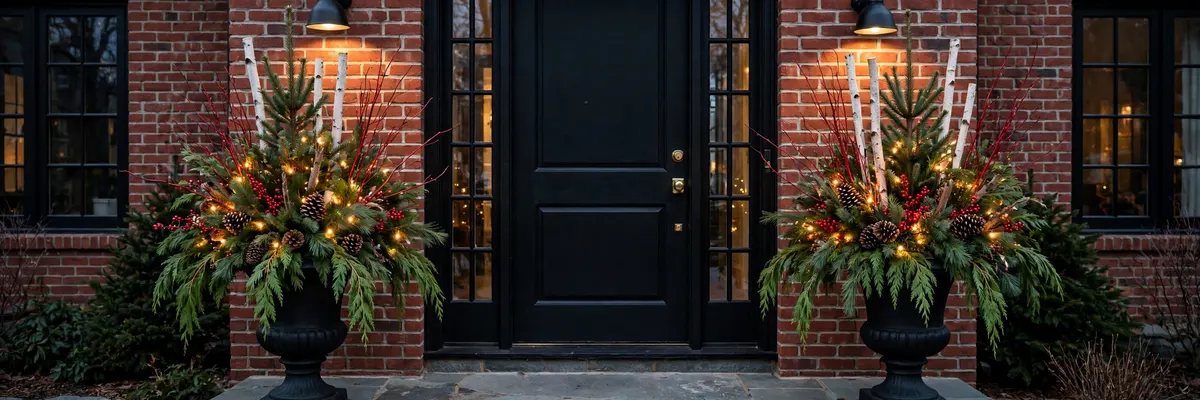
Christmas Porch Pots: 15 Easy Ideas for a Festive Front Door
A Christmas porch pot is a frost proof pot filled with cut evergreens in three layers. A tall thriller stands in the center, full filler packs around it, and a spiller drapes over the rim.
Berries, pinecones, and one bow finish the look. This guide gives you 15 Christmas porch pots for the front door, the build steps, and the care tips that keep them fresh into February.
You can build one in about an hour with greens from your yard or a garden center. Pick a frost proof pot, set the tall pieces first, fill the middle with boughs, and let the soft greens spill over the edge.
These Christmas planter ideas work for a wide porch, a small stoop, or a windy entry. For planters that look good in every season, see our front porch planter ideas.
Pick your porch first. Match your entry to the right ideas and skip the rest.
- Wide porch, big front door: start with ideas 1, 3, and 5.
- Small stoop or a rental: try ideas 6, 7, and 8.
- Open, windy porch: look at ideas 9 and 10.
- Modern or neutral house: save ideas 11 and 12.
How to Make a Christmas Porch Pot
This Christmas DIY porch pot takes about 45 to 60 minutes per pot. You need a frost proof pot, potting mix, tall stems, mixed boughs, pinecones, berries, ribbon, and battery fairy lights.
Materials
- A frost proof pot, 14 to 20 inches across
- Potting mix, or the old soil from a summer pot
- Tall stems: birch poles, red twig dogwood, curly willow, or a small cut spruce top
- Mixed evergreen boughs: fir, pine, cedar, spruce, juniper, or boxwood
- Pinecones, winterberry stems, and red berries
- Ribbon and one wide bow
- Battery fairy lights with a timer
- Position the pot. Set it where it will stay. A full pot is heavy, so place it first and build it in place.
- Fill with mix. Fill the pot with potting mix to about two inches below the rim. Water it until damp.
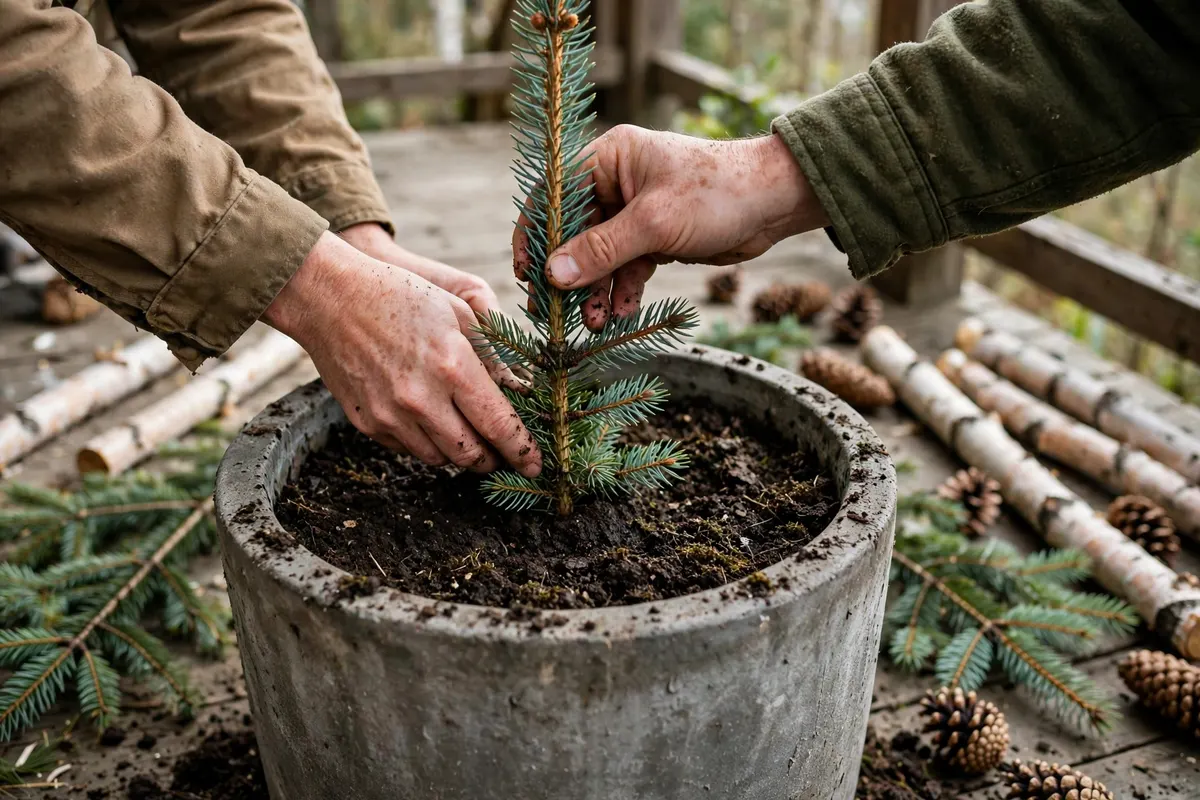
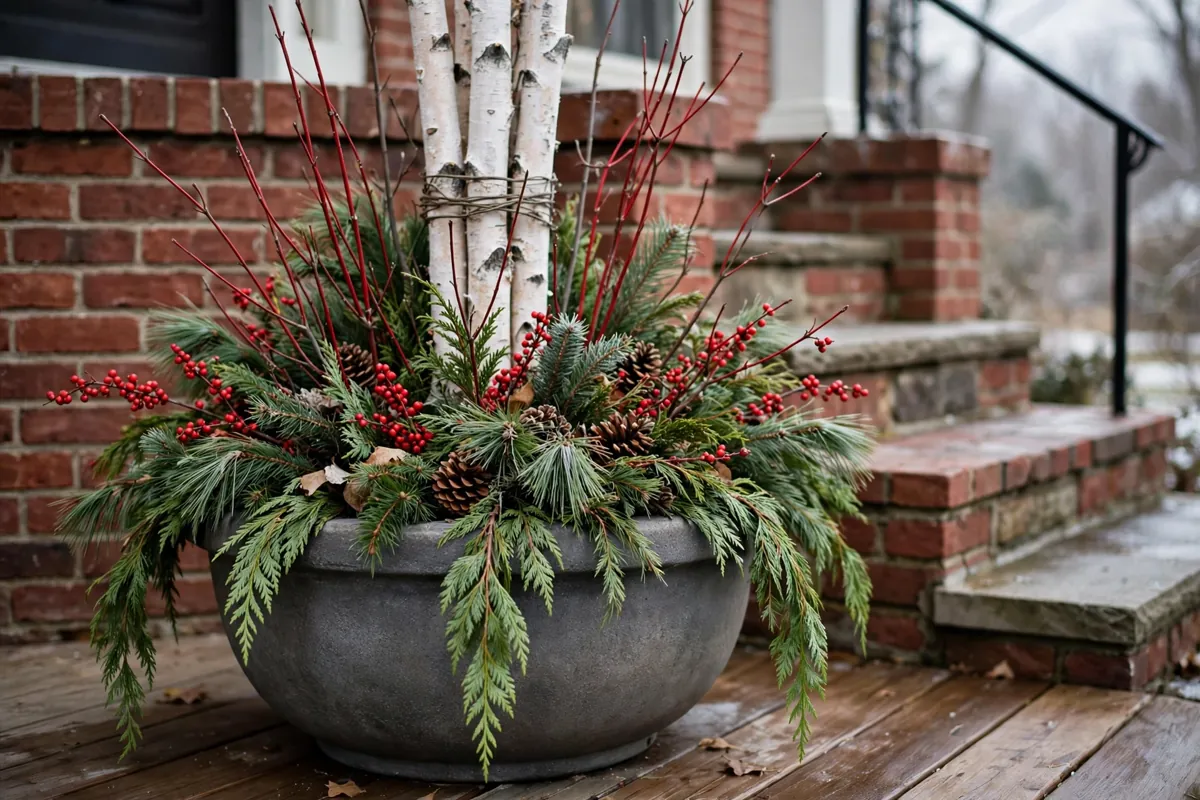
- Set the tall stems. Push the tallest stems into the center. Push them deep so they stand firm. Birch poles, red twig dogwood, or a small cut spruce top all work.
- Pack the filler. Add stiff upright boughs such as fir, spruce, or boxwood around the center. Angle them outward so the pot looks full.
- Add the spiller. Push soft, drooping greens such as cedar or white pine into the outer edge. Let them drape over the rim and hide the soil line.
- Finish and water. Tuck in pinecones, berries, and one bow. Weave battery fairy lights through the greens. Water well to settle the soil.
The three layer method has simple names. The thriller is the tall piece in the center. The filler is the full green middle. The spiller is the soft green that falls over the rim.
What to Put in a Christmas Porch Pot
Every good Christmas planter idea uses four roles: height, filler, spiller, and accents. Pick one or two from each role.
Height. Height comes from birch poles, red twig dogwood (Cornus sericea), curly willow, a small cut spruce top, or a living dwarf Alberta spruce.
Filler. Filler is the green middle. Fir, pine, cedar, spruce, juniper, boxwood, and holly all work. Fir, cedar, pine, and boxwood hold up best in cold weather. They last four to eight weeks or longer.
Spiller. Spiller softens the edge. Trailing cedar, white pine, and ivy drape over the rim. White pine looks soft and full, but it dries faster than cedar, so use it where the pot stays cool and shaded.
Accents. Accents finish the pot. Pinecones, winterberry stems (Ilex verticillata), red berries, magnolia leaves, ornaments, ribbon, and lights. Use accents in odd numbers.
15 Christmas Porch Pot Ideas for the Front Door
Each idea tells you what goes in the pot, how to arrange it, and where it works best.
1. A Matching Pair of Black Urns
Two matching urns, one on each side of the door, read as finished from the street. Set a tall spruce tip in the center of each urn. Drape cedar boughs over the rim. Push three or four red twig dogwood stems in behind the spruce for height. Finish with red berries and one bow per pot.
2. Evergreens With Red Berries
Pine boughs make a full dome in the pot. Pack red berry stems and small pinecones in at the rim. One wide red velvet bow on each pot is all the finish it needs. This look works on a wide porch and a small stoop alike. No lights or tall poles are needed.
3. Birch Poles for a Tall Entry
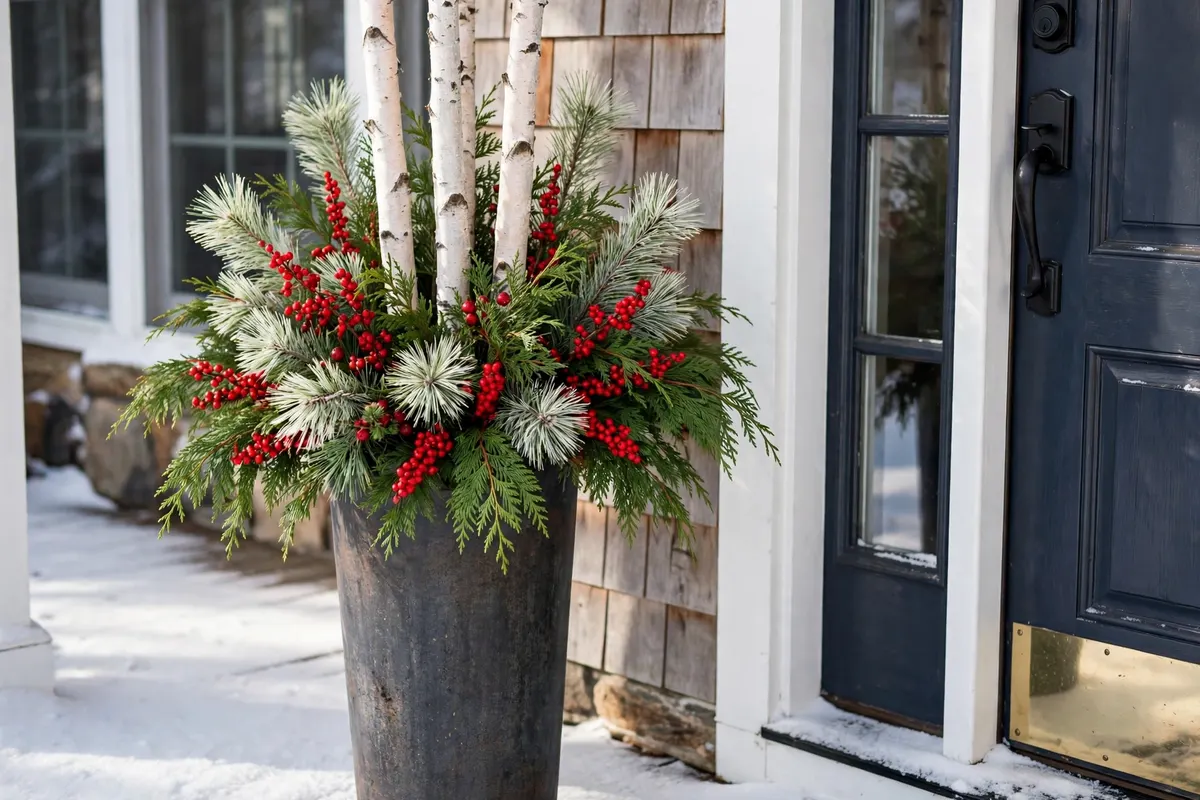
A tall front door can make a normal pot look small. Stand three white birch poles upright in the center of a tall planter. Bundle them with floral wire. Pack soft white pine around their base so the pot looks loose and full. For more tall planter looks, see our tall planter ideas.
4. A Small Tree as the Centerpiece
A small cut spruce top in the center turns the pot into a mini Christmas tree. Set the spruce top deep in the soil. Pack fir and cedar around it. Add pinecones and a few ornaments at the rim. Spruce tips sold for porch pots are small trees or branches, not the tops of large spruce trees, notes the University of Minnesota Extension.
5. A Lantern Centered Urn With a Battery Candle Glow
A lantern turns a porch pot into the first light guests see. Set a black metal lantern in the center of an urn. Surround it with fir boughs. Tuck a battery pillar candle inside the lantern. Add pinecones and red berries at the rim. Battery candles are safe in greens because they give off no heat.
6. One Tall Planter for a Small Stoop
A small stoop needs one strong pot, not two crowded ones. Use a single tall planter, 14 to 20 inches across. Set one tall spruce tip in the center. Pack cedar and fir tight around it. Let white pine spill over one side only, toward the steps. One bow at the front finishes it.
7. A Window Box That Matches the Porch Planters
A window box ties the whole entry together. Fill it with the same greens as the porch pots. Cedar and white pine along the front edge, red twig dogwood at the back, pinecones and berries in between. For more railing and window box looks, see our railing planter ideas.
8. Stair Railing With Trailing Greens
Greens on the stair railing lead the eye up to the door. Drape trailing cedar and white pine along the rail. Wire small bunches of pinecones and red berries to the rail at even gaps. Keep the walkway clear and the rail easy to hold.
9. The Windproof Porch Pot
An open porch needs a pot that stays put. Fill the bottom third of a light pot with bricks or a bag of sand before you add soil. Push the tall stems deep into the soil. Wire the tall stems together so they move as one piece in the wind. Use a wide, low pot rather than a tall thin one.
10. A Galvanized Washtub of Pinecones on the Steps
A galvanized washtub holds a lot of greenery and looks at home on wooden steps. Fill it with pine boughs and cedar. Pile pinecones high in the center. Add red berries and a plaid bow on the front. Metal gets very cold in winter, so line the tub with a plastic pot or a thick liner first.
11. Frosted White and Silver
White birch, flocked branches, and silver ornaments make a calm, modern look. Start with white birch poles in the center. Pack frosted fir and cedar around them. Add silver ornaments in odd numbers. Skip the red berries here. White and silver suit a modern house.
12. A Fruit Filled Planter
Faux oranges, velvet ribbon, and cedar make a warm, old style look. Pack cedar and fir tight in the pot. Tuck faux oranges into the greens in groups of three. Tie a wide velvet bow on the front. Use faux fruit only. Real fruit rots in damp soil and draws pests.
13. A Living Dwarf Alberta Spruce With Winter Pansies
A living dwarf Alberta spruce gives you a small Christmas tree that keeps growing. Set the spruce in the center of a large pot. Plant winter pansies around its base for color. The spruce is hardy in zones 3 to 7 and grows slowly, about 2 to 4 inches a year. After Christmas, plant it out in the garden in spring, after the last frost.
14. A Poinsettia Pair Flanking the Door
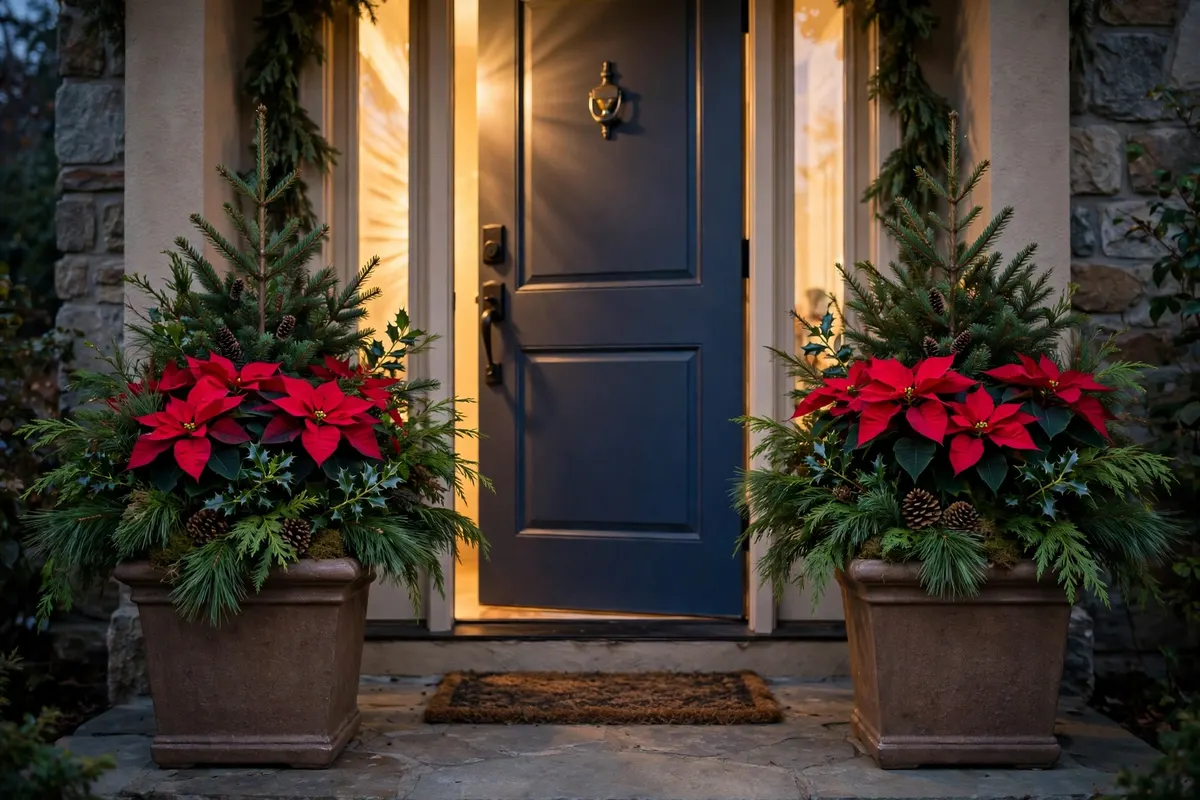
Two red poinsettias, one on each side of the door, make the oldest porch trick there is. Slip each poinsettia in its nursery pot into a larger planter so you can lift it out. Surround it with evergreen boughs.
Poinsettias are tropical plants. They sulk below 50 degrees Fahrenheit, so in a cold area treat the pot as a daytime welcome and bring it inside at night. For more Christmas plant gifts, see our plant gift ideas.
15. The Christmas Porch Pot That Lasts Into February
This pot starts as a Christmas pot and turns into a winter pot. Build it with fir, cedar, and pine, which last four to eight weeks or longer in cold weather.
After Christmas, pull out the bows and ornaments and keep the greens, birch poles, and pinecones. The pot now reads as plain winter decor. The University of Minnesota Extension notes that porch pots made this way can last all winter until spring arrives.
Christmas Porch Pots That Survive Winter
These winter planters for front porches need pots that can take a freeze. Fiberglass, resin, and wood handle cold best. Terracotta is the risk.
It is porous, so water soaks in, freezes, and cracks the pot. The University of Minnesota Extension warns against porous containers outdoors in winter. Concrete is heavy and steady, but an unsealed concrete pot can still crack in a hard freeze, so line it or slip a plastic pot inside it.
Every pot needs drainage holes. Water that cannot leave the pot freezes into a block and pushes the stems up. If a pot has no hole, drill one. For a living plant that stays in its pot all winter, pick one rated two zones colder than your own zone. Illinois Extension gives two zones colder as the general rule.
How to Keep Christmas Porch Pots Fresh
Water the pot well before the first hard freeze. Damp soil freezes solid around the stems and locks the arrangement in place. Frozen soil keeps the greens fresh because the cold slows drying. The University of Minnesota Extension notes that porch pots built this way can last all winter until spring.
Water again whenever the soil thaws. If a warm spell lasts for days, water the pot the same way you water summer flowers. Move the pot out of the sun into shade if you can, so the soil stays frozen longer. Snip out brown pieces as you see them.
Fir, cedar, pine, and boxwood last four to eight weeks or longer in cold weather. White pine dries faster, so keep it in a cool, shaded spot. Ornamental kale handles light frost and gets brighter as nights drop below 50 degrees. Winter pansies may flop after a hard freeze, then perk back up as the day warms.
Common Christmas Porch Pot Mistakes
- Pot too small. A small pot dries out fast and tips over.
- Stems too shallow. Short stems pull out in the wind. Push every stem deep into the soil.
- No drainage. Water with nowhere to go freezes and lifts the whole arrangement. Every pot needs a hole at the bottom.
- Indoor lights outdoors. Indoor light strands are not built for rain and snow. Use only lights and cords rated for outdoor use, and plug them into a GFCI outlet. Keep plugs off wet ground and cords out of the walkway.
- Too many decorations. One bow and a few accents are enough.
- Blocking the walkway. Keep the walk clear and the rail easy to hold.
Keep Pets Safe
Some Christmas greens can make a pet sick. Holly berries can cause vomiting and diarrhea. Yew is highly poisonous to dogs, cats, and people, so keep it out of porch pots and wreaths. Poinsettia sits on the ASPCA toxic list, but the effect is usually mild. Its milky sap irritates the mouth and stomach. Amaryllis and paperwhites are toxic, and their bulbs carry the most risk.
Check the ASPCA toxic and non toxic plant list before you add a new plant to a porch pot. If a pet chews a plant, call your vet or the ASPCA Animal Poison Control Center at 888 426 4435. A Christmas cactus is listed as non toxic to cats and dogs, so it works well in a pet friendly home.
Christmas Porch Pot FAQ
How long do Christmas porch pots last?
Four to eight weeks or longer in cold weather. Fir, cedar, pine, and boxwood hold up best.
Do you water winter porch pots?
Yes. Water well before the first hard freeze so the soil freezes around the stems. Water again whenever the soil thaws during a warm spell.
How do you keep porch planters from blowing over?
Fill the bottom of a light pot with bricks or a bag of sand, push the stems deep, and wire tall stems together.
Can you put a Christmas tree in a planter?
Yes. A small cut spruce top works as a mini tree in the center of a pot. A living dwarf Alberta spruce also works, and you can plant it out in spring.
What greenery lasts longest in outdoor Christmas pots?
Fir, cedar, pine, and boxwood last longest, four to eight weeks or longer. White pine dries faster, so keep it cool and shaded.
What can I put in my outdoor planters for Christmas?
Cut evergreens in three layers, tall stems such as birch poles or red twig dogwood, pinecones, winterberry stems, red berries, ribbon, and battery fairy lights.